2012
Review: Sightseers
 The Pitch: Oh, living in a house, a small wheeled house in the country! Got relationship deceit and some murd’rous feats in the country! Count-ra-a-aaay! (with apologies to Blur)
The Review: I’ve never quite understood the appeal of caravans. Even in the UK, there are so many fine hotels, B & Bs and hostels that the idea of packing up a few treasured possessions in a small house on wheels and setting off for a muddy field with a communal bathroom. But if you absolutely want to make your own itinerary, then they’re probably idea, but it still takes a certain kind of person to want to go caravanning; possibly a little nerdy, certainly very British, and maybe with a tendency to murder people at the slightest provocation. (Wait, what?) Yes, there is apparently a fine line between genial and insane, and the new film from director Ben Wheatley takes a journey to the heart of a very British darkness.
The story stems from an original idea by Alice Lowe and Steve Oram, who started playing the two characters on stage, thought of a move to TV, but then executive producer Edgar Wright and director Wheatley got involved and the adventures of Tina and Chris (Lowe and Oram playing the characters as well as scripting alongside Wheatley’s co-writer from Kill List, Amy Jump) as they trek round some of the British countryside’s more esoteric delights, from the Crich Tramway Museum to the Keswick Pencil Museum. Along the way, they meet a variety of the countryside’s typical residents, but it quickly becomes clear that neither Tina nor Chris is equipped with a full set of social skills, and what start as minor irritations soon turn into something much more threatening.
It might be better described as a bleak comedy rather than a black one, given the isolated settings, but Sightseers certainly doesn’t skimp on the comedy itself. It’s clear that Lowe and Oram have a lot of love for the characters they’ve created, and their actions and reactions to the world around them feel both perfectly grounded and just the right side of creepy. Of the two, it’s Lowe who probably has the slight edge, Tina being afforded a slightly better selection of the choicest lines and also getting the more thoughtful character arc. She also has the advantage of an overbearing, housebound mother (Eileen Davies) to feed off for further character development, and it’s with Tina that your sympathies are most likely to be engaged.
The other star of the film is the British countryside, with carefully chosen venues that Sightseers avoids poking fun at, although there are some great gags squeezed out of a couple (most notably the pencil museum). The film tries not to play its hand too early, with Wheatley employing a leisurely pace – arguably a little too leisurely – in the opening scenes before the nature of the pair’s trip forces them to pick up the tempo. Just occasionally, Wheatley’s reach exceeds his grasp and the budget restrictions expose themselves, but not in any of the murderous episodes, where the claret is liberally spilled and the weaker stomachs in the audience may find themselves turning over slightly. For a film with such big backdrops, it does occasionally still feel very small scale, but there’s much to like in the tale of Tina and Chris; I don’t know if it’s going to make any caravan converts though, you just never know who might be staying in the next pitch…
Why see it at the cinema: Ben Wheatley does make absolutely the most of the country locations – a little too much on occasion – but as long as you can find an audience with the same sensibility, there should be plenty of communal laughs. (Possibly not the audience I saw it with, where the other six people on the front row all walked out before the end. Their loss.)
The Score: 8/10
Review: Silver Linings Playbook
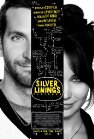 The Pitch: Madness is all in the mind.
The Review: If you visit my Twitter profile, you’ll find this at the top of the page, my vaguely self-deprecating description:

Now, for anyone that’s read any amount of this blog, you’ll be aware that I have a somewhat addictive personality. When I invest in a subject, I tend to invest hard, having seen 635 films in the cinema in the last five years and 447 of those since I started writing this blog. But if you think that’s an actual OCD, then you’re very wrong; obsessive, clearly, but it lacks the physical compulsions which can debilitate its sufferers and in the most severe cases ruin their lives. I’ve always known that the day I start a family is the day that my cinema dwelling will dwindle to nothing for a while, and I’m ready for when that day comes. But from schizophrenia to psychosis, mental illness is generally misunderstood in our society, so any film looking to imbue its characters with such afflictions would be advised to tread carefully.
Silver Linings Playbook features a number of characters who have an array of mental difficulties: Pat (Bradley Cooper) is discharged from a mental hospital after his mother (Jacki Weaver) intervenes, but struggles to come to terms with both his home life and the absence of his wife, estranged after Pat’s bipolar disorder came to the fore when he catches her cheating. His only real friend (Chris Tucker) is still struggling with his own mental health issues and regularly attempts to escape from the same hospital, but even he can see that the more classically depressed Tiffany (Jennifer Lawrence) has an interest in Pat, but both Pat and Tiffany have their own deeper motivations for wanting to spend time with the other. Meanwhile Pat also struggles to reform a bond with his father (Robert De Niro), who shows his own signs of both obsessive behaviour and addiction and which start to come to the fore when Pat struggles.
In terms of the film itself, it’s worthwhile trying to separate the characters from their afflictions for the depictions of mental illness are shaky at best. Oddly, Chris Tucker fares best in that respect, as he appears outwardly normal and little attempt is made to characterise his illness, which actually makes his the best description. For the others (Pat / Pat Sr. / Tiffany) the seeds of their illnesses can be seen, but the characteristics are poorly sown by David O. Russell’s script (based on Matthew Quick’s novel) and somehow the Asperger’s syndrome of Pat’s literary counterpart attempts to become bipolar disorder here. It wouldn’t matter so much if the characters were more generally well written, but the script gives them little else to feed off for most of the time and when it does, the contrast is sharp; Jennifer Lawrence fares best in that respect, again getting the chance to show off the skills that got her recognised for Winter’s Bone and in one pivotal scene, waltzing in and acting everyone else, De Niro included, off the screen. Cooper, De Niro, Weaver and even Tucker put in good work but this turns out to be Jennifer Lawrence’s show.
Successfully portraying mental illness on screen is one challenge that Silver Linings meets only with partial success; the other half hearted attempt is to put a new wrinkle on the romantic comedy. For a film so serious for much of its running time, the occasional laughs sit uncomfortably, although thankfully they are driven out of the situations and never at the expense of the characters themselves. But the third act turns into the kind of romantic comedy plot that’s hamstrung the careers of the likes of Katherine Heigl and Gerard Butler, and it’s only the likeability of Lawrence and Cooper that helps to see it through. It is predictable in the extreme, and once the pieces are laid out the last act plays out with a total lack of surprise and not much more suspense. It’s a totally mixed bag directorially from Russell as well, shepherding his characters through to the resolution with only occasional flashes of the touch which he’s shown in his best films. A mixed bag all round then, worth seeing for the performances but not doing very much to advance just about anything else.
Why see it at the cinema: The drama of the last act comes across well in the cinema, even if it is lacking in surprise, but it’s not enough of a comedy to benefit from the audience buzz and there’s nothing remarkable in direction or cinematography. If you’re keen, worth catching in the cinema, but otherwise wait for the DVD.
The Score: 6/10
The Half Dozen: 6 Most Interesting Looking Trailers For December 2012
Gather round, one and all. The spirit of the season is upon us, and cinemas will be filled with festive treats and reissues of The Muppet Christmas Carol, It’s A Wonderful Life and, if you’ve been really good this year, Die Hard. But as well as that, there’s a host of fresh Christmas goodies, all wrapped and waiting, plus at least one other seasonal treat getting a fresh airing.
So here for your seasonal entertainment are my selection of trailers for this month, each one accompanied by a Christmas ditty or piece of prose of some sort which I’ve shamefully ripped off reworded slightly in honour of the film in question. A Merry Christmas and a Happy New Year to everyone.
Gremlins
‘Twas the night before Christmas, when all through the house Not a creature was stirring, not even a mouse This close to midnight, the Mogwai was waking But no food for him, no chance Bill be taking When down in the lounge there arose such a clatter He sprang from his bed to see what was the matter Away to the kitchen he flew like a flash To grab him a knife, some Gremlins to slashThe Hobbit: An Unexpected Journey
O little town of Hobbiton How still we see thee lie Above thy deep and pipe-fuelled sleep A fire-breath’d dragon files Yet in the dark caves shineth The elven “sword” called Sting The hopes and fears of Gandalf’s peers Rest not yet on a ringChasing Ice
Oh, the weather outside is frightful But the photo’s so delightful And since we’ve no place to go Let it snow, it must snow, oh please snow! It’s showing large signs of thawing And the world is still ignoring Al Gore would have liked this show Let it snow, it must snow, oh please snow!Life Of Pi
On the twelfth day of Christmas, all known Gods gave to me Twelve zoo crates moving Eleven Coldplay pop tunes Ten whales a leaping Nine ladies dancing Eight fish a catching Seven hours of swimming Six meercats playing Five shots of bling Four attempts at filming Three dimensions Two blokes just chatting And a tiger who wants me for teaPitch Perfect
Christmas time, mistletoe and wine Children singing truly phat rhymes With logs on the fire, Anna K in the nip This gaggle of girls will try hard to be hipJack Reacher
At Christmas time, there’s no need to be afraid At Christmas time, we banish light and we let in shade And in the world of bad guys, Werner Herzog’s just a joy Can Jack Reacher save the world, at Christmas time? But say a prayer, pray for the other ones At Christmas time, they’ve no chance when Tom’s having fun There’s a world outside your window And it’s a world of dreaded fear Well tonight thank God it’s them, instead of youReview: The Sapphires
 The Pitch: Less purple hearts, more purple dresses.
The Review In Graphical Format:


Why see it at the cinema: It does achieve the feel good ambition, so it you’re looking for a midweek lift, you could do worse.
The Score: 6/10
Review: Madagasgar 3: Europe’s Most Wanted 3D
 The Pitch: It’s not fair – no, it’s a circus!
The Review: Animals, if kept cleanly, can make fine pets and excellent companions. Some of the larger varieties, though, should be left to the zoos; trying to keep lions and zebras at home is not recommended for even the bravest of home owners. There’s also another threat that these larger mammals present to our safety, and it’s one which you won’t be kept safe from by simply seeing these animals in the zoo; it’s an infection you could catch at your local cinema, the most unsuspecting of places, and it’s one known as earworm. There is no known cure for earworm, only the hope of gradual immunisation through repeated exposure. Here we can see the primary wild animal earworm in its most virulent form:
It may not seem that threatening, taken out of the wild and seen in laboratory conditions, but you should be wary, especially if exposed to the full Madagascan strain of the virus. It’s also a mutation of the original, weaker strain known as the Move-It-Move-It virus which had been seen in two previous outbreaks, but had thought to be contained and possibly dying out. Certainly the contagion appeared to be contained within around a dozen animals, including a lion going under the name of Alex (Ben Stiller), a hippo Gloria (Jada Pinkett Smith), a giraffe Melman (David Schwimmer) and a group of trouble-making penguins, delusional lemurs and antisocial monkeys. The first infection seemed to start with the lemurs but quickly crossed species, and wasn’t thought threatening as long as the animals remained in the wild.
However, latest reports say that the group has headed to Europe; how and why remains largely a mystery, although the finest animal controller in France, Captain Chantal DuBois (Frances McDormand) is tracking the animals in an attempt to spread further infection. It’s believed the virus may have mutated when the animals came into contact with a travelling animal circus, including a tiger (Bryan Cranston), a jaguar (Jessica Chastain) and a sealion (Martin Short). Symptoms of the animals affected include increasingly irrational and inexplicable behaviour; such as the tiger jumping through increasingly impossible smaller hoops as part of his act and quite how the animals managed to swim from Madagascar to the Mediterranean in the first place.
Make no mistake, this is the most dangerous example of the virus yet. It’s likely to induce various symptoms, including increased levels of laughter over those seen during the first two outbreaks and also a heightened responsiveness to bright colours. Despite an increasing number of animals, subjects should remain lucid and be able to distinguish easily between all of the various animals clearly, most of whom show clear signs of development, despite the general increased levels of madness. It’s unusual in such a situation to see such forward development but also increased anarchy and humour among such an extended group of animals, but this is symptomatic of the joy which the earworm virus can bring. Further strains have been seen, including a dangerous melding of Move-It and Circus Afro variants, and those subjecting themselves to this latest Madagascar outbreak should prepare themselves for jollity, general amusement and a surprising amount of good times as the animals are allowed to run free, unhindered by logic or common sense and all the better for it. Just be prepared to be suffering from the after-effects of the earworm infection for some time to come.
Why see it at the cinema: Plenty going on in both foreground and background, so the larger viewing area gives you chance to catch it all, and it’s the funniest of the series, so see it with a good crowd.
Why see it in 3D: No hugely compelling reasons for forking over the extra cash here, although the palette is bright enough that for the most part that Madagascar 3 doesn’t suffer from the normal dulling effects of wearing dark glasses indoor too much; one sequence on a train does descend into almost total darkness, but you can probably take your glasses off for that bit.
The Score: 7/10
Also: Da-da-dadadada-da-da, circus, da-da-dadadada-da-da, afro! Circus afro, circus afro! Polka dot, polka dot, polka dot afro!
Review: Rust And Bone (De rouille et d’os)
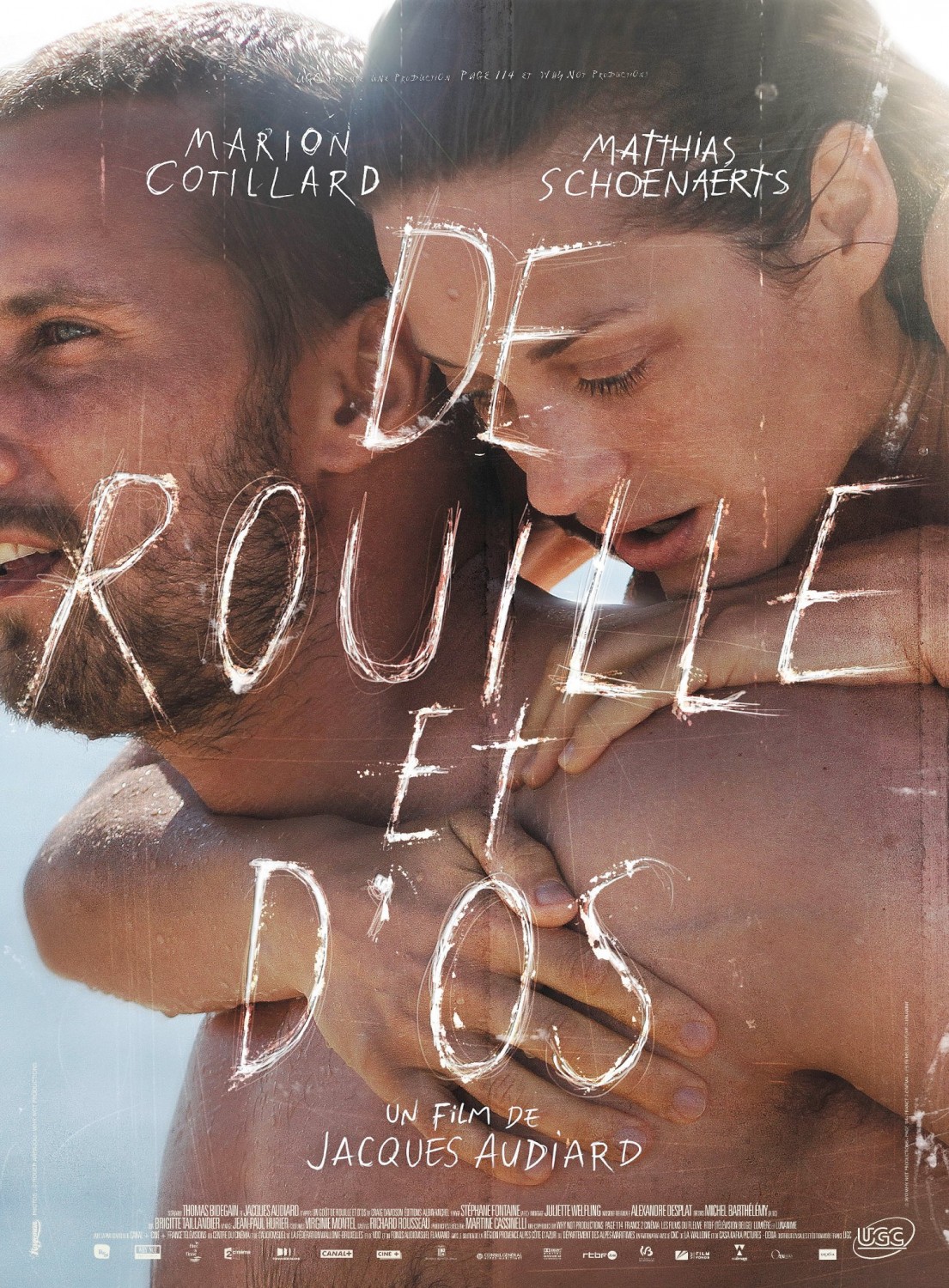 The Pitch: Love is… never having to say you’re sorry (for the killer whales and street fighting, apparently).
The Review: If you’ve never seen a Jacques Audiard film before, then you should come to this with the right expectations: that what you’re going to get will be a little unconventional, to say the least. Take his last three films: Read My Lips, involving the pairing off of an almost deaf woman with an ex-convict, or The Beat My Heart Skipped, the story of a shady real estate broker with aspirations to be a pianist. Audiard’s last film, A Prophet, was less concerned with romantic aspirations but still took a hard-boiled prison drama and wove supernatural elements inextricably within it. So if you’re coming to Rust and Bone completely cold, you should be aware that Audiard’s films are anything but simple.
It will be no surprise in that context that Rust And Bone sees a return to romance, but also that it’s not your average boy meets girl. In this case the boy is a big hulk of a man, Ali (Matthias Schoenaerts) who’s trying to find the means to raise the young son he’s been saddled with looking after, but it’s difficult when responsibility doesn’t come easy to him. Through one of his many attempts at respectable work as a nightclub bouncer, he has a chance encounter with Stephanie (Marion Cotillard), whose hotheadedness gets her in trouble at the club before Ali intervenes. A begrudging act of kindness on her part later becomes more crucial when she suffers an unfortunate and potentially devastating accident; through that, this odd couple start to become friends, but form a complex relationship which both of them struggle to truly come to terms with.
Audiard is no stranger to powerful male figures in his films (the last three have featured Vincent Cassel, Romain Duris and Tahar Rahim, for example), and Matthias Schoenaerts seems to have been hewn almost from solid granite, such is his imposing physical presence. But the real strength comes from the performance of Marion Cotillard, now no stranger to English speaking audiences for her work with the likes of Michael Mann and Christopher Nolan. Most reviews are giving away the nature of what happens to her character, and given that she’s a killer whale trainer it’s maybe not hard to surmise, but I’ll leave that for you to find out on screen if by some miracle you don’t already know; either way, the pain of self-discovery is powerfully captured by Cotillard, but that’s only the start of an excellent performance that sees her take a surprising, but always believable, journey through that pain and towards some form of a normal life.
It’s fair to say that Audiard’s film isn’t necessarily concerned primarily with the difficulties of dealing with disability. There’s an awful lot more going on here, from Ali’s street fighting career to his stewardship of his son to the nature of his relationship with Stephanie to the issues of socialism and family brought up by some of the divisions between management and employees where Ali also works. With so much happening, not every plot line gets the time it needs (Ali’s son suffering most from this) and also not every plot feels that it’s earned its time in the mix. Whenever Cotillard’s on screen, Rust And Bone captures and keeps your attention, but when she’s not, it has to work a little harder, and while it’s not a constantly captivating film when it’s at its best, it soars. But it’s fascinating to see what can be done with modern special effects, no longer purely the domain simply of big Hollywood productions, and for the most part Audiard has produced another compelling story of human relationships with a twist to stand shoulder to shoulder with his earlier works.
Why see it at the cinema: Audiard knows how to use the frame, and there’s at least a couple of moments that pack a much bigger punch for being seen in a cinema for their emotional wallop.
The Score: 8/10
Bond Legacy: Skyfall

Warning: I’ll be getting into a very thorough discussion of Skyfall here, on the presumption that you’ve already seen it. If you haven’t, take in my non-spoilery review of Skyfall first, then go and watch the damn thing, then come back.
Is it really two years since this all started? Two years since BlogalongaBond became a thing, and without which I wouldn’t have sat and watched a Bond film a month for two years Bond films at increasingly random and desperate intervals. (It also wouldn’t have spawned goggle-eyed love child BlogalongaMuppets, but that’s another story, one to be told halfway up the stairs.) I set out to prove that Bond films have had an unerring effect on each other and also on cinema in general, that fifty years of history have developed a template from which Bond films are now almost able to be produced like vodka martini flavoured jelly from an Aston Martin DB5 shaped mould. So for a series of articles based on what the future effect of a series of films has been, how the chuntering thunderballs do I write about a film that’s only been out a week? In the words of our very own M, The Incredible Suit, “you didn’t think this through, did you?”
First, I’m going to distract you with a review of what’s gone before, and some Bond Legacy stats. I’ve been back over the past 22 Bond Legacy posts, and totted up that I found 91 legacies in total, all of which can either be felt in effect in subsequent Bonds or in cinema in general. I then worked out, giving the slight benefit of the doubt to two or three borderline cases, the number of that 91 which can be seen in Skyfall. Here’s what I found:

So out of 22 previous Bonds, eighteen have an element in them which was seen for the first time in a Bond film, but reoccurs in Skyfall. Out of the 91 total legacies, 48 can be seen in some way, shape or form in the film itself or the surrounding hype and marketing. That’s now one heck of a formula. If we’re trying to find the most influential Bond films, then clearly From Russia With Love and Goldfinger continue to set the pattern, sharing 13 legacies between them, although in terms of percentages, it’s the last two Brosnan films that have a 100% record, followed by Dr. No at 80%, and four Bond films (Moonraker, Octopussy, Tomorrow Never Dies and Quantum Of Solace) have no identifiable element unique originally to them which appears again here. Sadly, the wait for another double-taking pigeon goes on.
Of those 48, some are more influential than others, no doubt the increasing desperation of me in small part to keep the theme going all the way to the end. If you’re looking for a formula, though, then I’ve picked out the top third of that list for a slightly more detailed look.
1. Dr. No: Product placement. Lots and lots of really, really obvious product placement.

Yes, product placement has been in place ever since Dr No, but instead of a small British production company run by two ex-pat Yanks, we now have one of the biggest studios in the world protecting its profit margins by putting a brand on everything that isn’t nailed down, and a few things that are. But it has been, and always will be, a friend to Bond, and at least Daniel Craig hasn’t had to resort to making any dreadful commercials. Much.
2. Dr. No: The theme tune. Dum-ba-da-ba-dum-bum-duma-dum-ba-da-ba-dum-ba-da-da-BAAAAA-ba-ba-ba…
There are two regular Bond themes, one which makes an appearance in every film in some form – and be aware, Eric Serra, if you don’t put it in they’ll hire someone who will – and Thomas Newman takes the opportunity to sprinkle the theme liberally through the score. It won’t go down as one of the great Bond scores as it’s a little generic, but it feeds enough Bondy moments to soothe the senses rather than angering them.
3. From Russia With Love: First appearance of Q. Now pay attention, 007…
One of the biggest problems for twenty-first century Bond has been how to fill the void left by Desmond Llewellyn’s portrayal of the man who ensures Bond has manly guns and a good supply of exploding toothpaste. Ben Whishaw’s Q is a reinvention for the 21st century, happy to give Bond a gun and a radio and do all of the techy stuff himself, leaving Bond more the blunt instrument than ever. I don’t want a return to invisible cars, but it would be nice if the tech department could give Bond some more gadgets next time for, y’know, actual spying?
4. From Russia With Love: Bond soundtrack pattern. The case of the mysterious Wendy Crumbles.
I do think Adele was the right choice for a Bond theme (although I’d still like to hear what Muse could do with it; sadly my dream of the Manic Street Preachers performing one is probably now long gone). However, there is one big issue with that theme; many of the best soundtracks, from either John Barry, David Arnold or the occasional greats from others, take either the opening or closing title song and weave it through the score. But Paul Epworth’s orchestration for Adele’s song is so Bond-based in the first place, when the orchestral version of the title track kicks in as Bond enters Macau kicks in it feels as if the film is about to disappear up its own arse. Also, Adele’s lyrics are sometimes incomprehensible – I cannot now hear the track without thinking about the infamous Wendy Crumbles – and she also seems to be shoehorning in references to what Lolcats would think of Bond. Zat Skyfallz, indeed.

5. From Russia With Love: Bad guy with a hidden face. Hidden in plain sight, it seems.
Now here’s an interesting wrinkle on an old chestnut. Blofeld’s face was hidden out of sight for the first two and a half films he was in, building up to a big reveal. We see Javier Bardem’s gurning blond mug after just over an hour, but it’s not until he discusses the effects of his poisoning and removes half his face that we see the true nature of evil. One of the most satisfying and disturbing moments of the otherwise saggy middle of this Bond.
6. Goldfinger: Evil plans that defy rational explanation.
“So James, here’s my plan while I touch the inside of your thigh. I’m going to steal a hard drive which you’ll only fail to take back when one of your own team shoots you by mistake, which I’ll then use to moderately threaten the government of a former world power. I’ll then let you kill my rather dull henchman, allowing you to track him down via his gambling habit and then I’ll have a woman seduce you to bring you to my run down lair who I’ll later shoot for no reason. But it’s fine, because I know that even though you’ve failed your physical and mental tests at MI6 after being repeatedly shot, you’ll be good enough to capture me with perfectly timed helicopters, where you’ll take me back to your base so I can then escape again and kill my old boss in front of anyone watching dull government boards of enquiry on satellite news channels. If anyone tries to prevent my escape, probably you, then I’ll drop a Tube train on their head. This is all because I hate my old boss. I will then probably forget all about the other secret information I’ve stolen.”
“Really? Her flat is really easy to break into. I break in and sit in the dark all the time. Sometimes it’s hours before she comes home.”
“Bollocks.”
7. Goldfinger: The coolest car in the world. Unless you get excited by VW Beetles.
One of the biggest gripes of nerds who need to get out more – in other words, people just like me – is that we get a brand new Bond who acquires a brand new Aston Martin in Casino Royale, but it appears he still has the fully kitted out one, with machine guns and ejector seat, in a dodgy lock-up in London somewhere. The look he gives when Silva blows it up, though, is priceless, and it’s good to see the man still has priorities. However, if he doesn’t get Q to kit out the one he won in Casino Royale with all the same gadgets, I’d be astonished; I’m willing to bet the winnings of a high stakes poker game that’s not the last we’ve seen of the Aston.
8. On Her Majesty’s Secret Service: Bond’s complex relationship with women, especially closest to him. If this is a male fantasy, it’s not one I’ve had often.

Casino Royale was the first time that Bond didn’t end up with the girl. In this one, there are three main women; one who shoots him, and is so generally incompetent she has nothing better to do than to go halfway around the world to give Bond a wet shave before eventually taking a job as a glorified PA; one a a former sex slave who Bond immediately shags, then tosses off a casual witticism in an attempt to look cool around the lads when she’s shot in the head, and the third who’s become virtually a surrogate mother to him over the past three / seven films, he fails miserably to protect from becoming ever so slightly more dead. Good work, James.
9. Diamonds Are Forever: The increase in poor quality jokes. A secret agent walks into a bar…
When Bond hit the Seventies, it went from a spy adventure with occasional titting about in the bosses’ office and the lab to a full on gagfest with gags that left much to be desired. Poor old Roger Moore gets the stick, somewhat unfairly, for a lot of that, but Skyfall was too much of a compensation to the humourless and dry Quantum Of Solace on a couple of occasions; if there’s a version available on Blu-ray that doesn’t have any of the stupid scenes in the Underground, I’ll happily buy it.
10. Live And Let Die: The use of swearing to look proper hard. Language, Timothy!
Live And Let Die had the first “holy shit!” of the series, and Dami Judi kept up the PG swearing in Quantum before letting rip with the first ever F-bomb here. When driving home afterwards, Mrs Evangelist felt that an opportunity for the Denchmeister to let rip with a full, hard 18 rating torrent of f-, c-, m- and possibly even q- words was now sadly lost forever (her suggestion of “c***tacular almost caused me to drive off the road). Maybe Fiennes will be up for it.
11. For Your Eyes Only: The regeneration game. It’s all the same to me.
Despite a constant need to reinvent itself, up until the Craig Bonds the series did its best to maintain that this was always the same secret agent, who with the best will in the world would either now be into his mid-Seventies or going into carbon-freeze in between missions, so that Moore, Dalton and Brosnan all at various points mourned the loss of Tracy, even though technically none of them married her. Or did they? Skyfall takes this a step further, and goes out of its way to suggest that this is the same Bond we’ve always had, we just saw him get his first two kills six years ago, but somehow he’s magically earned fifty years’ worth of backstory. I look forward to John Logan’s next two films telling us the story of how Bond won World Wars 1 and 2 single-handedly.
12. A View To A Kill: The game’s the thing. Although I always preferred Sonic myself.
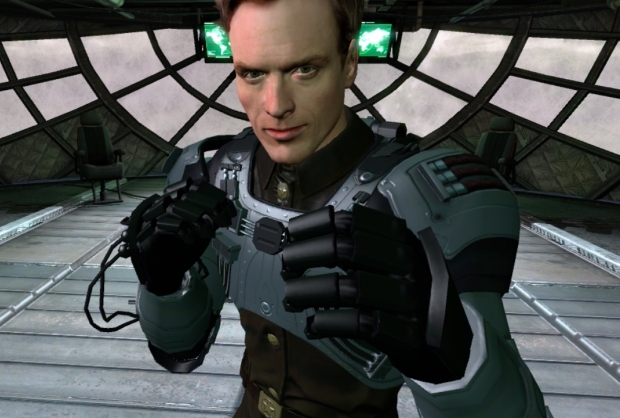
Yes, continuing a trend that started with A View To A Kill, there is game content available so that you can pretend to be the world’s greatest secret agent in the comfort of your own living room. The 007 Legends game has DLC (that’s downloadable content to anyone over 35) relating to Skyfall, which means you too can play as Patrice or Eve Moneypenny if you’ve got a PS3, each character having their own special gifts. (In Moneypenny’s case, it’s light typing and not being able to shoot straight. It does make the game really hard to finish in one sitting.)
13. The Living Daylights: Putting the (re-)boot in.
Despite all being one interconnected story, somehow the Bonds manage to reboot themselves every couple of films, with each new actor giving a different take on the same character, even though it’s regularly made explicit that this is the same character all the time. (Bond’s shrink must be on a massive retainer.) This is the third and most egregious Bond reboot of the last three films, with us now getting a new version practically every time, and this time we appear to have been rebooted right to the end of 1964. From shunning all of the trappings of the character and using a stripped down version, by the end of this film we now are totally in Bondage again; let’s try to stay there for the next one, and keep our hands off the reboot button, shall we?
14. Goldeneye: A relic of the Cold War.

Goldeneye was the first film where Bond had to justify his own existence; Skyfall takes that a step further and asks all of MI6 to state its place in the world. Dame Judes does this by rocking up at a hearing and, rather than making detailed statements about policy or effectiveness, just quoting some Alfred Tennyson. Classy.
15. Tomorrow Never Dies: No material from the novels.
Skyfall has to once again rely on an original plot, for most of the novels and short stories have now been adapted and there’s little to draw on. Significantly, one thing that Skyfall does do is delve deeper into Bond’s past, featuring the ancestral home and even the gravestone of his departed parents. Maybe future instalments will tap further into this peripheral history of Bond; for example, after his parents lost their lives, young Bond went to live with his aunt, Charmian Bond, in the village of Pett Bottom, and if that’s not an open goal waiting to be scored, I don’t know what is.
16. Die Another Day: The anniversary waltz.
After Die Another Day clumsily shoehorned in references to the rest of the series, including Q having Rosa Klebb’s shoe from From Russia With Love in his workshop, Skyfall imbues the golden film and diamond book anniversaries with some more subtle nods to the rest of the series and a few other tips of the hat, including Bond’s favourite whisky, a 1962 vintage. The going rate for a bottle of that make and era would set you back around £1,250 these days; if that’s how well being a spy pays, where do I sign up?
So, as you can see, the template is well in force; these are just a sampling of the most significant, but there are over 30 other cultural references from the Bond series that are in some way to be seen in or around Skyfall. Given that Bond films could now just recycle that for evermore, without ever having to invent anything new – and if the initial box office is anything to go by, they could do that very well – what will be the enduring legacies of Skyfall when we come to look back in a few years’ time? I thought I’d have a go at picking out four of the most likely things that crop up in Skyfall that we might see again someday.
1. China in your hand: I think we’ll see more trips to China
Bond’s been to Chinese territories before, including Macau and Hong Kong, and also to Chinese waters, but Skyfall marks the first time the series has been set in actual proper China. Following an increasing trend of films to have Chinese set sequences, and building off the back of the significant increase in box office that Quantum saw in the Chinese territories, it’s a big market which the Bond films will have to be increasingly creative if they’re going to continue to exploit. But one thing which Bond’s never done on screen is active military service in time of war; maybe if rumours of a two part story are true (even though Craig’s said they aren’t, but after Naomie Harris no-one’s going to believe anything any of them ever say again), then maybe Bond could infiltrate China as they look to take on other big world powers like the USA, Russia and Papua New Guinea? (All right, and Britain.)
2. Bond might be keeping the British end up in more ways than one
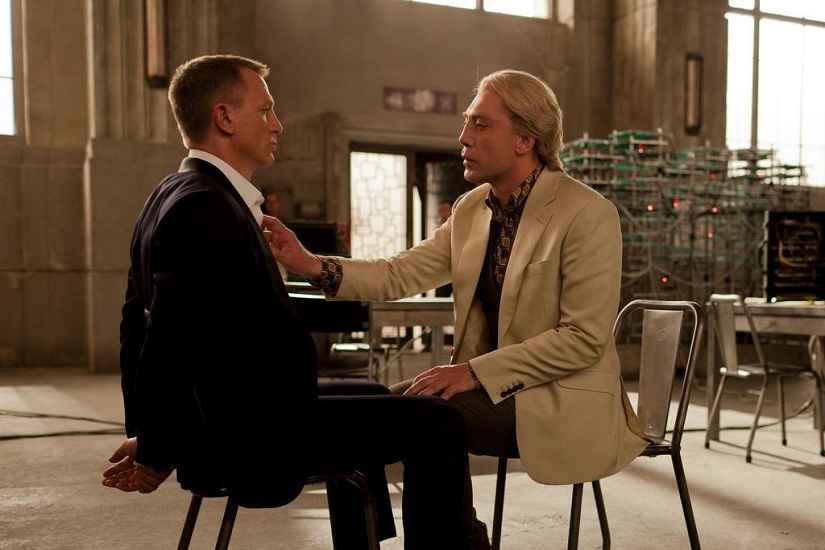
In the pivotal scene when Bond and Silva first meet, Silva makes some suggestive comments to Bond, only for Bond to dismiss the idea that it would be his first time. We’ve seen Bond take down any woman in his path, but the closest he’s come to bedding a minger is Grace Jones. What if Bond really had to suck it up for queen and country, and bed a woman with a face like a hippo’s arse? Or maybe Bond’s sexuality is actually a little more complex than we’ve all been led to believe, and actually he could bed both women and men on the path to world domination? The possibilities are potentially endless, and the template might have to be edged rather than pushed, but we live in more enlightened times and Bond’s bed hopping is one area ripe for further exploration now his psyche and his family have been laid barer.
3. Techno techno techno techno: Q Branch will keep the gadgets to themselves

The Bonds have moved further into the world of techno-terrorism, with Q Branch seemingly less keen to spend their cash on gadgets for dunderheaded spies and more keen to buy rooms full of servers and dodgy Sony Vaios. I give it about four Bond films before James loses it completely and tries to eradicate all of the world’s geeks to take us back to the dark ages, when men were men and women were, er, women. (Genuinely don’t know where I was going with that.) But cybercrime looks to be the way of the future, as long as it can be made to look interesting on screen.
4. The look of love: Skyfall could be the dawn of the auteur Bond
I’ve already mentioned it a lot across the three Skyfall-related posts I’ve written, but Skyfall was the best Bond visually by every one of the country miles between London and Scotland. Now that big names in their fields such as Sam Mendes and Roger Deakins have been allowed loose, and other contributors such as second time editor Stuart Baird and composer Thomas Newman have had their say, that Barbara Broccoli and Michael G. Wilson will have the confidence to let others loose. I will go to bed tonight dreaming that a Nolan / Pfister Bond may one day become a reality. (With a David Arnold score, of course.)
And that’s it. I don’t think I missed any significant legacies, although there were probably a few minor moments that slipped my gaze, and if I watched the whole lot again, maybe that fresh insight would leap out. (Not for a few years, though.) Still, if you’ve spotted a genuine legacy I’ve missed, then get commenting, always keen to receive feedback from my readers, which is normally people telling me where I’ve gone wrong. Why break the habit of a lifetime?
Next time: Bond returns in two years in Bond 24. The increasingly shorter titles to allow for Twitter hashtags and the like suggest Risico of the remaining titles, although equally short alternative options might be Bang, Phwoar or Oof. So, see you in 2014 for Oof, then.
Previous Bond legacy posts: Dr No / From Russia With Love / Goldfinger / Thunderball / You Only Live Twice / On Her Majesty’s Secret Service / Diamonds Are Forever / Live And Let Die / The Man With The Golden Gun / The Spy Who Loved Me / Moonraker / For Your Eyes Only / Octopussy / A View To A Kill / The Living Daylights / Licence To Kill / Goldeneye / Tomorrow Never Dies / The World Is Not Enough / Die Another Day / Casino Royale / Quantum Of Solace
Go deeper for the full BlogalongaBond experience, courtesy of The Incredible Suit.
The Half Dozen: 6(ish) Most Interesting Looking Trailers For November 2012

While Five Star the group might be consigned largely to history, I can’t help thinking of them every time a discussion of five stars comes up in the context of film, because I have that idiotic kind of brain. With the two largest circulation film magazines in this country both working on a one to five star scale (and at least one other working on “out of five” principles), the five star sliding scale has become something of an industry standard, as posters look to be able to crowd their commendations with reviews from members of the press with as many stars as possible.
I, somewhat more in line with online ratings schemes such as IMDb, rate my scores out of 10. In terms of alignment, I consider only 10/10 films to be worthy of the five star gold standard, and since I began keeping records in 2008, these have been the films to get the ultimate Evangelist recommendation:
2008: Waltz With Bashir, The Dark Knight, No Country For Old Men, There Will Be Blood, Wall•E and Hunger
2009: (500) Days Of Summer, Let The Right One In, Up, District 9, The White Ribbon and Synecdoche, New York
2010: Of Gods And Men, Inception, The Social Network, Kick-Ass, Scott Pilgrim vs. The World, Toy Story 3, Winter’s Bone and Mary And Max
2011: Confessions, Drive, Tinker Tailor Soldier Spy, True Grit, Take Shelter and The Guard
2012: Looper, Moonrise Kingdom, The Cabin In The Woods, Shame, The Artist, Robot & Frank and The Imposter
Given that I average over 100 films a year, you can see it’s a relatively small proportion that are getting that elusive ★★★★★ rating from me. This year especially, where the main box office tentpoles such as The Avengers¹, The Dark Knight Rises and Skyfall have gotten so many five star plaudits elsewhere and only four from me, it feels an odd list that I’ve ended up with. There’s also some slight shame in saying that Shame is still my film of the year, for while I still believe it’s a story utterly of our times married to Steve McQueen’s exemplary film making, it’s not exactly the kind of movie I want to discuss with my mother when I call her on a Sunday afternoon.
What November has promised is the possibility of contenders to both the five star crown, and possibly even films which could nab that illustrious title of “Favourite Film Of The Year”, taken by No Country For Old Men, Up, Scott Pilgrim and Confessions over the last four years. Empire Magazine reviewed 32 films this month, and gave 21 of them four stars or more. I’ve picked out six that might just be able to take that fifth star.
The Master
I still take no pleasure in reminding people that There Will Be Blood still holds the record for the number of audience walk-outs of any film I’ve ever seen (23). There’s been much discussion on Twitter this week about reviewers giving it various ratings, where even the mainstream press have been divided from ★★★★★ all the way down to ★. I’ve been a fan of PTA ever since Boogie Nights – although telling my mother to watch Magnolia was, in hindsight – a mistake, but this one could definitely go either way.
Excision
Empire magazine have awarded this five stars, and say what you like about Kim Newman, he knows his horror. I’m seeing this as part of a Fright Fest all-nighter later today; earlier this year I saw six films in a full day session at their weekend event in London, the best of which was the again uncomfortably misogynistic Maniac with Elijah Wood. But there’s no reason why a horror movie shouldn’t be able to get on that list.
Amour
Speaking of lists, Total Film published a recent list featuring the 50 Best Movies Of Their Lifetime in their most recent issue. It’s a very populist list, but at the same time Michael Haneke has two entries in the top 20 (Hidden and The White Ribbon). I’ve developed a deep admiration for Haneke’s films and so consequently this is probably the most anticipated film of the month for me, even if I am expecting it to be absolutely devastating.
Jason Becker: Not Dead Yet
I saw so many films at the Cambridge Film Festival this year that I’m still writing them all up. (Days 9 – 11 coming next week. Hopefully.) However, I still missed a couple of films I was really looking forward to, including Ugandan-set documentary Call Me Kuchu and this story of a man following his passion when his body lets him down. I also love that this trailer doesn’t feel constrained to the normal two minute and thirty second rule that seems to define most full length trailers these days.
Silver Linings Playbook
I heard about Oscar buzz for this one just before I saw the trailer, and having seen it my first thought was “Really?” However, it does carry the caption near the end confirming that Dave Karger from Entertainment Weekly thinks it’s the best film he’s seen this year. Now, there might be someone out there that thinks Keith Lemon: The Movie is their ultimate highlight, but we’re all different and Playbook would certainly be an easier sell to my mother. In terms of mainstream entertainment this month, it looks like this and Argo have the best shot of achieving greatness. (Also, given that we have a three hour Romanian film called Aurora on the way, a great month for films beginning with A.)
Nativity 2: Danger In The Manger
Had you going.
Sightseers
I bought Kill List on Blu-ray last Christmas, with the intention of watching it to see if it made my top 40 of the year. It’s still in the cellophane. I probably need to stay in more. This year’s list of films I ought to watch on DVD but probably won’t have time include Monsieur Lahzar and The Turin Horse.
¹ A reminder that we don’t call it Avengers Assemble round here. I can tell the difference between Uma Thurman and Scarlett Johansson, thank you very much.
Bond Legacy: The World Is Not Enough

There’s a strong argument to be made that the two longest serving Bonds both peaked at the time of their third film. Certainly Shir Schean’s heart was never quite in it after Goldfinger, and Roger Moore also may have never been as good as he was in The Spy Who Loved Me. So it comes as somewhat of a relief that Pierce Brosnan, after two films of alternating rather too frequently between fierce Dalton-like toughness and a shit-eating grin that spews out cheesy puns and desperate innuendo, manages to truly nail his portrayal of James Bond, balancing the humour and the drama far more successfully. But, as students of basic physics will know, for every action there is an equal and opposite reaction, and for a stronger Bond we have Denise Richards as a Bond girl.
Denise Richards plays nuclear physicist Dr Christmas Jones, in a sentence so ridiculous I didn’t even manage to type it while keeping a straight face. Instead, I sobbed bitter tears of despair and regret into my keyboard at the thought of quite how good The World Is Not Enough could have been if it had nailed the casting. The Brosnan Bonds, now freed from the shackles of Fleming’s heritage, were starting to take few more risks, including injuring Bond in the pre-credits sequence and then not forgetting about it by the time the dancing ladies had stopped. They also had the first truly bad Bond girl in the form of Sophie Marceau, an equal match for Brosnan’s added bitterness and Robert Carlyle as a menacing henchman, but Michael Apted’s attempt at a Bond never quite knows how to gel the elements together.
There’s further misadventures with Robbie Coltrane’s dodgy (and dodgily accented) Valentin Zukovsky, but the elements just don’t get the correct weighting, and all of the good will built up by the solid first half goes crashing out of the nearest window without a bungee cord the moment that Denise Richards turns up and opens her mouth. It makes TWINE very much a film of two halves, and while the first is one of the stronger Bond entries, and easily at least the equal of Goldeneye in the Brosnan canon, the second half has only moments of greatness and ends on a joke so crashingly bad, even Roger Moore would have probably had second thoughts.
There’s some consideration to be made of the legacies, but for me The World Is Not Enough holds a particular place in my personal Bond history, alongside The Spy Who Loved Me (first Bond I can remember seeing on TV) and Goldeneye (first Bond I saw in the cinema); The World Is Not Enough is not only the first Bond film I owned on DVD, it’s one of the first two DVDs I ever owned. I received a DVD player as a Christmas present from my ever loving mother, along with TWINE and The Sixth Sense on DVD – handy, that – so I was able to not only skip easily to just the parts of the film that I enjoyed, and more quickly edit Denise Richards out of the film, but also try to see how much of The Sixth Sense held up the second time around. Which has nothing at all to do with Bond, but seriously, whatever happened to M Night Shyamalan? Such a one trick pony.
To the legacies, though, and The World Is Not Enough can count a decent number of firsts among its achievements, including being the first Bond film release by MGM after they had swallowed up the unfortunate United Artists, original studio of Bond, the first film to feature the Millennium Dome and the first Bond film made in Dolby Digital EX 6.1 – ideal if, like me, you have a 5.1 surround sound system at home that your wife never lets you turn on anyway because it scares the neighbours and bothers the cat. But the move to MGM hasn’t had a huge bearing on the series as a whole, and the O2 hasn’t had a huge career in the movies, although it has got a Cineworld with a giant screen in it. To my shame, I can only find one real legacy of The World Is Not Enough, but it’s enough to keep the run going.
1. The world’s least secret secret organisation
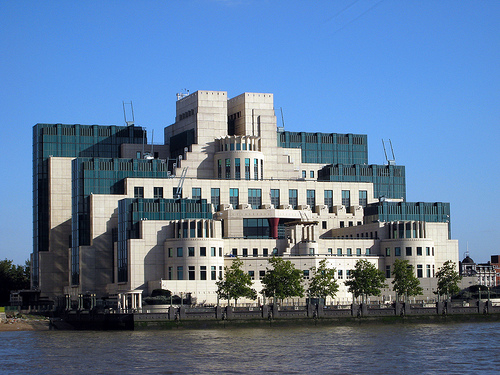
Apparently James Bond, and all of his mates, the spies – secret agents, supposedly – work in one of the most famous buildings on the modern London skyline. It’s the third time that it’s been in the Bond films, but it won’t be the last time we see a giant hole get blown in it in a Bond film, if the Skyfall trailer is anything to go by.
And that’s it. I blame Denise Richards.
Next time: Well, at least it can’t get any worse. It’s not like it was Madonna or anything. That would have been dread… oh. It’s Die Another Day.
Previous Bond legacy posts: Dr No / From Russia With Love / Goldfinger / Thunderball / You Only Live Twice / On Her Majesty’s Secret Service / Diamonds Are Forever / Live And Let Die / The Man With The Golden Gun / The Spy Who Loved Me / Moonraker / For Your Eyes Only / Octopussy / A View To A Kill / The Living Daylights / Licence To Kill / Goldeneye / Tomorrow Never Dies
Clicky here for The BlogalongaBond collective, courtesy of The Incredible Suit.
London Film Festival Review: Robot And Frank
 The Pitch: iBurglar.
The Review: Consciousness is a fragile thing. Somehow, the collection of atoms and molecules that make up our brains manage to form thoughts and memories, and thankfully the organ that stores that operations centre in each of us has a fairly hard shell protecting it from shocks and damage. Sadly, the one thing it can’t protect us from is the passage of time, and sooner or later that will catch up with all of us. It’s amazing that something so complex keeps running for so long in most of us, and despite the advances in science in the 21st century the finest minds of all of us haven’t yet managed to either successfully extend that lifespan, or indeed to replicate the complex functions that make us human. But when science gets to that point, will we be accepting of our new robot friends, or fear our potential new overlords and the uprising that might follow?
It’s common for films to assume the latter, despite the fact that the appliance of science generally seems to be directed to make life more comfortable for us mere mortals. Robot & Frank follows the former path, and when his son Hunter (James Marsden) decides he needs to devote more time to his own family, rather than weekly ten hour round trips to his ungrateful father Frank (Frank Langella), he gets him a robot (voiced by Peter Sarsgaard). Initially both he and his world traveller absentee daughter (Liv Tyler) are resistant to the idea, but once Frank latches onto the potential of a robot friend, his enthusiasm grows. Frank, it seems, has a shady past and sticky fingers, one he’s not even keen to share with the lady at the library who’s caught his eye (Susan Sarandon), and what better sidekick than a piece of easily swayed modern technology with Frank’s best interests at heart?
At its core Robot and Frank is a poignant tale about memory and the passage of time. While set in the future, the shading and details make it feel close to our own time, but just as believable as other, grander, futuristic vistas in bigger budget films. It’s not about the technology, but the lack of that personal connection, and those like Frank still clinging to the physical elements of the world are seen to be relics, almost museum pieces. Frank’s failing memory occasionally sees him drifting into the world of his past, and there’s a deep poignancy to his yearning for the restaurant now replaced by a home store or the library throwing out all of its books.
But deeper than that is the exploration of family. Frank’s son and daughter come across initially as disaffected and tied only by the obligation of bloodlines, but it becomes clear that for every action, there’s a reaction and Frank’s certainly seen a lot of action. That Robot & Frank succeeds so well in that family dynamic is down not only to the strength of the performances from those involved, but also to the script and direction, which invests the characters with genuine emotion and which manages to pull off some late twists deftly, without the feeling of soap opera melodrama.
At the core of the movie in every sense are the two titular characters. Initially reluctant to take on his robot servant, Frank starts to see the possibilities and runs through the whole range of potential clichés, from odd couple domestic drama to mismatched buddy heist movie and eventually to surprisingly tender and almost heartbreaking scenes as Frank starts to form the kind of bond with a machine he’s never managed with a human. Warm and resonant, but playful and mischievous and ultimately deep and thought-provoking, Robot & Frank packs a wide array of ideas into its slender running time, and handles every single one beautifully. If you ever imagined having your own robot as a child, the thought of that coming true might just equate to the joy that Robot & Frank could bring; the prospect that it never will in our lifetimes may just match the bitter-sweet feeling you’ll get from it as well.
Why see it at the cinema: See this with a big audience to share the emotional rollercoaster, as well as a decent selection of laughs from the inappropriate OAP.
The Score: 10/10
- ← Previous
- 1
- 2
- 3
- …
- 6
- Next →
 The Movie Evangelist