film
Film4 FrightFest 2014 Day 5: Alleluia, Nymph, Extraterrestrial, V/H/S Viral, The Signal

My last day at FrightFest, and thanks to living an hour and a half away I was getting up just five hours after getting to sleep from getting in late the night before. I just don’t sleep in hotel rooms, and I have a cat and a rabbit to wrangle in the mornings, but thankfully the Monday commuting option was easier; the lack of a late film meaning I could park up and let the London Underground see me all the way in. I was also quite glad of that given the weather, feeling as if I was driving through a DTV movie about incessant rain, possibly with sharks in it somewhere, and that rain continued to dump itself on London for the rest of the day.
 The effect on Leicester Square was dramatic, the hordes of
 shuffling zombie undead tourists breaking for cover, and it was actually possible to walk around the square at a speed greater than one mile an hour. That said, after three days there already I’d long since ceased to feel the need to actually shuffle round the square myself, even for food: lunch on the final day is pictured left, on the basis that it was as nutritious and inexpensive as anything else I could find on the Square. The rain eased off enough for me to make it to Chinatown for dinner for a hot and soup with dumplings so spicy that my eyebrows melted off, but other than that I took refuge in the Vue West End for the day.
I used to have this romantic notion of Leicester Square of being some cinematic haven populated by the great and the good. What it actually is for the large part is a depressing cesspool on the face of humanity which sucks in tourists and extracts their money in the most demeaning ways possible, with some expensive cinemas dotted about. But for one weekend, the Vue became an oasis in that unfortunate tourist slum, with reasonably priced tickets (anyone getting a festival pass effectively saw each film for less than £7.50 each over the weekend), a great atmosphere (despite being spread across five screens) and not a single projection issue over the weekend, which for a multiplex in this digital age is something of an achievement. Thankfully the festival has made a seamless transition from the Empire and hopefully will continue to go from strength to strength there in years to come.
Alleluia
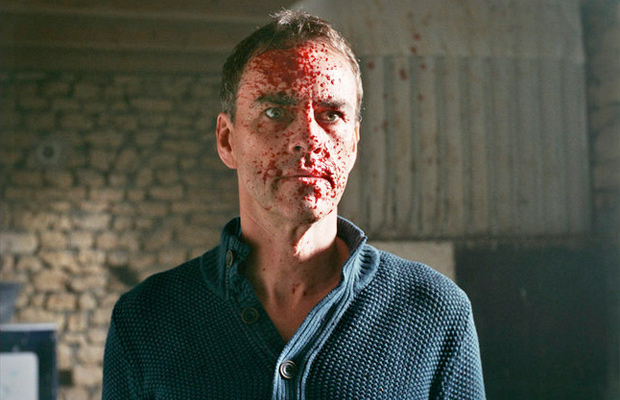
My first film of the final day was a take on the story of the real life Honeymoon Killers, split into four acts – one for each of the key women in the story – and updates the tale to the modern day. Lonely mortuary worker Gloria (Lola Duenas) is reluctantly signed up for online dating by a friend, but is soon won over by the smooth charms of her internet date Michel (Laurent Lucas), only for him to do the typical male thing and never call her. In this case, though, he’s absconded after having borrowed money from her, and you know what they say about a woman scorned. Once she’s tracked him down, they form an unlikely alliance, determined to work together on Michel’s future scams but at constant risk from Gloria’s inability to keep her own feelings in check.
The story’s been made before, most notably as 1969’s The Honeymoon Killers, but director Fabrice du Welz brings an operatic quality to proceedings (in one astonishing scene, almost literally) and both plays up the intensity of the relationship that binds these two together and plays down their surroundings. As revealed in the Q & A that followed, du Welz took the decision to shoot on 16mm, providing a grainy texture and further enforcing the mood with dark sets and grim cinematography. Even when Michel and Gloria are first flirting, the over the shoulder camera shots obscure half the face of the person in shot, deliberately keeping both leads in a murky light and the ambiguity of the situation keeps you guessing as to the eventual outcome. It’s delightfully dark and offbeat in tone, a black comedy with plenty of red splashed through it, and with two thoroughly committed performances from Duenas and Lucas, Alleluia is a pitch black treat.
The Score: 8/10
Nymph
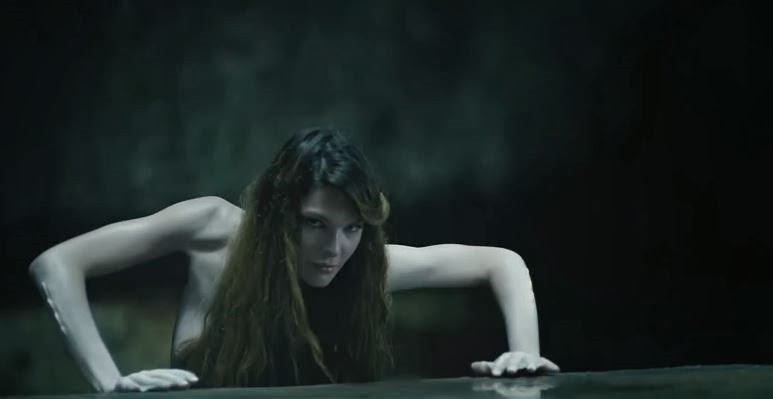
Going to work from back to front on this one. There’s nothing wrong with coming up with a great concept then working backwards, and Nymph’s original titles – originally called Mamula, the island on which the second half of the film takes place, and there’s a poster for it calling it Killer Mermaid – strongly suggest the core to the concept, as confirmed by the director at the Q & A which took place after the film. I didn’t stay for that Q & A, partly to stretch my legs but mainly because the film was dreadful in almost every aspect. If you’re going to start from a concept and work backwards, you still need some idea of where you’re going to end up, and there’s a fundamental disconnect in Nymph in that all of the character work ploddingly and painfully set up in the first half of the film is instantly dispensed with when the killing starts; you could start watching close to an hour in and the end of the film would make no less sense. When the characterisations are as trite and poorly expanded as they are here, you’re left to wonder what the point was.
On top of that, the film is trapped in a “tell, not show” mentality, with poor Franco Nero recruited as one of two almost identikit clichéd seamen and forced to rattle off reams of exposition that advance the story, but it did make you feel listening to him recite the phone book would be a more compelling prospect. The killer mermaid is a nice idea, but she’s basically a bit bitey and not much more and her siren-like qualities in seducing men can apparently be overcome by a quick slap around the face. It all takes itself far too seriously, the kills are rote and horror movie audiences deserve better, the cinematography is often cheap (random crane shots so grainy they might even be stock footage, and as soon as anyone starts running it’s impossible to tell what’s happening) and to cap it all off, the director and writer cheerfully took to Letterboxd and announced they were awarding their own film five stars each. Allow me to redress the balance somewhat.
The Score: 2/10
Extraterrestrial (Extraterrestre)

My Nacho Vigalondo weekend continued as I dodged Xmoor in the main screen to take in this alien invasion movie in the Discovery Screen. Extraterrestrial is very much a romantic comedy drama that takes place in the context of an alien incursion; we see very little of the alien presence itself, as Vigalondo is much more interested in using his limited budget to explore the human condition. Julio (Julian Villagran) and Julia (Michelle Jenner) wake up after a hard night of partying in Julia’s apartment. Not only do they not recall how they came to be so drunk, but they also don’t recall the moment when the huge alien spaceship started hovering in the skies over their city. With the streets deserted, Julio decides he’s going to hang around to learn more about Julia, with whom he’s instantly smitten, but will have to contend with the attentions of both a creepy neighbour and also the return of Julia’s boyfriend to complicate matters.
Extraterrestrial’s humour is bone dry, but that dry wit should still appeal to a certain audience. As he did with Timecrimes, Vigalondo has used genre trappings to spin something out of nothing, and the isolated feel provided by the deserted streets and the paranoia gradually imbued into most of the characters is more effective in its own way than any hordes of marauding aliens would be. It never soars, but once again Vigalondo has constructed a satisfying chamber piece that defies expectation, but one that sadly never truly grips or excites.
Vigalondo popped up again at the end to introduce his own Q & A; I think he became a little exasperated at some of the questions, but this is no fault of his, rather that of the dangerous nature of audience Q & As that questions come with no quality filter of any kind. Still, he was as gracious and entertaining as he had been when discussing Open Windows the previous day.
The Score: 6/10
V/H/S Viral

It’s Nacho time again! This time popping up for an intro, rather than a Q & A, Vigalondo had also given his time to the latest in the video-based anthology series. I will confess to having not seen the first two, but I know that contributions from the likes of Adam Wingard and Gareth Evans had been well received. What the first two had in common, which is absent here, is a framing device which had given need for the tapes with the anthology stories to be watched; here, the wraparound story is simply segmented in among the other stories, almost as if you’d found a VHS tape of the main story and someone had taped over it. Consequently there are huge amounts of the video crackle you’d get when transitioning between recordings, and after several minutes of enduring this on a state of the art projection system with the volume ramped up, I’d have cheerfully settled for listening to a thousand demons dragging their nails down a blackboard instead.
There are three main segments within the anthology, and for me the standout was Vigalondo’s, a well constructed tale of a man creating a doorway to a parallel universe with typically unforeseen and horrific consequences. The reveal felt like the most old school horror moment of the weekend and had me whooping with glee inside. Gregg Bishop gives us a tale about a magician who gets an actual magical cloak, but is required to occasionally feed it the bodies of his assistants to keep it happy. It pretty much abandons the found footage gimmick, being more preudo-documentary, but the climax reminded me of Monster’s Inc. in a good way, inventive but not that heavy on the horror. The final main segment is a mess, skateboarders who summon a demon in Mexico is filmed on tiny handheld cameras and skateboard-eye viewpoints and its main achievement will be to give a headache to anyone not already suffering from the framing device. Overall, the V/H/S series would seem to be an interesting way to give life to ideas that would otherwise not stretch to feature length, but you very much have to take the rough with the smooth.
The Score: 6/10 (8 for Vigalondo’s segment, 6 for Gregg Bishop’s, about 4 for everything else)
The Signal
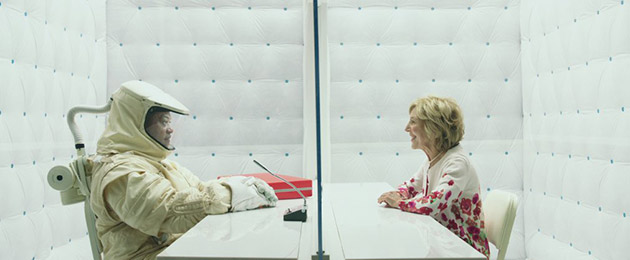
To close the festival, a film that was barely a horror movie at all, rather a sci-fi with a series of sequences that wouldn’t look out of place in a darker horror movie. Students and part time hackers Nic (Brenton Thwaites) and Jonah (Beau Knapp) are taking Nic’s girlfriend Haley (Olivia Cooke) on a road trip to California, while discussing the issues that Nic’s muscular dystrophy could present to their relationship. While en route, they get a message from mysterious hacker NOMAD, who’s already caused them problems, and Nic and Jonah determine that they could confront NOMAD with a reasonable detour from their trip. On finding his location is a deserted cabin and then coming under some form of mysterious attack, Nic awakens in a defence facility, seemingly unable to walk, and is confronted by a mysterious scientist (Laurence Fishburne).
This might constitute something of a spoiler, but it’s an oblique one. The film makers have claimed to have taken inspiration in constructing this tale from Plato’s Allegory Of The Cave, but there are a number of more obvious sci-fi influences at work here. What director William Eubank and his crew have done is to weave that tapestry of influences into an intriguing whole, and despite a couple of clunky missteps (the mysterious tattoo on Nic’s arm once he’s been captured, the reveal of who NOMAD is), in general the level of execution matches up to the ideas. Fishburne does what he can with a nothing role, but the younger actors all put in great performances, and Thwaites’ career already appears to be on an upward trajectory. If this is his calling card, then Eubank could be on a similar trajectory, and if he can rein in some of those cheesier impulses and tie his strong visual sense to slightly more polished storytelling, then greatness could be on the cards. But despite a few rough edges, The Signal still proved a very satisfying way to close out the festival.
The Score: 8/10
So that’s it; the festival over for another year. I personally felt that my decision to ramp up from the single day attendance of the two previous years to the three and a half days I managed this year justified itself with the quality of some of the films seen: The Babadook was the standout of the festival for me, but with The Guest, Life After Beth, The Samurai, The House At The End Of Time, Alleluia and The Signal also being thoroughly entertaining, I’ll be aiming for a full festival pass next year if at all possible. Thanks to everyone involved in putting on such a great spectacle, and I hope to see you all next year.
Film4 Frightfest 2014 Day 4: Open Windows, Faults, Among The Living, The Samurai, The House At The End Of Time, Stage Fright
The Sunday of FrightFest was the first of two full day passes that I’d originally intended to purchase in an effort to up my intake from the previous two years. After getting carried away with the ticket booking, I arrived at Sunday already having seen five films, but with a lovely festival pass stuffed into a lanyard (and if you’ve never roamed a film festival wearing a lanyard, put it on your bucket list right now, there’s few film experiences in life so oddly yet pointlessly empowering) and an anonymous-looking printed voucher with which to collect Discovery Screen tickets, I was all ready to go.
My only problem was getting there. I live an hour and a half from central London, so normally park at the tube station and use my Oyster card – because despite living an hour and a half away, I watch films in London enough to justify me having an Oyster card – but the tube shuts before the last film finishes on a long day and the Nightbus adds an hour to my journey. Additionally, my car had been into the garage twice in the previous week, once for a scheduled service at the company garage where I was hoping a persistent shudder would be resolved, and once into my village garage when the scheduled service made no difference to the persistent shudder.
So I drove into London with the intention of parking at the Leicester Square car park, knowing it would cost a fortune this year without the cheap parking deal of previous years but just glad of the convenience, and gripped by more terror thanks to my juddering car than I was at any time watching films so far – yes, even in The Babadook. It may have been that which caused me to miss my scheduled turning when driving into London, but I suddenly realised I don’t know south and east London half as well as I thought I did, so I quickly fired up the satnav while parked at traffic lights. Its first attempt to direct me asked me to turn left, which I duly did, only to realise I’d just turned on to Tower Bridge heading south across the river, when Leicester Square is resolutely north of the Thames.
You’ve probably heard of park and ride, but what I had to do once I’d concluded my massive detour that took me via Vauxhall to Parliament Square on Sunday was park and run, run across Leicester Square thankfully before the hordes of zombie-like tourists normally shuffling around it had assembled, grab my lanyard and take my aisle seat just as the first film was getting going. I then spent the rest of the day in a panic that I hadn’t locked the car properly, but also feeling I’d come across as neurotic if I went back to check. (Of course, if I hadn’t just told you, no one would have been any the wiser, but hey…)
Open Windows

So the first film of the day was the latest from Timecrimes director Nacho Vigalondo, a techno-thriller that you wouldn’t be surprised to find the likes of Brian De Palma’s name on. Shot generally from the perspective of someone viewing various windows on a laptop, Open Windows follows the misfortunes of Nick Chambers (Elijah Wood), a webmaster of a fansite for actress Jill Goddard (Sasha Grey) who believes he’s won a competition to meet her. While watching her press conference via a laptop, Nick is contacted by a man (Neil Maskell) claiming that she’s cancelled their meeting and encouraging him to spy on her via some high tech equipment he’s already put in Nick’s room. Nick is swiftly drawn into a web of lies and deceit that put both his and Jill’s lives in danger and his only hope might be a group of secretive hackers attempting to contact a super hacker who might just be the man tormenting them.
I’ll not beat about the bush: Open Windows is nuts. It’s quickly apparent that whoever’s manipulating Nick has access to some seriously advanced tech, giving him seemingly omnipotent powers in the world of technology that Nick has become trapped in. It’s possible, at least for a while, to read some deeper meaning into the voyeurism that Nick both peddles and that then could become his undoing, but by the end any such hope of a more philosophical or cerebral challenge is lost. Elijah Wood gives good panic-face, but he’s about the only participant called on to do any actual acting. By the third act, as twist piles upon twist and revelations start dropping like flies, credibility has put on its sun hat and short trousers and long since taken a holiday, and the whole thing is as mad as a giraffe in a tutu juggling chainsaws and about as believable. But it is not for one minute dull and I found myself heading out with a big, stupid grin on my face.
After the film, director Vigalondo gave a Q & A where he talked about some of the logistical and technical challenges involved. The highlight was his reveal that he next plans to make the lowest-budget Godzilla movie possible, ideally with a man in a suit and even more ideally with him in the suit. Someone get that man a Kickstarter, pronto.
The Score: 7/10
Faults
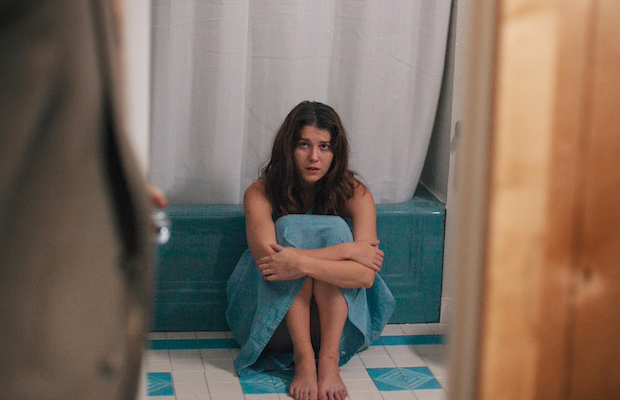
Next up was the debut feature from Riley Stears, who you’d probably have more idea of if I told you his wife is Mary Elizabeth Winstead. Faults concerns a young woman called Claire (Winstead) who’s been brainwashed by a cult called Faults. Her parents approach washed-up author Ansel (Leland Orser) with experience in the field, who takes on the job of deprogramming Claire despite an unfortunate suicide the last time he attempted a similar task. Claire’s parents are willing to pay whatever it takes to get their daughter back, but they’re unaware that Ansel’s debtors have him working under a ticking clock that may make the task that much more challenging.
Faults certainly starts promisingly, with Ansel’s abrasive nature putting him in conflict with almost everyone he comes into contact with; not useful when your only hope of earning money is to run a seminar and to sell books. Ansel feels very much a loser cut from the mould of many of the Coen brothers’ characters, an unfortunate loser frequently caught in meaningless debates about the minutiae of life. The success of the early stretches are making him seem at least competent in his field while managing to fail at almost every other aspect of life. His fraught demeanour is the perfect counterpoint to Claire’s icy collectedness, and the two have an interesting intellectual tussle as he attempts to challenge the ideas that Faults have placed in her head.
There’s no denying that the two central performances from Orser and Winstead are both fantastic in their own ways, that there’s a pleasing collection of oddballs speckling the supporting cast and that the setting, spending much of its time in two hotel rooms, is suitably claustrophobic and Stears keeps the pace gentle while still managing to stir up tension. However, I never quite bought into the transitions that Ansel and Claire undergo through the course of the film, the ultimate resolution feeling just a little too pat and contained and the leaps of logic a little too strained, even within the mindsets of the characters. But if she’s going to deliver performances as good as this, then Stears should continue making star vehicles for his missus, as there’s enough here to suggest a promising future.
The Score: 6/10
Among The Living (Aux yeux des vivants)
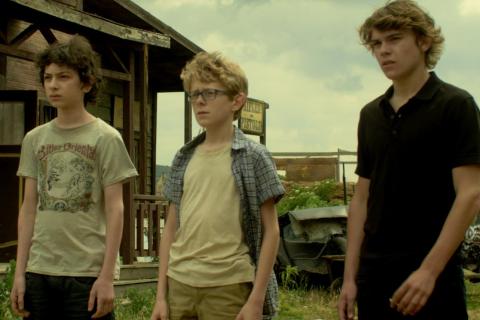
The third feature from French directors Julien Maury and Alexandre Bustido, Among The Living focuses on three delinquent teens who bunk off the last day of term to avoid a mutual detention and end up attempting to set fire to a barn before exploring a deserted film studio in the countryside. While there, they happen upon a kidnapped woman, but their attempts to convince the police of the woman’s plight fall on deaf ears thanks to their earlier pyromania. While they are returned to their respective homes, the kidnappers – a father and his deformed son who hides behind a clown mask – determine to hunt them down and ensure there’s no possibility of any further problems from the youngsters.
Among The Living takes the standard tropes of a slasher movie and inserts them into the equivalent of an American teen film. While the youngsters might look fresh faced enough in the picture above, these are three rather unpleasant youngsters and this is no The Goonies or even Stand By Me. In fact, it’s difficult to know where your sympathies should lie: the youngsters are emblematic of the worst excesses of troubled youth but Maury and Bustido also do their best to make the killers unsympathetic. With no one left to root for, the only hope is that the violence itself and that turns out to be, for the large part, desperately dull – only one kill in the final showdown engages the senses and too often the rest of the action feels oddly neutered, despite being often quite brutal. All in all there’s little to excite or engage and Among The Living won’t linger long in the memory.
The Score: 4/10
The Samurai (Der Samurai)
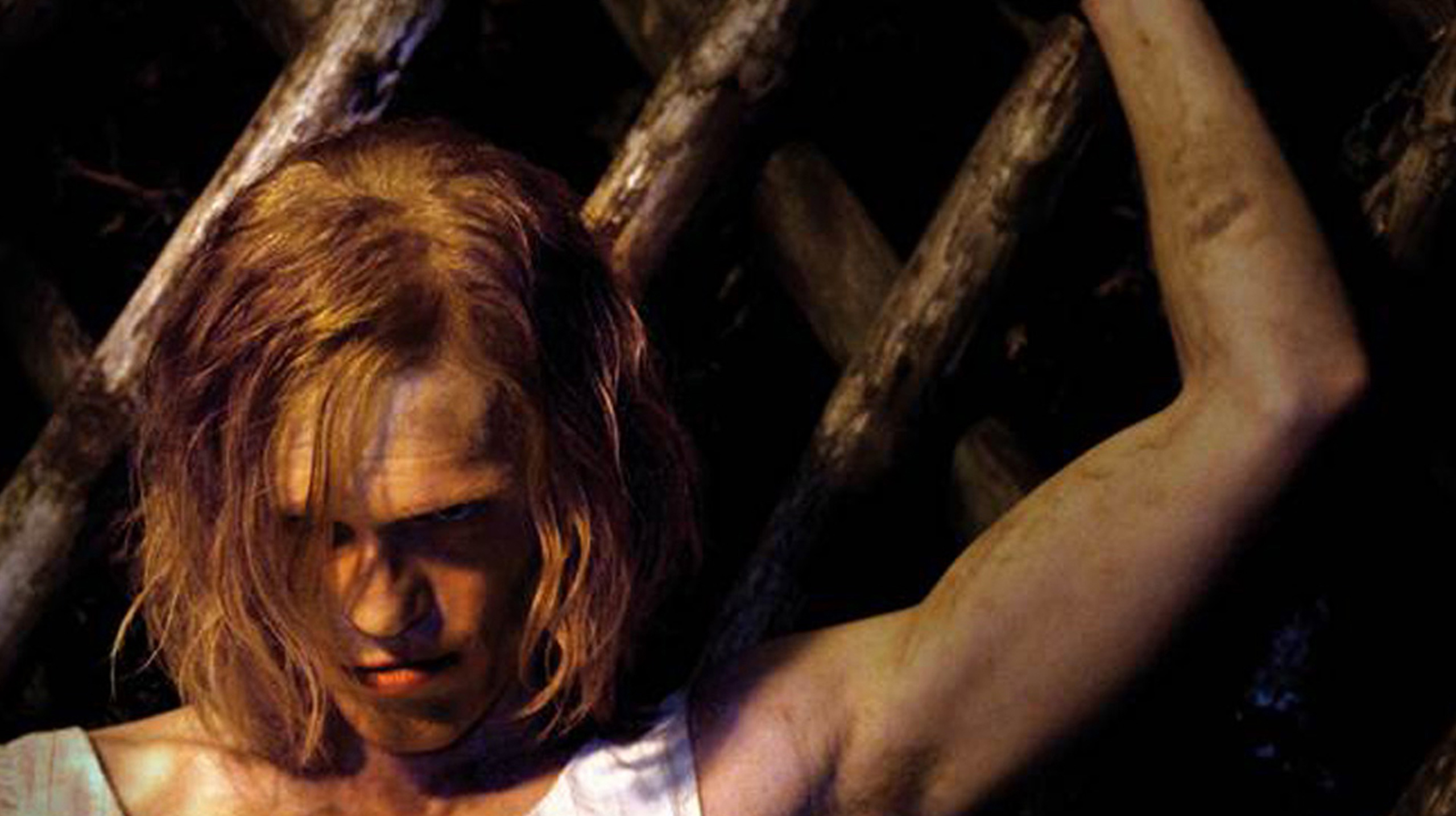
In the words of the Barenaked Ladies in their song One Week, “Like Kurosawa I make mad films; ‘kay I don’t make films, but if I did they’d have a samurai.” A fine sentiment, although samurai films are two a penny and need something to elevate themselves above the crowd. This, however, is a samurai film from Germany that’s distributed by Peccadillo Pictures, the distribution firm that’s made a name for themselves by getting films such as Weekend, Tomboy, Stranger By The Lake and The Golden Dream into cinemas. Michel Dirks is Jakob, a young policeman who’s attempting to track a wolf stalking the woods of a remote German village. But the wolf isn’t what the villagers or Jakob should be most afraid of; a shadowy figure has a package delivered to Jakob which contains a samurai sword, and soon Jacob is drawn into a battle of wills with its wielder, a mysterious man in a full length white dress (Pit Bukowski).
Dirks and Bukowsi have a fascinating and unpredictable interplay, and as their head to head expands into violence and spills out into the community tensions rise and director Til Kleinert uses the night-time forest setting to retain a sense of foreboding throughout. Bukowski gets to give the showy performance (aiming to, and to a large extent succeeding in, evoking Rutger Hauer as he discussed in the Q & A afterwards), but he’s well matched by Dirks’ descent from earnestness into anger as he fights both the samurai and the villagers’ perceptions of him. Kleinert uses the setting and the mixture of elements to create something that resides somewhere between a revenge thriller and a fairytale, and stages his fight scenes and the more gruesome kills stylishly and efficiently. The Samurai is a true original, and if you’re looking for something dark and different then Kleinert may have just the recipe for you.
Following the film, Kleinert, Dirks and Bukowsi attended a Q & A, where Bukowski spend half his time discussing the technical challenges of a shot near the end that were, as they described, the antithesis of all the female flesh on show over the rest of the weekend. Let’s just say it involved a lot of non-prescription Viagra and one fearless actor.
The Score: 8/10
The House At The End Of Time (La casa del fin de los tiempos)
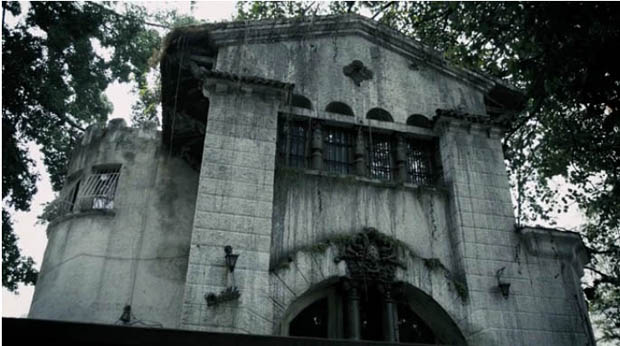
Horror gets everywhere in the world eventually. During the festival there were trailers for the granddaddy of them all, Das Cabinet Des Dr. Caligari, which has just undergone a digital restoration, and ninety years on the likes of this festival now encompass films from Europe, Asia, America and Australia, but The House At The End Of Time shows that there are still new corners of the world to be explored, this being the first commercially released horror movie to come out of Venezuela. At first, the story feels generic and unlikely to push many boundaries: Dulce, an elderly woman (Ruddy Rodriguez) is released from prison after thirty years and ends up living under house arrest in the very same house where the murders she is accused of took place. Despite her husband having been murdered with a knife covered in her fingerprints, she claims to have no knowledge of how he came to be stabbed, and her son’s body was never recovered after he disappeared mysteriously in front of her. Only a sympathetic priest (Guillermo Garcia) may be able to help to understand what’s going on before events begin to repeat themselves.
Initially my feelings of optimism around this film were tempered with two concerns: as effective as they were, the opening sequence relies heavily on a couple of jump scares and little else to scare, and some of the visual and practical effects (in particular the old age make-up on Dulce) looked to be of poor quality. The effects actually turn out to matter little as they are offset by the great set design, the split levels of the house interior contributing to the general feeling of unease. Then what happens with the jump scares is even more remarkable: while there are more throughout the course of the film and unsurprisingly their effectiveness decreases over time, you start to see how the events behind them form part of a bigger picture and moments take on an unforeseen poignancy. Overall The House… is an effective mix of emotional beats and haunted house scares, and reveals itself to be something ambitious and rewarding.
The Score: 8/10
Stage Fright

As I’d gone to all the effort of driving in and parking up over the road rather than taking the tube, and as the mix of coffee, diet cola and ProPlus in my system were still keeping me relatively awake, I thought I’d take in horror musical Stage Fright. I have to say that, when I came to write up this review, I was looking for a suitable image and found lots of versions of this:

Apparently it’s from an Italian horror by a pupil of Argento’s from 1987, and it looks freaking awesome. Sadly, what I got was a half-hearted mess. Minnie Driver turns up for around one scene, Meat Loaf is in large chunks of the film but gets one short song, and the remainder has been described as Glee meets Friday the 13th. Well, for all its faults Glee is at least two things Stage Fright is not: it’s willing to be funny and bitchy for more than five minutes, and it’s willing to be full of songs. After one great opening number which introduces us to the summer camp, we are then treated to an extended casting sequence which takes up the best part of half the film, during which Stage Fright forgets it’s a musical. Oh, and it also forgets it’s a horror. And it doesn’t have any owls with chainsaws. (Still bitter.) What it does have is one entertaining killing sequence. By the end it’s descending into saccharine sweet and faintly melodramatic, and you can’t make a good horror musical out of one good song, one good murder and a couple of decent jokes (spoiler: someone confuses kabuki with bukkake, and I only mention this because I suspect it’s the only reason that the musical is reworked as a kabuki version). The acting’s nothing to write home about, and I just wish Stage Fright had the courage of its convictions and had either gone more serious or a lot more camp.
The Score: 4/10
Next time: finally to Monday, when I wrapped up my festival experience with another five films, and when the rains came.
Film4 FrightFest 2014 Day 3: Life After Beth, The Babadook
Sadly, doing the whole of FrightFest wasn’t really an option for me this year. Two days after it finishes, I’ll be starting my annual eleven day stint at the Cambridge Film Festival, so there’s only so much annual leave I can spend watching films and that ruled out Friday. Then I also knew I had a choice to make about Saturday, as one of the choirs I sing with when I’m not watching films was doing their annual cathedral visit. The idea is, whenever the regular cathedral choir goes on holiday, then other visiting choirs come in and do the services instead, and this choir was singing at St. Paul’s Cathedral. I’ve sung in a whole host of places before, from the Royal Albert Hall to Westminster Abbey and Canterbury Cathedral to King’s College chapel, but if I have a bucket list of places left then St. Paul’s was probably at the top of it and it was too good an opportunity to pass up.
Normally you do these things for your own benefit, as a Saturday evensong at most cathedrals during the summer gets two people and a dog in attendance, but I was surprised to discover that St. Paul’s – being proper famous and all that – had somewhere between three and four hundred people in the congregation. No pressure then. It lived up to my every expectation and I spent three hours practising and singing in one of the finest buildings in the country, and all of the staff there were lovely. Then, as the rest of the choir boarded their coach to head back to Norfolk, I headed down The Strand and towards Leicester Square – I knew I could still get at least two films in when I planned the day, and what better way to finish it up than another dose of FrightFest?
 Well, as it turns out there was one alternative: I hadn’t twigged that this was when the new series of Doctor Who was starting when I booked the tickets, so I will now not be seeing that until at least Tuesday. (EDIT: Wednesday now. Still not seen it.) However, on arriving in Leicester Square it dawned on me that not only was the episode on TV, but the whole thing was being shown in cinemas as well – which Leicester Square has in abundance – and the Q & A might even have been hosted somewhere round there. So I waded through the hordes of enthusiastic cosplayers – I counted a First, Tenth, Eleventh and Twelfth Doctor, as well a woman in a TARDIS dress and a multitude of children in various get-ups, including one with a cardboard TARDIS of his very own – and made my way over to the Vue for another night of horror-related film entertainment.
Thankfully it seemed as if the issues over the venue transition were settling down, and I arrived to find a very contented audience at the halfway point of the festival. The afternoon also meant I arrived for the second time at the festival suited and booted, so I shall feel somewhat under-dressed when I rock up in jeans and trainers on Sunday. It also made me realise that, for all of the genres it ends up spanning, FrightFest is actually pretty light on the cosplay. Someone did ask me if I was dressing up for the festival, but I think I’d not be along in thinking that five days sat in a cinema in fancy dress or heavy make-up isn’t the best idea.
(You might wonder why I’m telling you all this; partly because this is a blog, so you get the delight of reading about me and the films in a sort of movie BOGOF deal, partly so you know why I hadn’t given myself over completely to FrightFest when I’m an enthusiastic blogger but also because I think it’s useful for you to know that I live life through a series of rather mundane extremes; knowing that I spend the afternoon in church singing and the rest of the weekend seeking out the most depraved horror films imaginable probably tells you all about me as a person that you need to know.)
Anyway, to the films! Not actually that much depravity here, but certainly a double dose of quality.
Life After Beth

When you think of the term rom-zom-com, you might think (a) is that really a thing?, or more likely (b) Shaun Of The Dead (or, if you’re paying attention, last year’s Warm Bodies). The latest attempt to put a tick in all three boxes of that high concept is a very different spin on each aspect. The “com” is very much in the style of American indie films, not feeling a million miles away from Aubrey Plaza’s earlier film “Safety Not Guaranteed”. The “zom” is also a little different: rather than the world suddenly being swamped with hordes of the undead, we pick up with Zach (Dane DeHaan) mourning the loss of his girlfriend Beth (Plaza) and spending time with her parents (John C. Reilly and Molly Shannon) in an effort to find peace. Except what he finds is Beth, seemingly returned from the grave and oblivious to her recent untimely death. Finally, the “rom” is also somewhat skewed, for while Beth’s return gives Zach the opportunity to say and do the things he regrets never saying and doing, their relationship was already in trouble and Zach is now left wondering if life with Beth’s death is actually what he wants.
The stand-out performance undoubtedly comes from Plaza, absolutely committed to however zombie she needs to be, but DeHaan is also great as the confused boyfriend trying to work out whether or not he should be using the Z-word about his newly returned girlfriend. The cast is packed full of familiar comedy faces, including Paul Reiser and Cheryl Hines as Zach’s parents and Anna Kendrick as an old family friend who catches Zach’s eye, much to Beth’s disgust. The other highlight in the cast is Matthew Gray Gubler as Zach’s unhinged brother, who adds a screwball note to the otherwise deadpan, understated comedy. The laid back nature of Life After Beth might mean it’s not to everyone’s tastes – not a huge amount actually happens – but there’s a lot to enjoy, especially as events pick up pace in the second half; in the words of the immortal Ron Burgundy, “that escalated quickly.” It’s a fun take on an established genre mix that will leave you smiling, with just a touch of poignancy before the end.
The Score: 8/10
The Babadook
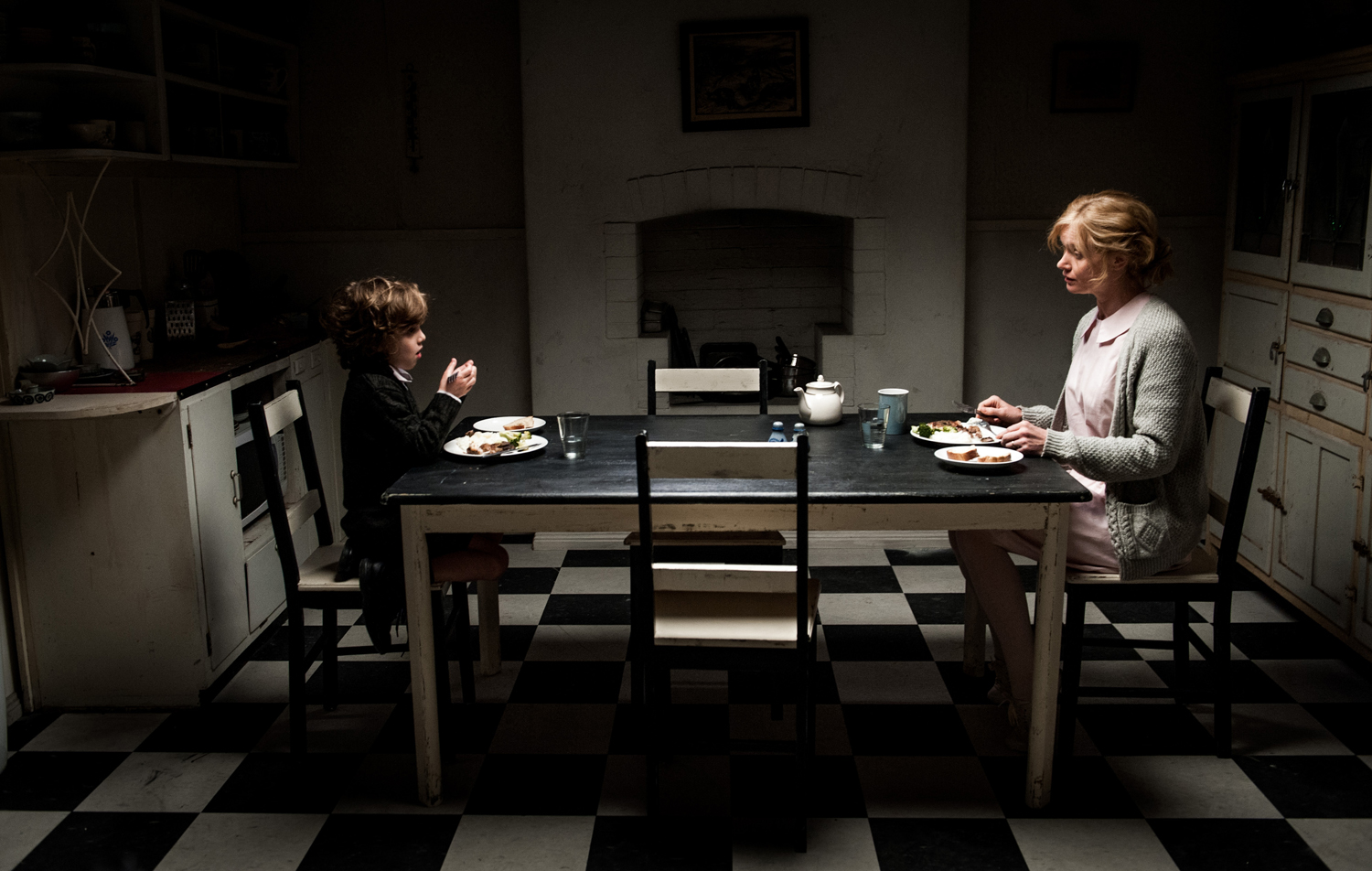
Each of the films at FrightFest were preceded by a short selection of trailers and one of a series of films encouraging viewers to “Turn Your Bloody Phone Off”, after years of people not doing exactly than and causing much wailing and general abuse in FrightFest audiences. On Thursday night, one of the films also came with the trailer for The Babadook, which caused at least two people behind me to evacuate their bowels thanks to being generally terrifying.
So there’s two things about The Babadook: first, it’s generally terrifying. The washed-out aesthetic of the family home, full of dark blue hues and lingering shadows may not be the most original horror setting but it’s superbly executed, every dark corner full of constant menace. The Babadook is also a magnificently ominous creation, especially given that he’s a character in (admittedly the world’s darkest and most twisted) children’s book. When the book appears without warning on their bookshelf, mother Amelia (Essie Davis) and son Samuel (Noah Wiseman) think it’s just another bedtime story, but Samuel becomes obsessed with the story. Raising her son without the father killed in an accident seven years earlier is hard enough for Amelia, but as Samuel’s very soul seems to be overtaken by fear of the monster, Amelia also finds herself pushed to breaking point.
The second thing is that there’s more to The Babadook than just some carefully constructed scares. What really makes The Babadook work so well is the level of investment that writer / director Jennifer Kent puts into Amelia and Sam’s relationship and backstory. Both Davis and Wiseman give perfectly pitched performances, Wiseman with the wide-eyed terror redolent of highly strung Danny Torrance from The Shining and Davis visibly fraying at the edges as the stress of her situation continues to pile on, but it’s the accident that took Amelia’s husband that haunts her as much as any fictional character ripping itself from the pages of a book.
Taken in combination, the emotional resonance from the script and the unnerving images of Amelia and Samuel’s gradual haunting produce a gripping story that worms its way into your mind before scaring the living senses out of you. I’ll just say this: it’s my third year at FrightFest, but I’ve been watching horror in cinemas for over twenty years, and yet while I’ve seen and heard people jump countless times in horror movies, The Babadook was the first time I’d heard someone properly scream in a cinema. Twice.
The Score: 9/10
Next time: Sunday, and a full day pass to a half dozen horrifying treats. (I also skived off church. Well, you have to have some priorities, don’t you?)
Film4 FrightFest 2014 Day 1: The Guest, Sin City: A Dame To Kill For, Zombeavers
For the past two August Bank Holiday weekends I’ve entertained myself with a day at Film4 FrightFest, quite possibly Europe’s most prominent horror film festival and now in (I think, too lazy to Google, sorry) its fifteenth year this year. I’d originally started going after looking for a replacement event when Empire Magazine’s various summer conventions stopped three years ago, drowned under ticket debacles and poor organisation from third parties involved in setting up the events. (I’d gone from BIG SCREEN to a big scream, if you will.) This year, with a bit more free cash flow and Mrs Evangelist already otherwise engaged over the weekend, I decided that maybe I could manage a couple of days. Then I discovered that I was otherwise engaged on the middle Saturday, thus ruling out the day I’d gone for the past two years. Through a combination of indecision and a willingness to spend money without thinking, I have somehow this year ended up with three day passes (Thursday, Sunday and Monday), as well as two single tickets for Saturday evening once my other commitments are done.
 Last year, I’d finished off with mixed emotions. The final film, Cheap Thrills, is probably the most enjoyable I’ve seen in my two days at the festival, but it was preceded by an announcement that the cinema we were in, the main screen at the Empire Leicester Square, wouldn’t be there in its present form by next year. The main auditorium (left) was 1,300 seats, and despite being a complete cavern with poor acoustics, once the place was packed and watching a great film it came alive; it even made R.I.P.D. seem reasonable, so it must have been doing something. Since then, we’ve learned that it’s been replaced by an IMAX screen, and while it’s great to now have one directly in the West End, it just doesn’t have the capacity of the old venue (having been split in two as part of the IMAX development). So this year the festival has shuffled down Leicester Square to the previous venue of its all nighters, the Vue West End.
The move has not been without teething difficulties: even with three screens, rather than one, the seating capacity is down by a couple of hundred seats and many attempting to book day or weekend passes endured significant difficulties. These seem to have extended to opening night, as I saw several instances of people discussing with cinema staff how they weren’t in their expected seats and in some cases, weren’t even in the same screen as their friends. This could prove interesting as the films are looping round the three screens, so it may take half a day for everyone in the three main screens to have all seen the same films. There are definite pluses, with the screen capacity for the two Discovery screens now significantly increased, and the festival has also taken over the bar area. You’re also still slap bang in Leicester Square, so the possibilities of popping down the square and ramming your face full of sweets between screenings at the freakish M & M Store still remain.
Anyway, my judgement got the better of me, and I booked a Thursday evening pass before discovering I was in a meeting at work in London the same day. I managed to escape my office, in the shadow of St. Paul’s Cathedral, around 17:55 and then embarked on a perilous and potentially decapitating trek across a soggy London in rush hour, waving my rusty umbrella in the faces of anyone who dared block my path. Apologies if I did manage to have any heads off or eyes out with my umbrella, but it was all in a good cause and much in the spirit of the occasion.
The Guest

First up was The Guest, the latest from American director Adam Wingard. Wingard has contributed to anthology films including the first two V/H/S sets and The ABCs Of Death, as well as giving us last year’s well received country house thriller You’re Next. Wingard has a trump card for The Guest in the shape of Dan Stevens, who you might know better as Downton Abbey’s Matthey Crawley. I don’t know Downton at all, but on this evidence I might be tempted to give it a go. Stevens is David, a soldier who’s just been discharged from the army and calls in on the family of a recently deceased fellow platoon member. He’s invited to stay and quickly ingratiates himself with the family, winning over the sceptical father (Leland Orser) and handing out an ass-whooping to the school bullies threatening son Luke (Brendan Meyer). It’s only daughter Anna (Maika Monroe) who starts to suspect David might just be too good to be true, but as local reports of trouble turn to corpses, she might not be able to convince her family before it’s too late.
Where You’re Next was aiming for old-fashioned chills in a dark country mansion, The Guest is lighter and airier in almost every sense. There’s a slow-burn set-up before a second act sequence reveals the true nature of the family’s visitor. That sequence is so packed full of clichés that you’d almost think it was stock footage, dropped in purely for exposition, and there’s little to surprise in terms of plot developments, but it does pay off later in the film with some bombastic gun battles. The Guest is absolutely Stevens’ film, as he swaggers, broods and brandishes his butter-wouldn’t-melt grin, an avenging anti-hero roaming through the town and having huge amounts of fun in the process. Many of the laughs are knowing, but none the worse for that, and by the climax – set in the Hallowe’en dance at the local school, naturally – the perfect pay-off to a supremely entertaining dark comedy. The only shame is that it was shown at tea-time on a weekday, as it should best be enjoyed late on a Friday night with a beer in hand and a few mates for company, but the FrightFest crowd still lapped it up.
The Score: 8/10
Sin City: A Dame To Kill For

Somehow Robert Rodriguez and Frank Miller have managed to prevaricate for nine years about pulling together a follow-up to their genre defining, über-stylised noir Sin City. The closest anyone had ever come to ripping the pages of a comic book out and pasting them onto a cinema screen, it inspired a thousand imitators but its green-screen driven, washed out aesthetic and mix of stark primary colours against the black and white framing left a mark that’s been difficult to erase from the memory, but also nigh-on impossible to replicate. Rodriguez and Miller have had a second attempt to capture lightning in a bottle, this time with Miller contributing two new stories to further adaptations of his own comic books, and with a story structure that attempts to function as both prequel and sequel to the original anthology.
Consequently, a mixture of characters return from the original, with Mickey Rourke, Bruce Willis, Rosario Dawson, Jessica Alba and villain Powers Boothe cropping up again, while others have been recast either due to death (Michael Clarke Duncan being replaced by Dennis Haysbert) or narrative reasons (Clive Owen now benched in favour of Josh Brolin). Most notable newbies this time are Joseph Gordon-Levitt and Eva Green, and the cast is further fleshed out with the likes of Ray Liotta, Juno Temple, Christopher Lloyd and even Lady Gaga in small roles.
As valiant an effort as it is, sadly the magic from the original doesn’t sustain to the same level here. Sure, there are plenty of individual moments that titillate or thrill to some extent, but the plot seems to be working against them forming a coherent whole. The chapter style feels more choppy than it did first time out, and if you’ve not seen the original recently I’d suggest a little homework might be in order to keep track who’s done what to who and who knows who might just help. Green is the most effective addition to the cast, devouring any man within a five mile radius and flaunting here curves against some (almost comedically convenient) shadows covering up her lady bits.
Tonally, this follow-up has more flashes of Machete and its sequels, Rodriguez’ other pet project since the first film, and the all-pervading sense of gloom and the brutish noir feel of Sin City are replaced by something which feels that, if left alone, it would have sagged into full-blown parody after another half an hour. There’s also a great trick of Miller’s script attempting to empower the female characters but still coming off as weirdly misogynistic much of the time.Oddly the 3D, while being expertly realised, works against the mood and heightens the plastic artificiality to the detriment of what’s being attempted in a narrative sense, and it also increases the “uncanny valley” feeling of the eyes of many of the leads; especially bizarre when these are real people, not CGI constructs. A moderately pleasing follow-up, then, and one that will grate or irritate as often as it impresses.
The Score: 6/10
Zombeavers
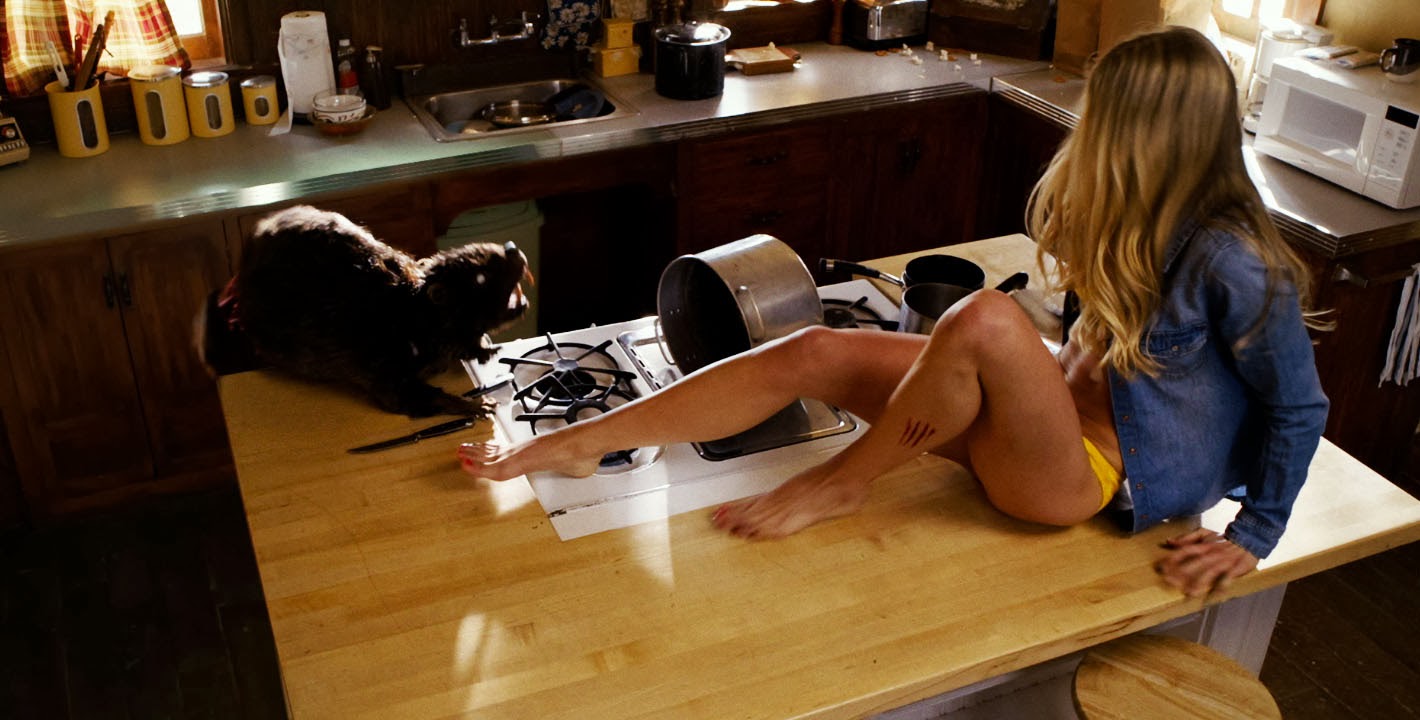
Zombeavers doesn’t waste any time setting its stall out: a pre-credits sequence which features two idiotic truck drivers engaging in weird banter before running over a deer and, in the process, spilling dangerous chemicals over possibly the most fake-looking animatronic beavers ever captured on film. Zombeavers is a B-movie in heart, soul and beaver. At 76 minutes it (just about) doesn’t outstay its welcome, throwing in just about all the tropes you’d expect and leaving out all the originality you’d expect as well. Very much a midnight movie that’s a cut above the normal level of quality and laughs you’d get from a SyFy channel-type movie, but it never quite manages to get past the one joke of its premise. The highlight for me was the gloriously inappropriate Sinatra-style song over the closing credits, but the rest of Zombeavers still manages enough moments of bitey, rabid looking fun to make it worth a watch.
The Score: 6/10
Friday was a work day for me, but I’m back in on Saturday for The Babadook (which, on seeing the trailer, caused the person sat behind me to develop Tourette’s though fear alone) and Life After Beth.
Review: Boyhood

The Pitch: Before College.
The Review: What were you doing 12 years ago? It’s easy to delude ourselves that adulthood is a static progression of work, pub, sleep, rinse and repeat until we’re ready to retire, older, greyer and not necessarily wiser. Twelve years ago I bought my first house and got my first mortgage, and since then have gotten married, become a cinema obsessive, a choral conductor, put on six stone, lost half, put it on again – twice, losing it again, and you get the idea. While I’m a completely different person now to the one I was then, there’s no doubt in my mind that the period of my life with the most change – and also the most formative of my formative years – was the 13 years and two terms I spent at school. Coming of age and teenage movies are two a penny, and there have been some great examples, even in the last couple of years (The Way, Way Back and The Kings Of Summer, for example). There’s also a few examples of characters or series documenting the passing of time; both Francois Truffaut and Michael Apted have done this in fiction and fact respectively over the course of half a lifetime, and even Linklater’s Before trilogy has taken snapshots of a relationship at decade long intervals. But Boyhood is the most deliberate attempt to compress the passing of time into a single narrative, squeezing a dozen years into a running time closer to three hours than two.
We first meet Mason (Ellar Coltrane) without much pomp or fanfare on a typical school day, just doing what young boys do: from laying on the grass, dreaming to spray-painting a local underpass, little in his life is remarkable. His parents (Patricia Arquette and Ethan Hawke) are recently separated, and Mason and his sister Samanthan (Lorelei Linklater) find their first few years of school regularly disrupted as their mother’s family circumstances change and their father is often nowhere to be found. Over the course of the next twelve years, we see friends come and go, new figures appear in family life, and Ellar’s development from confused infant to disgruntled adolescent through to shy, undemanding teenager as his voice drops and his facial hair rapidly sprouts (and presumably his other hair; thankfully Linklater keeps some of the more generic facets of growing up tastefully out of sight).
It’s a tricky balance to strike: there are occasional flashes of danger, but nothing remotely approaching peril, and when there’s potentially enough story to cover a trilogy’s worth of three act structures and more. Either despite, or perhaps because of, the lack of drama Boyhood is a calm, almost pacifying watch. Richard Linklater has never been a proponent of excessive camera moves or technical chicanery, but even the long single takes of the Before films which allowed so much character development are largely dispensed with here in favour of shorter, almost truncated scenes. In one example, we see the first blossoming of a crush as Ellar is passed a note in class; rather than dwell on or explore the moment, it serves as a reaction to something else that’s happened and we skip on to the next small life event. Rarely does a single scene in isolation feel revelatory, but by the third hour the cumulative effect of the life experiences sees something remarkable take shape.
There’s probably a feeling that stunt work in action cinema is still more impressive if you know it’s been done for real, rather than added with CGI later. Boyhood is one giant stunt in terms of its dramatic concept, but it rises above that to become something else entirely. Individual scenes are rarely, if ever, grandstanding theatrics or visually operatic, but the long progression of cause and effect gradually amounts to something much greater than the sum of its simple parts. Watching the time lapse of both a childhood and the world around it is surprisingly gripping, and the decision to mark the passing of time with technology – a new games console or Face Time on an iPhone – and with not-so-subtle references to the political landscape of the time allows the story to flow more freely and to develop organically.
Linklater also allowed his narrative and his cast to develop organically, matching Mason’s childhood to Coltrane’s own interests over time. The casting is eerily perfect – the six year old Mason is very much his mother’s child, while his gradual evolution into a physical resemblance closer to his father is uncanny. He lingers in the background of many scenes, observing rather than reacting, but his performance evolves into something quietly touching over the years. Hawke continues to be a revelation twenty years in the making, another successful long term collaboration with Linklater after the Before films, and Arquette is also allowed to shade her character beautifully, both the parents showing at least as much change and development as their young charge. Boyhood is a quietly powerful, accomplished journey through school years and is more successful than Linklater might have dared hope twelve years ago; he and his cast have captured something unique, uplifting and life-affirming and with it Richard Linklater may just have confirmed his place as one of the great American storytellers of his generation.
Why see it at the cinema: In this case the most obvious benefit is the feeling of watching the characters evolve over time; broken into chunks if watched at home, it cannot help but be less effective than absorbing in one showing in the confines of a cinema.
What about the rating: Rated 15 for strong language, sex references and drug use. That’s boyhood right there; maybe we didn’t need a three hour film after all? (Yes, yes we did.)
My cinema experience: Watched at the Abbeygate Cinema in Bury St. Edmunds, now a true independent again after the Competition Commission wrangling of the past year. Thankfully the new owner’s intentions are very much to keep the place in the style to which Bury residents are accustomed, so I was able to sit back for 164 minutes in my favourite cinema seat in the whole world and enjoy another Linklater masterpiece.
The Score: 10/10
Review: Oculus

The Pitch: Through the looking glass? You’ll never be through with the looking glass.
The Review Recipe For An Old School Yet Still 21st Century Horror Movie:
Ingredients
1 previously unused high concept**
1 editor-turned-director such as Mike Flanagan getting his big directing break
2 well known genre actresses such as Karen Gillan and Katee Sackhoff (although the genre can also be science fiction)
1 character actor such as Rory Cochrane who you can’t quite place but has been in lots of things
1 up and coming actor such as Brenton Thwaites who learned his craft in Australian soaps
2 child actors who look close enough to their adult counterparts and can act scared
1 small cup gory moments
1 small cup jump scares
1 large box creepy contact lenses
1 selection of other standard principles of horror movies
1 willing suspension of disbelief
1 satisfying climax (optional)
** the high concept may have previously been used in a half hour short film made by the same director eight years ago
Instructions
1. Take a short film made eight years ago and allow a director with an unproven track record in feature films to expand that short into a full length feature script.
2. Base your script around a high concept – say, a haunted and possibly possessed mirror – that’s simple enough to understand yet hasn’t been used yet (other than in your short).
3. Cast two actresses well known for roles in niche genres (in this case science fiction) to ensure you’ll draw in a crowd based purely on their casting. One of them can be well known for a family sci-fi show, but this should still be enough to get a decent crowd through the door and guarantee you a return on your investment.
4. As with good Italian cookery, use a small number of high quality ingredients; other than the two actresses, no more than another four or so characters in the main cast should allow you to keep focus on the plot.
5. Ensure you do your preparation early. Give one character all of the exposition behind your high concept and get her to deliver it all in a rapid fire manner in the first act, giving plenty of resting time and allowing the film to breathe. Remember to remove the exposition once you’ve used it, so as not to distract from what you’re trying to achieve in the film’s present.
6. Stir in your small selection of horror devices, mainly jump scares and gory moments, but spread them evenly through the mix for the most effective results. You should also be able to work in a number of other horror conceits, including flashbacks, foreshadowing, blurring of fantasy and reality and characters who look otherworldly and stand in the back of scenes not speaking. (Ideally give them all creepy contact lenses to increase the otherworldly feel.)
7. Allow to simmer for about an hour, keeping the film on a low light level to allow the tension to rise naturally; you need to avoid the tension dissipating like an overcooked soufflé.
8. Gradually ratchet up the tension levels, which should slowly draw good performances out of your leads once the exposition has been delivered. Using a director with an editing background should also keep scenes moist and tasty.
9. You will need to gradually sift in your willing suspension of disbelief, given that the lead character’s plan is ill-advised and you would expect reasonable people to abandon it long before the characters here start to have doubts.
10. After an hour and a half, you should be ready to add the denouement icing. If your mix of ingredients has been good enough, your audience may even be prepared to overlook a slightly rushed climax that feels true to the concept but slightly underwhelming given the build-up.
11. Serve in multiplexes and other mainstream cinemas, and expect your lead actress to go on to appear in a major comic book franchise and a terrible-looking American sitcom.
Why see it at the cinema: For a film so entirely reliant on mood for you to get the best out of it, there’s no better option than finding the darkest room possible, with the loudest and best sound system and a screen that encompasses your field of vision, totally immersing you. I think they call them cinemas. Who knows, there might be one near where you live?
What about the rating? Rated 15 for strong bloody violence and horror. Yep, just in case you hadn’t worked it out for yourself, this film contains horror. Thanks, BBFC.
My cinema experience: With my wife on a training course and me giving her a lift, I took the chance to spend the time between pick-up and drop-off at the cinema (in this case Cineworld in Huntingdon). Consequently, this gave me a chance to undertake one of my favourite occupations in cinema: watching a horror film in a darkened cinema at 10:30 on a Saturday morning.
This was the first time I’d experienced Cineworld’s new allocated seating policy in the cinema, and the person at the concessions stand selling me my ticket asked where I’d like to sit. My preference is always for somewhere with legroom, so I normally go for aisles or the front of blocks unless the seats are particularly spacious. When I got into the cinema, I was given a seat that was four rows from the front of the block and five seats in from the aisle, and with as little legroom as most of the seats in the cinema. Not an auspicious start for the new policy.
The Score: 8/10
Review: 22 Jump Street

The Pitch: 21 Jump Street: Part Deux.
The Review: In the filing cabinet of “Great But Nonetheless Pleasant Cinema Surprises Of The 21st Century”, somewhere in between “you can make a good film out of a pirate fairground ride” and “Robert Downey Jr. will earn $50 million dollars a film”, you’ll find a rather thick file stamped “21 Jump Street”. Case notes in this particular file include “you can make a great comedy out of an Eighties TV series that hardly anyone remembers”, “Channing Tatum is a great comic actor” and “double Academy Award nominee Jonah Hill”. OK, that last one doesn’t have anything particular to do with the 2012 film or its sequel which we’re considering here, but hey, who saw that coming? Who even thought he’d be the talented one out of Superbad? Anyway, I digress: in the draw underneath in the filing cabinet market “Least Surprising Things To Happen In Cinema In The 21st Century”, 21 Jump Street did rather well, returning a $200 million worldwide gross off the back of a $40 million budget, so Tatum, Hill and the Jump Street gang have moved over the road to 22 Jump Street.
What you want from a sequel is enough of what you liked about the original, but with enough new elements to keep you invested in the follow-up. In a spectrum that runs somewhere from “Alien / Aliens” (radical reinvention) to the two Hangover movies (completely identical, but with all of the joy cynically sucked out), I’m pleased to be able to report that somehow 22 Jump Street is much closer to the Aliens end, despite being almost identical to the original. No, hold that: 22 Jump Street works so well because it plays with the audience’s expectations of rolling out exactly the same elements again. From Korean Jesus to a dangerous drug trip and extreme male bonding, 22 Jump Street feels like a comfortable pair of gloves that you’ve take out of the draw, ready for another winter, but sometime during the summer someone’s pimped them out with seven kinds of bling and redone the fur lining with a gorgeously soft exotic animal. Everything’s familiar, just a little bit more expensive.
The main subversion this time around is that while school was nothing like the school Schmidt and Jenko experienced – giving Hill’s Schmidt the happy school experience he never had – college is exactly like it was when the pair were probably too dumb to get into it, meaning that Tatum is now in his element and Hill’s the one that’s struggling. Other than that, it’s a re-run of the original plot: the two attempt to infiltrate the educational-based drug ring with hilarious consequences. And they are hilarious: I’m a generally quiet and reserved person in real life, and I regard any good comedy to be one that can make me physically laugh out loud on more than one occasion. Both Jump Street addresses pass this test comfortably, and at one point I was rolling around in danger of falling off my chair. The lack of the element of surprise does mean the laughs don’t quite resonate as loudly, but there’s not much in it and if you enjoyed the first one, the second won’t disappoint.
There are a few new elements to keep things fresh, including a slew of new comedy staples from American TV to complement the likes of the returning Nick Offernan and Rob Riggle. There’s also more Ice Cube this time around, in a move that should disappoint precisely no-one, and additions of new supporting characters as Jillian Bell as an acerbic roommate and The Lucas Brothers as stoner twins in the college dorm also raise some of the biggest laughs of the follow-up. The extended budget does allow for bigger car chases and explosions (oddly, this leads to the only disappointment as the opening port chase feels anticlimactic and lacking in big laughs) but whether it will result in a similarly large box-office return remains to be seen. However, the film even gets a dig in at this concept, along with pretty much every other preconception you’ll have of sequels in general and this one in particular, and the steady supply of laughs and the fact that Tatum and Hill’s easy chemistry burns just as brightly make this a successful return to Jump Street. It seems, between this and The LEGO Movie, that directors Phil Lord and Chris Miller can currently do no wrong; hopefully they’ll now be as much the go-to guys for comedy as J.J. Abrams has become for science-fiction with huge amounts of lens flare.
Why see it at the cinema: Likely to be one of the year’s biggest comedies, and you’ll enjoy it that much more with an audience around you. The action scenes aren’t bad, but not as essential to be seen on the big screen.
What about the rating? Rated 15 for frequent strong language, strong sex references and violence. Also, BBFC, with reference to your extended classification, I’m not sure you really needed the quotes around “fisting”, but whatever.
Should I sit through the credits? The opening of the credits runs through so many possibilities of future sequels, most of which you’ll wish you could watch in full, that you’ll wonder where they can go if they do head anywhere else on Jump Street. (My suggestion: kindergarten teachers. Swearing, drugs and small children: killer mix.) There is a final gag at the very end, and while it may not be worth sitting through the credits for, it made me smile.
My cinema experience: Seen at a Saturday afternoon showing at the Cineworld in Cambridge (where they sold me a ticket to 21 Jump Street; I didn’t feel it was worth aruging). The Cineworld has recently introduced assigned seating, but rather than take my designated seat in the middle of the main block, as the cinema was half full I took my more usual seat on a side aisle. Since I was then out on my own, I had the odd experience of almost feeling as if I was watching in a different cinema, with the laughter in the audience weirdly displaced. No point in going to the cinema if you’re not going to get involved.
The Score: 8/10
Review: X-Men: Days Of Future Past 3D

The Pitch: X-Men: Days Of Sideburns And Flares.
The Review: I was never much of a comic book reader as a child, other than traditional British fare like The Beano and The Dandy. It wasn’t that the concept of comic books didn’t appeal; far from it, as I spent large chunks of my adolescence in comic book stores, I was just there for the latest TV and film merchandise from my favourite franchises. Comic books always felt somewhat alienating for their complex universes, and I never felt comfortable attempting to pick up in a franchise that had sixty years of back story. Slowly but surely, the film franchises are heading the same way, and the Avengers and X-Men series are both at a point where coming in fresh to the franchise will prove alienating and frustrating.
For those keeping score in the XMCU (X-Men cinematic universe, as probably no-one apart from me is yet calling it), the tally is so far one decent, one amazing and one muddled film in the original trilogy; one dire and one passable Wolverine spin-off; and one fun, fresh and revisionist take on the younger versions of the characters that seemed almost impossible to reconcile with what we knew was to come. Undaunted, many of the key players in both the franchise’s high and low points behind the scenes have returned to attempt to draw these plot threads and characters together in a single film. In theory it’s a simple premise: Kitty Pride (Ellen Page) has been using her powers to send someone’s consciousness back a few hours and use the future knowledge to help win otherwise impossible battles with highly advanced, adaptive robots called Sentinels in an era when both humans and mutants are all but extinct. Deciding the only way to win the war is to stop it before it starts, the franchise’s own odd couple Professor X and Magneto (Patrick Stewart and Ian McKellen) decide to send someone back using Kitty’s power, but only Wolverine (Hugh Jackman) can survive the trip. Once back in the Seventies, he must stop Mystique (Jennifer Lawrence) from killing Sentinel designer Bolivar Trask (Peter Dinklage), but will need to get younger Charles and Erik talking first (James McAvoy and Michael Fassbender).
If that paragraph didn’t make a lick of sense to you, I suggest you give up now and turn back. Those also expecting detailed explanations at how the future mutants have either regained powers or survived should also lower expectations now. While many of the film’s set-pieces can be enjoyed on their own – especially the opening future battle showcasing a host of new mutants with exciting powers and no time to get into their character traits, and the standout scene with new super-speedy mutant Quicksilver (Evan Peters) and a Pentagon break-in – whether or not the character arcs stand up on their own is more debatable. In terms of development, there are only three characters who get any serious work: once again, the focus is on young Magneto, Xavier and Mystique. Fassbender continues to exhibit the same directness as McKellen did, while Lawrence is a mass of whirling limbs and is in blue more often than not. The standout this time is McAvoy, who gets to explore his own evolution more thoroughly and his struggle on whether or not to use a drug created by Nicholas Hoult’s Beast to enable him to walk at the cost of his powers carries the most dramatic weight.
Pretty much everyone else is a cypher, even Jackman as Wolverine who here is little more than a plot device who gets to react to the latest dramatic development. The biggest waste has to be Peter Dinklage, effective but woefully underused in the rush to give everyone a line of dialogue or two. With even minor mutants from the original trilogy and First Class populating the background, some of whom I didn’t even remember on first watch, there is an occasional feeling of the plot straining at the seams under the sheer weight of mutants. You may be too entertained to care, as Days Of Future Past rattles past at a fair old lick, and Singer directs with the same flair he brought to the series high of the first sequel. I also hope you’re not too attached to the original trilogy, as by the time the dust settles it’s unclear how much of them even happened in this new timeline, but in this case if you’re thrilled by this instalment, it’s probably enough. The USP, and strength, of the X-men series has been their service as an analogy for any groups suffering segregation, abuse and injustice, and while these themes are still at play, they’re slightly more to the background here and DOFP is more action movie, first and foremost; that’s no bad thing, as there are only so many times you can wheel out the same moral or message before it feels stale. Where many other comic book franchise episodes feel like they’re biding time before the next chapter, this X-Men movement has substance and feels pivotal while still leaving you wanting to watch the next in the series. It’s to the credit of all involved that there still feels plenty of life in this franchise, but let’s hope the coming Apocalypse can thin out the X-roster a little and keep the series relatable.
Why see it at the cinema: It’s another big Hollywood mash-up, and with a decent supply of humour and some epic visuals – as anyone who’s seen the trailer will testify – the cinema is the sensible choice to get the most out of this one.
Why see it in 3D? The two main issues for any 3D film are both related to seeing what’s going on clearly. In terms of editing, Singer favours long takes and steers away from choppy editing, and in this sense the third dimension works well. Much of the future setting, though, is very dark and although I could always work out what was going on, sometimes I was straining hard to see everything.
What about the rating? Rated 12A for moderate fantasy action and infrequent strong language. I’d hate to be a director of a major studio tentpole knowing that the best you can aim for is “moderate”, but as moderate films go, no complaints here.
My cinema experience: A Tuesday night at my local Cineworld in Bury St. Edmunds, another person to show my ancient Cineworld card to and to convince them it still works, and a sizeable audience taking advantage of cheap Tuesday prices which meant
The Score: 8/10
The X-Men Movies From Best To Worst (because these things matter to some people):
1. X2: X-Men United
2. X-Men: First Class
3. X-Men: Days Of Future Past
4. X-Men
5. The Wolverine
6. X-Men: The Last Stand
7. X-Men Origins: Wolverine
Review: Godzilla (2014)

The Pitch: The ever-so-slightly-less-jolly green giant.
The Review Extended Pitch: ROLL UP! ROLL UP! Ladies and gentlemen, take your seats for the ninth wonder of the world, behind the Pyramids, those other six that no one can ever remember and how Miley Cyrus manages to have a career! WITNESS the enormity of a fifty year old legend! Only realise if you’ve seen an infographic somewhere that he’s much, much bigger than any of his predecessors! DON’T let your memories of a wizened lizard with a ridiculous chin from the Nineties put you off; this monster is SERIOUS! As is every human being he comes into contact with! Be RELIEVED that Warners gave responsibility for this to someone who’d proven himself with a monster movie, rather than just the nearest hack looking to make a quick buck! MARVEL at just one summer blockbuster that isn’t reliant on a comic book character (apart from all the comic books featuring Godzilla, including the Marvel series from the Seventies).
BE ASTOUNDED by the simplicity and directness of the plot! WATCH as a scientist (Bryan Cranston) attempts to convince everyone he’s not crackers and that something otherworldly is about to throw the world into DANGER! SYMPATHISE with me as you realise that I normally write a whole paragraph on the plot, then realise that this might be quite a SHORT paragraph! Be RELIEVED as the plot starts in Japan, staying true to Godzilla’s roots! FEEL SLIGHTLY UNCOMFORTABLE as you realise the enormous parallels to a real life Japanese disaster, then become JUST SLIGHTLY MORE COMFORTABLE as you notice allusions to other major global catastrophes but realise it’s all being done reasonably tastefully for a disaster movie! Be THANKFUL that the plot aims for simplicity and realism, rather than the convolutions of some of its predecessors! Be AMAZED that such a simple plot (monsters fight each other, humans chase around after them to generally very little effect) still manages to generate so much interest and, just occasionally, TENSION!
Be EVEN MORE ASTOUNDED at the wonders of Incredibly Convenient Man! OBSERVE as Aaron Taylor-Johnson follows the path of Godzilla so closely ACROSS TWO CONTINENTS that the monster would be within his rights to file for a RESTRAINING ORDER if he wasn’t a monster and so unable to follow DUE LEGAL PROCESS! Become SLIGHTLY DISAPPOINTED that no-one else much has anything significant to do unless they’re a monster! Be GRATEFUL that the likes of Sally Hawkins and Elizabeth Olsen are willing to invest nothing roles with feeling and give them a lot more than they deserve! ENJOY Bryan Cranston and Juliette Binoche while they last, because they’re not exactly the leading roles you might have thought! WONDER just how Ken Watanabe seems to know exactly what Godzilla is thinking at any given point, and how the movie would have played out if he didn’t! (It’d probably be a LOT SHORTER!)
Be AMAZED at the monsters, who all seem to be invested with more character development than most of the humans! Be IN AWE of the images that Gareth Edwards has composed, including FANTASTIC scenery with lumps knocked out of it and STUNNING vistas such as a group of HALO parachute jumpers descending into the maelstrom created by the monsters! Be ASTOUNDED by the sheer scale and weight of Godzilla and the other monsters, and be ASTONISHED at just how epic Edwards makes the adventures of his monsters feel! THINK BACK to the likes of Jurassic Park or even Close Encounters, for Godzilla the film contains truly Spielbergian levels of wonderment, beauty and sheer scale. TRY NOT TO GET HUNG UP on the lack of real character development in the humans, consider this a monster story that just happens to have some people in, and you’ll truly get the most from this monster mash-up. Be, er, (gets out thesaurus) FLABBERGASTED that Godzilla succeeds where Pacific Rim fails, and makes a monster movie to truly care about, rather than just witnessing oversized reptiles and insects clobbering each other! RUN NOW to your nearest auditorium to WITNESS the SPECTACLE that is GODZILLA!!!
Why see it at the cinema: I don’t care how big your home cinema is, it’s never going to have quite the same impact as seeing this humongous beasts going at each other on the big screen. Immerse yourself for the best experience.
What about the rating? Rated 12A for moderate violence, threat. Is that moderate threat as well, you might be wondering? Thankfully the extended classification confirms that it is, although if 300 foot high monsters are a moderate threat, I’d hate to see what’s at the top of that scale.
My cinema experience: The second half of a late night double bill at the Cineworld in Bury St. Edmunds. With it being quite late on a Tuesday evening, consequently a pretty empty screening allowed me to sit pretty much where I wanted with my traditional cinema fallback of a bag of Revels and a large drink.
The Score: 9/10
Review: Frank (2014)

The Pitch: Getting inside your head.
The Review: Never having been a great sleeper, at least until I settled down for domestic bliss with Mrs Evangelist, I’ve watched a lot of late night TV over the years, most of which in the Nineties in the UK on a Friday night would have been somewhere between a talk show, an old fashioned revue and a freak show. Saturday morning TV was also a student staple that carried over from childhood, and was generally a lot more wholesome, if often just as irreverent; oddly, there was at least one character who managed to fit in comfortably with both, a relentlessly cheerful man who sang songs, occasionally had a hand puppet and spoke in a broad northern accent. All the while, he dressed in a suit, wearing a giant papier maché head in the style of a Max Fleischer cartoon and calling himself Frank Sidebottom, when he was actually called Chris Sievey. He had a band called the Oh Blimey Big Band and one of its members, now journalist Jon Ronson, has co-written a film using Frank as his inspiration.
Rather than a jovial Mancunian, Frank is now an American trying to make it with his band of eccentrics on the UK music scene. With an unpronounceable band name (The Soronprfbs) and a collection of dysfunctional members, Jon (Domnhall Gleeson) ends up filling in for their drummer when he’s found raving in the water on a local beach. Before he knows it, Jon is holed up with the rest of the band attempting to record an album in an Irish holiday home, with only the sympathetic manager Don (Scoot McNairy) on his side. Desperately unable to channel his own musical input into the band and seemingly only able to antagonise Frank’s right hand woman, highly strung theremin player Clara (Maggie Gyllenall) and can’t even communicate with the others, so his only outlet becomes expressing his frustrations on Twitter and posting videos of the band on YouTube. Unwittingly, that strategy might be the path to fame and fortune that the whole group craves, if they can keep themselves together for long enough.
You have to disassociate the real life Frank from the fictional one here; while Sievey might have kept his head on for an hour or two after performances, Michael Fassbender’s Frank never takes his off, a conceit played out for a number of teasing moments through the course of the film. There’s nothing to really give away that Frank is Fassbender; he disappears into the head convincingly and thoroughly, and he’s a charismatic oddball that offsets the angst and misery of his fellow bandmates. It’s needed because everyone else in the band is resolutely one-note, as much – maybe more so – caricatures than Frank and his giant head are. Gleeson perfected his ginger Hugh Grant, slightly shy English routine in About Time and gets another chance to roll it out here, but he’s no more sympathetic than any of his emotionally frigid colleagues (Frank excepted). The humour derives from a mixture of desperation and pathos, and while there’s a number of stand out moments, the tone is uneven and uncertain, causing the film to occasionally feel like its lurching about blindly. The social media overlay, with Sherlock-style onscreen text for Jon’s Twitter and YouTube postings, somehow feels at odds with the shambolic, gangly and old-fashioned thread of the band’s story, and the two never gel satisfactorily.
Disassociating Fassbender-Frank from Sievey-Frank also serves another purpose: to be able to go along with the basic conceits of the film, that there must be a reason why a man chooses to wear a giant paper head 24/7, rather than “just because”, and that creativity is borne most successfully out of pain and suffering. The resolution of the first thread does at least allow Fassbender to deliver some great work, but feels over-engineered. It also serves only to underpin the idea that creativity is a burden to be exploited by tortured souls, and never feels more than a passing thread, an idea looking for a better script to hang itself on. Frank the film is stranger than both its fictional and real-life counterparts, but has only fleeting pleasures and ultimately rings as hollow as the famous head.
Why see it at the cinema: If you don’t have a home cinema set-up, then the opening minute or so will be something of a cinematic novelty as every speaker gets a workout. There’s a decent enough selection of laughs as well, for which you’ll hopefully have a full cinema to make the most of it.
What about the rating: Really, BBFC, this should come with a [SPOILER ALERT]. But it’s rated 15 for very strong language, strong sex and a suicide scene.
My cinema experience: Saw this as the second part of a double bill with Blue Ruin at the Cambridge Arts Picturehouse. With no gap between the two, I made sure I had my e-ticket on my phone to be scanned in, rather than one of those messy bits of paper. However, I confused the heck out of the person on the door when I walked out of the cinema and presented him with my phone; normally it’s the other way around.
Also, teeny bit of a grumble that the Corridor Of Uncertainty at the Arts seems to be hitting 20 minutes regularly when it used to be a nailed on 15 minutes before the film. Getting dangerously close to multiplex territory.
The Score: 5/10
 The Movie Evangelist