film
Double Review: Mirror Mirror / Snow White And The Huntsman
 The Pitch: Well, I like Julia Roberts, but I also like Charlize Theron. Which is better? There’s only one way to find out…
 FIGHT! Poetry.
The Review Poem:
Mirror, mirror, on the wall, who is the fairest of them all?
The story of Snow’s a familiar fableBut this year new versions have come to the table.
One from a man who made J-Lo’s The Cell
(A film which was totally cinema hell),
And one for whom this would be his debut movie,
Which of the two Snows would be the most groovy?
The trailers suggested that Tarsem was barking,
But both had ambition, and neither just larking.
Mirror, mirror, on the wall,
Who is the weirdest of them all?
Surely it’s Tarsem, last seen with Immortals,
Visuals cracking, but his scripts are poor tools
For rich storytelling, and always a let down
Most thought he’d struggle to take the Snow White crown.
So what could he conjure with Roberts and Hammer,
Could he mix darkness with plenty of glamour?
Sadly his film is a mixture of tones
Where most of the humour will prompt only groans.
Julia Roberts has most of the fun here,
She’s enjoying herself being evil, it’s quite clear.
Less certain’s the rest, Arnie Hammer’s too dry,
And Nathan Lane’s hamming might just make you cry.
No one thought Phil Collins’ daughter’d be highbrow,
But sorely distracting is her giant eyebrow.
The one saving grace, apart from the sights
Are the dwarves, those short guys are pretty all right.
They and the Queen really capture the mood
Of theatrics, but sadly the rest ain’t much good.
It’s all quite forgettable, just a bit boring
I wouldn’t blame your kids if they started snoring.
Once more poor old Tarsem’s let down by the writer,
If only the plotting had been a lot tighter.
Mirror, mirror, on the wall,
Who is the dullest of them all?
Could it be Twilight, the family Cullen,
Both Edward and Bella, perpetually sullen?
Well Eddie’s been off with that Cronenberg geezer,
And Bella’s now Snow White; it’s not hard to please her
For she’s got a role as a more modern Snow,
But does just a mud bath allow her to grow?
This Snow has to face a more miserable lot,
Her Dad’s dead, the kingdom’s going to pot,
Charlize Theron is the Queen – what a witch!
Less campy than Roberts, and more of a bitch.
There’s hints though she might be just misunderstood,
But mainly she’s wicked, and up to no good.
To off her stepdaughter she calls in Chris Hemsworth,
But will he? It could be much more than his job’s worth.
This Snow puts much more of grim into Grimm,
But falls down on such a peculiar whim!
Rather than men who’re smaller in stature,
This Snow has full sized dwarves comin’ straight at ya!
(But I don’t mean literally, for it’s not greedy
This movie felt no need to sell out to 3D.)
Familiar faces are shrunk down to size,
But they don’t quite look right, bamboozling your eyes.
Apparently real dwarves are no more in vogue,
For this version their dwarves have gone a bit rogue.
So “tall” men, from Nick Frost to Ian McShane
Are playing the dwarves, but I tell you it’s plain
That these guys are imposters, it’s eerie and weird,
Like British thesp bobble-heads, not to be feared.
But somehow the fake dwarves are still much the best part,
For this Snow is already lacking a real heart.
She’s easily better than Phil Collins’ sprog,
But Kirsten’s charisma still matches a log.
She tries to inspire, to fight and to rule
But she’s got the depth of a paddling pool.
Hemsworth’s no better, and only the “midgets”
Will keep your attention and save you the fidgets.
In terms of the parts that deserve the least credit,
Whoever filmed fight scenes knows not how to edit.
Mirror, mirror, on the wall,
Who is the fairest of them all?
In terms of the Snow Whites, it’s probably Kristen,
Even though not gold, she still has more glisten
Than Lily and her mob, and slightly more fair
In tone and intention, but it’s tough to care
About either of these films; instead of a winner,
I’d like to declare both Snow Whites a dog’s dinner.
Why see it at the cinema: Both have impressive visuals, and SWatH would actually win out on the battle scenes if you could make out what was going on in them.
The Scores: Mirror Mirror: The Untold Adventures Of Snow White 4/10
Snow White And The Huntsman 5/10
Review: Rock Of Ages
 The Pitch: Cinderella / Rocker fella.
The Review: “Welcome to Hollywood! What’s your dream? Everybody comes here; this is Hollywood, land of dreams. Some dreams come true, some don’t; but keep on dreamin’ – this is Hollywood. Always time to dream, so keep on dreamin’.”
Recognise it? It’s the narration from Happy Man, the random black guy who wanders into shot like a Morgan Freeman tribute act in Pretty Woman at either end of the film. Pretty Woman has become an all time classic in many eyes, taking two unlikely bedfellows – big business and prostitution – which actually have distinct parallels. Somehow, those two feel an easier marriage than rock music and the musical, which in theory should work better together. Now, I’m an expert proponent of the air guitar, wielding an imaginary axe as well as the next man, but at the same time I’m also a fan of musical theatre (not, in this case, a euphemism), but while the two share musical notes and a tendency for the flamboyant, they feel like two magnets with the same magnetic pole, both with a strong attraction but unable to connect to each other. Can Rock Of Ages prove this theory wrong?
No. No it can’t. What Rock Of Ages actually consists of are a succession of rock standards sung in a musical style, stripping away the essence of what made them great in the first place. There’s a few, like Extreme’s “More Than Words” that have a softer rock style which make an easier transition, and a couple of performances on stage where the song can be played straight rather than musical-ised. The biggest success on that front comes from the biggest film star in the world playing the biggest rock star in the world: Tom Cruise lets his hair down and has an absolute blast as Stacee Jaxx, accompanied everywhere by a baboon and ending up face down in his own swimming pool with absolute grace, he does a fair job with the big songs and it’s impossible to take your eyes off him, especially in his interview with Malin Ackerman’s smitten journalist.
The rest of the cast, not so much. Diego Boneta and Julianne Hough are utterly forgettable as the star-crossed lovers, doing a moderate job with the songs and very little else. Catherine Zeta Jones attempts to take huge chunks out of the scenery at any opportunity, sharing almost no screen time with her husband Bryan Cranston while the movie attempts to work out which of them, or indeed Paul Giamatti’s manager, should be the antagonist. Most of the laughs, such as they are, are left to Russell Brand and Alec Baldwin as the rock promoters, and if you can get past Brand’s accent – attempting to do for Birmingham accents what Dick Van Dyke did for Cockernees – then he and Baldwin make a reasonable double act, especially in their unexpected duet.
The key difference between the likes of Pretty Woman, and indeed director Adam Shankman’s previous work on the Hairspray remake and the episodes of Glee he’s directed, are that there’s a sense of fun sorely lacking in places. Rock Of Ages has neither the true camp value of the best tongue-in-cheek musicals or the best rock performances, and there are long stretches where you long for something – anything – interesting or just plain different to happen. Overall it’s enjoyable, but it’s unlikely to be inspiring singalongs in London cinemas twenty years from now, and the plot is so simplistic that it struggles to justify the two hour run time. The key similarity between this and Pretty Woman are how dangerously easy it is to fall into the sex industry in Hollywood; apparently a few days working in a bar, hanging round on the Hollywood sign and some relationship difficulties are just about enough to push you over the edge. Take heed, any young girls – some dreams come true, some don’t, but keep on dreaming. Just make sure it’s a dull sex dream with Tom Cruise in it.
Why see it at the cinema: Russell Brand’s Woilver’ampton accent has to be heard to be believed, and there are a couple of good songs sung well (as well as several more good songs sung quite averagely). If you hoped never to hear Journey’s now ubiquitous Don’t Stop Believing again as long as you lived, then move right along, nothing to see here.
The Score: 6/10
Review: Moonrise Kingdom
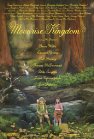 The Pitch: The Scouting Book For Boys, And The Girls With Whom They Want To Elope.
The Review: I’ve become addicted to daytime TV. Not just any old daytime TV, though; for me the Jeremy Kyles and Loose Women of this world hold no appeal. What I’m hooked on is a tea time pairing that tests the most trivial knowledge to the deepest of levels, where two men gently exchange banter and interrogate members of the public. Pointless is the name of the game, and if you’ve not seen it it’s essentially the inverse of Family Fortunes (or Family Feud if you’re American), so 100 people are asked questions and the best answers are given by the fewest people. I can often come up with a pointless answer on the film questions, but one recent episode had me completely stumped: all of the Bill Murray films I could think of, no matter how obscure, seemed to have been thought of. The likes of Ghostbusters and Groundhog Day aren’t a surprise, but when two people out of a hundred remembered What About Bob? and Broken Flowers, surely there was no Murray film left unsaid? In fact, among the list of pointless Bill Murray films sat three with a common thread: Rushmore, The Life Aquatic With Steve Zissou and The Darjeeling Limited.
I pity those two people, if they were the same two people, that despite an obvious level of film buffery they couldn’t recall half of Wes Anderson’s back catalogue, for Anderson and Murray go together like a well-aged cheese and a particularly fine wine. For what feels like an eternity, the world (and his former co-stars) have appealed to Murray to appear in Ghostbusters 3, with a seemingly now terminal lack of success, but he appears in whatever Anderson has cooked up with unerring regularity, ranging from the starring roles of Zissou to the blink-and-you’ll-miss-it cameo of Darjeeling. For fans, it’s not hard to see why Murray keeps being drawn back, like a moth to the flame, but the style of Wes Anderson might also explain why so few people would seemingly count themselves as committed fans, at least in a random sampling of the public. Wes Anderson’s films are easy to identify, both thematically and stylistically, and the recognition factor is dialled up to at least 11 on both counts here. Moonrise Kingdom is resolutely the most Wes Anderson film of any Wes Anderson film to date.
From the opening moments, when the camera glides round the house of Bill Murray and Frances McDormand, turning only at right angles as it winds its way through the corridors of the house to the accompaniment of Benjamin Britten’s Young Person’s Guide To The Orchestra, it’s as if Wes has only one more film left in him, and has poured his very heart and soul into this final cinematic fling. Every single frame is artfully constructed and everything from the main characters to the merest background detail planned to within an inch of its life. Everyone’s been led to believe that silent films and black and white are on the up again in the year of The Artist, and while one could conceivably take great satisfaction from sitting back with the sound off, the intense colour palette and vibrant scenery is as intense an argument as has been made for many a year. Of course, if you did have the sound off, you’d miss out on one of the year’s outstanding soundtracks, Alexandre Desplat’s score perfectly complementing the selections of Britten music that give Moonrise Kingdom its foundation.
There is one particular vocal resonance that’s missing here, for while Anderson stalwarts Murray and Jason Schwartzman both appear, there’s no Owen Wilson to be seen this time around. Filling the gap left by Wilson are the likes of Bruce Willis as the ineffectual police captain of the island, Edward Norton as the scout captain losing control of his brigade (and Harvey Keitel as his stern superior) and Tilda Swinton as the closest the film has to an antagonist in the form of Social Services. (There’s also another specific delight in the form of Bob Balaban popping up as a narrator; if the question was “How ridiculous can we make him look?” then the answer would be “satisfyingly.”) The grown-up performances all feel of the specific world created and are as good as anything else Anderson’s ever gotten from his actors, but they’re all really supporting roles. The stars of the film are the two youngsters, Jared Gilman and Kara Hayward and they give slightly mannered performances that should come as no surprise but still give the moving tableau a beating heart to bring it to life.
The adults around them manage to make life appear extraordinarily complex and awkward, whereas our two young leads glide through life with a reasonable amount of grace and a seeming lack of effort, reinforcing the cinematic stereotype that kids know more about love and relationships than adults ever will. Despite this, the unfolding young love affair grips and Anderson and co-writer Roman Coppola make it incredibly easy to root for them. It’s a simple story at its core, small but perfectly formed, the combination of production values and performances giving it a fable-like quality, oozing charm and packed full of humour and genuine emotion that shines through the mannerisms. For those who have found Wes Anderson pointless in the past, it’s unlikely to win you over, but for those who consider themselves fans of his previous work, this is an intravenous hit of pure joy which should reward repeat viewings.
Why see it at the cinema: If you’re a fan of any of Anderson’s previous work, then Moonrise Kingdom is an absolute must-see. Even if you’re not, then the blinding brilliance of the visual construction of each shot, coupled with a script that provides consistent laughs throughout, make this worth a trip to your nearest cinema. Catch it while you can, and don’t feel guilty about sitting through the end credits.
The Score: 10/10
BlogalongaTrek: Going Where Quite A Few Have Gone Before

In the annals of human history, there have been many grand and historic achievements. The wheel. Fire. The steam engine. Sliced bread. Computers. Putting a man on the moon. Marion Cotillard. The Blogalong. History may not yet have fully grasped the significance of the Blogalong, but the collective analysis and critical celebration of some of the finest movie series the world has ever been produced will one day become recognised for the… Oh, who am I kidding, while it is big and it’s generally been clever, it’s probably never going to be any more than that. However the Blogalongs have, as much as anything else, been a personal journey for those involved in them. (Probably. I’ve not actually asked.) There’s the original, masterminded by the powerhouse that is The Incredible Suit, that is Blogalongabond. Simon Kinnear at Kinnemaniac then took the idea on with his thorough exploration of Tarkovsky in BlogalongaRusskie; the masterminds behind All Of Whine and Space are currently bringing us BlogalongaPotter; and last year I was joined by four other intrepid bloggers to explore the career of Kermit and Miss Piggy in BlogalongaMuppets.
I had seen all of the Bond films before I joined BlogalongaBond, but BlogalongaMuppets was a great introduction to me for the world of Muppet films. Both have taught me things about those films that I couldn’t have imagined beforehand, such as how Sean Connery invented standing on top of lifts in films, or how it’s apparently perfectly acceptable to repeatedly assault a talking pig in a children’s film. There is, though, one series of films which is part of a larger phenomenon, one which I became utterly obsessed with for a large part of the 1990s, and the time has come for me to start what could be my most personal journey yet: BlogalongaTrek. The good news us, you are all invited too.
In the fine tradition of Bond / Russkie / Muppets / Potter, I will be blogging about a Trek film a month until the catchily-titled new film, Untitled Star Trek Sequel (2013) comes out, supposedly on May 17th next year. Twelve films, twelve months, a marriage made in heaven, unlike hot dogs and hot dog buns, which despite being made for each other never come in the same amount. (Seriously, what’s with that? Last night shopping, six buns, ten dogs. I swear they do it deliberately. But I digress.) If you’re a fan of Star Trek, or somehow the Trek films have passed you by for the last thirty-three years, then you could also avoid split infinitives and go boldly with me on the following schedule:
- June – Star Trek: The Motion Picture
- July – Star Trek II: The Wrath Of Khan
- August – Star Trek III: The Search For Spock
- September – Star Trek IV: The Voyage Home
- October – Star Trek V: The Final Frontier
- November – Star Trek VI: The Undiscovered Country
- December – Star Trek: Generations
- January – Star Trek: First Contact
- February – Star Trek: Insurrection
- March – Star Trek: Nemesis
- April – Star Trek
- May – Star Trek II / 2 / 12 / whatever
It’s almost frighteningly simple. Here’s how it works:
- Watch the movie for the month in question.
- Write about that movie on your own blog.
- Post a link to that blog post on the Facebook page, which you’ll find here.
- I will then add the link to the BlogalongaTrek page here.
- I will also pimp your blog on Twitter to my followers, for retweeting and general larks.
If for any reason step 2 presents a problem, and you’re reading this but don’t have your own blog, but would like the world to know just why you think that one with the whales and the curly blond woman is the best / worst / most confusing film ever, then I’ll happily host your thoughts on this blog right here, giving me the air of a madman with multiple personalities.
So what qualifies me to be the person to captain the USS Blogalong on this voyage? Well, apart from the fact that it’s MY IDEA, only a little shamelessly ripped off, I have long had a Trek addiction, which reached its peak at around 1994. But it wasn’t always this way. I can remember skipping over parts of II and III when they were on TV in the Eighties, not really sure why they were trying to rip off Star Wars – badly – and blissfully unaware that there was a TV series behind it all. Then Star Trek: The Next Generation started on TV, and I quickly became sucked in, starting to buy the VHS tapes, each with two episodes, so I could see them before they were on TV. By the time Deep Space 9 started, I was buying rental copies at £35 a pop of key episodes to get them early, I went to my first sci-fi convention to see Denise Crosby – who was lovely, I might add – and then, in a comic book store, I purchased a life size cardboard cut-out of this woman, in this uniform, which I had in my room at uni for the last two years despite it being only 9′ by 6′.

For much of the Nineties, I was a hardcore Trekkie, then Voyager came along and helped to bring me back to normality. Well, almost.
If you don’t already own them, the good news is that they’re dirt cheap – a box set of the first ten is around £30 on Amazon, or DVDs are about £4 each, with Blu-rays a snip at £7 a pop, if you’d prefer to pay in installments. I can’t sugar coat it going in, this is not eleven masterpieces of cinema that you’ll potentially be watching. I would say four of them are genuinely great, and two are genuinely awful, with the other five so far falling somewhere in the middle. But that’s just my view. You’ll get to hear a lot more of it over the next twelve months, but what do you think? Get watching, and get writing, and may the force be with you. Or something.
Review: Prometheus 3D
 The Pitch: At the foothills of the mountains of madness.
The Review: It’s been thirty-three years since Sir Ridley Scott first announced himself to the world at large with Alien. Inspired by the epic sweep of Star Wars and the potential that such images and ideas had in the cinema, he took a small crew into space, ripped them to shreds and terrified audiences everywhere. During that thirty-three years, we have come to find ourselves living in a world of sequels, where seemingly no story is ever truly concluded, and so the thought of Scott returning to that world, in which many others had played with different ideas but only James Cameron had received similar acclaim for, excited audiences the world over. The potential of another Alien film like Alien seemed too good to pass up, a chance for a further exploration of the world, and one which had many unanswered questions, not least what else was on LV-426 when the crew of the Nostromo set down on company orders. In the months preceding the release of Prometheus, excitement reached fever pitch, then rapidly turned to angst; the trailer seemed to deliver enough Alien related goodness, but when discussion even turned to the classification that the film would receive, with seemingly nothing less than a 15 / R rating satisfying the fans, all watching previous Alien movies in anticipation, could anything ever hope to live up to the high expectations set for it?
Except in the rush to proclaim this an Alien prequel, with the expectations of the same qualities as the original, everyone seemed to forget that no two other Alien movies have ever sat in the same genre. Alien was effectively a haunted house movie in space, for all its sci-fi trappings and unbearable tension; Aliens the classic war movie, the Dirty Dozen sent to pick off the enemy in black; Alien³ was a nihilistic prison movie, despairing at the nature of life and death; and Alien Resurrection had mutant DNA running through its core, the darkly comic contrasting with the horror of the cloned creations. It should come as no surprise to anyone willing to give it a moment’s thought that Prometheus is keenly ploughing its own furrow, looking to explore not only how the aliens may have come about, but also how we came about as well, and Prometheus could well be the first pure sci-fi of the series.
Consequently, it stands alone as a film that can be watched without pre-knowledge of the series, but one that also calls on the themes of each of the earlier (or is that later?) films, even if the key call out to Alien Resurrection initially appears to be incredible basketball skills. The core motifs of the series – other than a giant black alien with two mouths and acid for blood – are all present and correct. There’s the strong female lead in Noomi Rapace, a different twist on the gradually empowered Ellen Ripley who’s looking for answers she may not want to find; the corporate tool, in more than one sense of the word, as Charlize Theron lays down the law and takes matters into her own hands in equal measure; the friendly grunt (Idris Elba) who’s unshakably on the side of good, and the absolute standout here, David the android (Michael Fassbender), who’s working to his own agenda but avoids the more Pinocchio-like clichés of other obvious robots. This sense of familiarity in the characters, coupled with Prometheus telling a new story using many of the story beats of the other films, gives Prometheus an oppressive sense of familiarity, and for anyone familiar with the series a gut-wrenching sense of inevitability sets in as whatever’s still on the planet starts to reveal itself.
Prometheus then becomes a fascinating mix of the old and the new; grappling with new ideas that extend well beyond the claustrophobic scope of any of the films with Alien in the title, but at the same time having some fun with the old ideas and investing new life into them. The one thing guaranteed to disappoint those most hoping for another film cut from exactly the same cloth as Alien, rather than just cut into a similar style, is that this is more sci-fi than horror, looking to engage your mind rather than send it screaming. On the ideas front, the only failing is the insistence to have to explain some events in total and absolute detail, especially given that this leaves as much open to speculation as Alien did; to attempt to leave much unexplained, and then practically shout explanations in your face for the remainder, is both disconcerting and ultimately disappointing. For anyone else who’s ever contemplated either the nature of existence, or even what that blue fluff collecting in their belly button is, there should be a decent amount to enjoy. When Scott does turn his hand, in a few brief moments, to horror it’s the equal of anything in the series, queasily uncomfortable scenes that could leave you clasping your belly, Ripley-like, in sympathy. Prometheus is about two minutes too long (and those are absolutely the last two minutes – if you’ve any sense you’ll leave when you see the duffel bag, and you’ll enjoy it more on its own terms if you do), but the marriage of big, unexplained ideas and gorgeous cinematography and production design mean that there’s life gestating in the warm body of this franchise yet. Fancy another go, Cameron?
Why see it at the cinema: Visually stunning, which almost goes without saying being a Ridley Scott film, and there are just a couple of sequences that you’ll want to see so you can chat with your mates in the pub afterwards.
Why see it in 3D: Ridley Scott does about as well as anyone has with 3D in terms of creating a depth of field, and the crisp images and bold shots work pretty well with the extra dimension. Despite the dark sets and gloomy images, the image has been sufficiently brightened that you can still watch indoors with sunglasses on and make out everything that’s happening. If you’re a fan of stereoscopy, then do make the effort for Prometheus.
The Score: 8/10
Review: Men In Black III
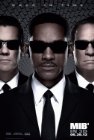 The Pitch: Special Ks.
The Review: When I was growing up, the likes of Tomorrow’s World on TV always fascinated with their unlikely and outlandish gadgets, like machines that could print on the outside of an egg without breaking it, shiny discs that contained a whole album’s worth of music, or small flashing pens that could erase your memory. Well, I can’t actually remember seeing neuralisers on there, but they must be real, as surely nothing else can explain how I can’t remember anything that happened in Men In Black 2? I definitely saw it, and I vaguely remember Rosario Dawson being in it, but other than that one of the most downright disappointing sequels of all time seems to have been forever expunged from my grey cells. Is the only solid argument for another sequel, so long after the second in the series, that it’s being produced in the hope people might remember it this time?
The one immutable of the series has always been the presence and the star power of Big Willie. Since rapping out the theme for the first movie, one of the world’s biggest stars has become synonymous with the MIB brand and he’s front and centre in MIB 3, so much so that this rapidly becomes his journey, his narrative and emotional arc, not least because the universe manages to forget his partner about ten minutes in. While Smith is as reliable as ever, the movie does take something of a risk by shuffling Tommy Lee Jones out early on and replacing him with Josh Brolin, but it’s a brave call and one that pays off well, Brolin’s uncanny version of an unfeasibly young K never causing you to doubt for a second that he is the pre-incarnation of the curmudgeonly Jones, and Smith and Brolin thankfully manage to capture just about the same odd couple chemistry that Smith and Jones did previously.
The reason for the body swap is time travel, an old fallback of the sci-fi genre and one that can work very well, but that can also become catastrophically confused in the wrong hands. Other than the opportunity to interact with a few historical scenarios, such as a well thought-out Andy Warhol sequence, and to see Brolin do his thing, the time travel never feels fully exploited, and also isn’t applied entirely consistently throughout the film. Men In Black also stood out for its freakish bad guy as well as its coterie of unusual aliens, and this also feels another partial success, Jermaine Clement’s bad guy generating moderate amounts of menace but feeling oddly bland at times. Emma Thompson and Alice Eve also leave little impression as the replacement for Rip Torn’s Z, written out no doubt to Torn’s real life exploits. The rest of the quality of the original, from the background alien design of Rick Baker to the jaunty Danny Elfman theme, is present, correct and reassuringly familiar.
What Men In Black 3 does lack most is big laughs. The series has never been laugh out loud funny, but there’s never more than mild chuckles raised here. But what it does lack in laughs it makes up for with an emotional core, driven out of J’s relationship with both generations of K and the plot’s success in giving their partnership a real sense of meaning lacking in both of the earlier sequels. The most enjoyment will be derived from slightly resetting your expectations, as director Barry Sonnenfeld and writer Etan Cohen focus on the relationship and the characters, and most unexpectedly those not entirely hard of heart may even shed a little tear at the end, and even with time travel you’d have done well to see that coming. For all the rumours that the script arrived half-finished, the plot is maybe the most satisfying of the series and while you might not be longing for a fourth trip to the alien well, it might at least take you a little longer to forget this one.
Why see it at the cinema: The opening prison escape and the final Apollo 11 set-piece are both well designed and justify their place on the inside of a multiplex this summer. The cinema screen also gives you the best chance of capturing all of the tiny background details first time, including all of the celebs-who-are-really-aliens on the screens at the back.
The Score: 7/10
The Half Dozen: 6 Most Interesting Looking Trailers For June 2012
There’s something about June. No, not a sequel to There’s Something About Mary, which will probably appear in two to three years when Ben Stiller and Cameron Diaz have finally squandered all public goodwill on unwatchable rom-coms, but there’s actually something about the month of June. It’s when the weather normally transitions from utterly miserable to just about bearable in this country, and it feels just that fraction more wasteful to be spending the few sunny days that we have inside a dark room full of seats and a big screen, even if it is air conditioned. (Watch now, as I have probably jinxed the whole thing and condemned the country to thirty days of storms.)
So it does feel that films released in June somehow have to make just a little more effort. It’s normally the lull in Blockbuster Season, which kicks off in May and is now biding its time until the onslaught of spider-men, ice ages and men with pointy helmets clogging up multiplexes everywhere in July. Now, June might also be the month this year that Prometheus has been unleashed upon the world, but if there’s anyone not utterly worn out by the endless procession of marketing which has both raised and unfairly directed expectations for the film itself, then you’re a hardier character than I am.
But my selections for June still have plenty of variety – there might not be space aliens or men dressed as bats, there are black and white horses, a freakish looking hedgehog, a stovepipe hat and R-Patz himself. If that’s not value for money, I don’t know what is.
The Turin Horse
Managing to best even Ridley Scott’s impressive visuals, the most striking trailer of the month features is supposedly the last feature from Hungarian director Bela Tarr, and if you’ve ever seen any of his previous work in a cinema, award yourself ten bonus points. In the year when a black and white film walked off with the Best Picture Oscar, there’s never been a better time to get your black and white horse film into distribution. Anyone with black and white meerkat films in the pipeline, you’d better get a wriggle on, these fads never last long.
A Fantastic Fear Of Everything
My attraction to this film has become somewhat perverse, as the word of mouth from those I know on Twitter that have seen it is astonishingly bad in the main. I don’t know what compels us as humans to look at the accident on the other side of the carriageway as we’re driving past, but that same instinct is driving me to understand what the bloke from Kula Shaker and the guy with red on him have managed to cook up. Ideally, the more awful, the better.
Abraham Lincoln: Vampire Hunter
I’ve seen this trailer twice now in cinemas, and both times it elicited an identical response. People seem generally interested in the setting, there’s the usual buzz and background murmuring, the odd bit of excitement as the trailer ramps up towards the end… and then the title card reveals itself, and when the words “Abraham Lincoln” and “Vampire Hunter” appear on screen, there’s a lot burst of incredulous disbelief, as several hundred people who hadn’t heard about this (and who still laugh at the Orange mobile ad every single time) go “WTF?” as one voice. Oddly satisfying.
Cosmopolis
I discussed my formative experiences with David Cronenberg a few months back, and ever since the first time I saw The Fly Cronenberg has been on my list of directors who simply need to make a film and I’ll be there. His last couple have been good without being great, and apart from a naked fight and Keira Knightley’s impersonation of the Giger alien downhill skiing they had nothing to really make them stand out. This looks satisfyingly like a return to crazy, ideas filled, off-the-wall Videodrome-era Cronenberg, and that makes me very happy. Kristen Stewart hasn’t yet risen above her Twilight role, despite getting all shouty in Snow White and the Huntsman, so let’s hope Robert Pattinson gets more to do here.
Killer Joe
I was going to put Polisse in here, but couldn’t think of a single thing to say about the trailer. Sure, it looks good and all, but… So at the last minute I swapped it out for this one instead, the latest from William Friedkin, with a great big NC-17 warning on the front of the trailer. That kind of insane last-minute decision making is just the way I roll.
The Fairy
You wait ages for a film about Le Havre, then two come along at once. In case you missed it, the other one was called Le Havre. Bit of a giveaway in the title, there. This one also notable for the horrified reactions in the YouTube comments sections of those who’d seen it, and obviously aren’t in the target demographic.
Review: The Raid (Serbuan maut)
 The Pitch: Attack the block.
The Review: Once in a generation, a film comes along that defines everything that follows, and few films have been as influential in terms of concept as Die Hard. Rapidly becoming a shorthand for the succession of action movies that followed, everything from Die Hard On A Bus (Speed) to On A Boat (Under Siege) was given a convenient high concept to relate to the audience. It seems we’ve gradually come full circle; earlier this year we had Die Hard On A Ledge and now The Raid presents a riff that takes a lot from the original concept: tall building, police officers, master criminal, high stakes… It should come as no surprise to the cynical, based on that description, that The Raid is actually nothing like Die Hard at all.
If I were to pick a more recent comparison, I’d liken The Raid more to Scott Pilgrim vs The World. A series of fights, highly choreographed, with a videogame-like level structure and regular boss-style battles. A dilapidated Indonesian tower block might seem an unlikely setting for an action movie; even more so once you consider that the very Welsh named Gareth Evans is in the director’s chair. Gareth’s actual style is almost the polar opposite of Edgar Wright, for although they might share an active camera Wright relies on the medium he’s paying homage to, be it fast cuts or videogame framing, to get his effect. Evans sweeps around the building more serenely, but when the fights come the camera locks in and fights of increasing length are captured in single takes to impressive effect.
The action is undeniably impressive to watch – it’s the first 18 rated action movie I can recall in a while that justifies that rating – and should set even the most action movie-hardened of hearts racing, but The Raid falls down in two key areas. When compared to classic action movies, The Raid has ramped up the excitement and pared down the dialogue and story to the bare minimum. What’s left is a little too threadbare, not quite providing enough to invest in the characters or why they continue to beat seven shades of crap out of each other. The actors are generally better fighters and stuntmen than they are actors, which is not to say they’re bad actors, rather that they probably won’t be troubling the main acting categories come awards season. The one standout is Ray Sahetapy as the big boss Tama, oozing menace and not being afraid to get his hands dirty, but the remainder are serviceable and nothing more.
All of these might be unfair criticisms of an action movie, but the best examples of the genre manage to balance explosions, fighting and talking, and in this case it is possible to have too much of a good thing. It’s also possible to say that of individual sequences, and while the Indonesian martial arts on display are fierce, every punch landed carries with it the weight of repetition. One of the final fights runs for over six minutes, and becomes a war of attrition as the characters involved wear each other down, leaving the audience at risk of knowing exactly what that feels like. The Raid will satisfy anyone with a craving for a rush of pure cinematic adrenaline, but it might just be a single hit rather than a repeat visit, as The Raid isn’t quite the classic that the hype would have you believe.
Why see it at the cinema: No doubt in my mind that the visceral impact of the fights will lose something at home, so best to immerse yourself in the building, and by that I don’t just mean 15 storeys of criminals.
The Score: 8/10
Bond Legacy: The Living Daylights

When BlogalongaBond first started, there were two certainties as far as Bond was concerned; that Sean Connery would be held up as the gold standard to which all others would be compared, and that pretty much everyone would have a different favourite Bond. My mother won’t actually watch Bond films any more, so convinced is she that Connery is unimpeachable in the Bond stakes and that anyone else would pale so much by comparison that they wouldn’t even be worth her time. For pretty much everyone else, the grimness of the later Moore years is over, and we come into the modern Bonds. For me and for many others of my generation, Timothy Dalton was the first new Bond in my lifetime. He was also the first new Bond in the sense that my house got its first VCR in 1985, so the Dalton Bonds were the first that I was able to watch in the comfort of my own home about the time that they were released. Thus Timothy will always be the tiniest Bond in my overly literal mind.
But it takes a big man to impose himself in a series that was becoming so stale you could practically see the fetid bacterial cultures forming up there on screen. That man, a long time candidate who now seemed in prime position, was Pierce Brosnan. Sadly for Pierce, some scheduling shenanigans at NBC kept him tied to his Remington Steele role for six more episodes, just long enough to rule him out of the Bond timeframe and instead to let someone who’d been thought of even longer as a possible Bond sneak in. Step forward one Timothy Dalton.
Both Dalton and The Living Daylights get a lot of things right that the series had been getting badly wrong. Dalton is belivably stern and occasionally patronising, but in a very satisfying manner, where Moore had lost that sense of quiet authority as age overtook him, and where Dalton’s quips are frothy and entertaining, Moore had become dangerously lecherous and positively leering. The action scenes are also ratcheted up by several levels of intensity, and the set pieces are some of the best in the series since the Seventies. The overall tone is more even and some of the wilder excesses are reined in, making The Living Daylights the most satisfying Bond film since The Spy Who Loved Me.
But enough of that, what we’re concerned with in Bond Legacy is the lasting impact that these films have had on each other and the world at large, and there’s still mean on them bones even fifteen films in.
1. Putting the (re-)boot in
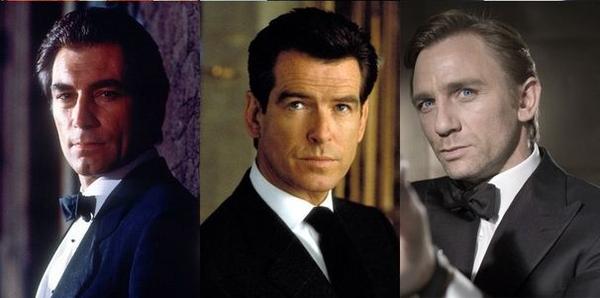
With a new Bond came a change in tone and a leading man as different to his predecessor as Lazenby was to Connery. But this time that change drove a shift in the tone, and it wouldn’t be the first time in the next couple of decades that a change in personnel would drive a change in ethos in the Bond films. The Living Daylights was almost conceived as a prequel, intented as a full reboot of the franchise, but that fresh slate was another twenty years away, and even then it still had Dame Judi Dench sprawled all over it.
But the coming of Dalton, Brosnan and Craig has seen a rethink in style and tone each time, and The Living Daylights was the first to really show that the mould really can be broken, or even thrown away and started with afresh, as long as you keep enough of these legacy elements to ground the audience.
2. Double trouble
There was one change afoot on the musical front as well, as while John Barry was still providing excellent music (and even gets an onscreen cameo this time around), the main public focus as far as music in Bond is concerned has always been the title track. Duran Duran had hit number 1 in the US with A View To A Kill, a first for the series, and that in trun reinforced the need in the producer’s minds to have a big name act to write the theme tune, and indeed sing the theme tune.
So Chrissie Hynde got shuffled to the end credits, and A-ha burbled out The Living Daylights once John Barry had sufficiently Bonded up the backing track. (Hynde can also be heard on the evil milkman’s Walkman, so she didn’t do badly.) But this started a trend of different tracks on the opening and closing credits, with often the composer’s first choice – and consequently the better tune – getting shunted to the end credits, rather than being an accompaniment to the usual parade of scantily clad ladies in fantasy settings that kicks off proceedings.
3. The name’s Aston. Martin Aston. No, wait…

The other notable feature about The Living Daylights is the return of the Aston Martin. James Bond’s vehicle of choice had been a prominent feature in the Sixties, but apart from a blink and you’ll miss it showing in Diamonds Are Forever had been largely absent. Dalton’s debut might have seen a V8 Vantage Volante rather than the earlier DB5 or DBS, but The Living Daylights sees the return of the classic car maker with some tooling about on the ice that was ripped off homaged in Die Another Day. Only two of the Bond films made since this one haven’t featured an Aston of some variety, and for many men, myself included, an Aston Martin would be near the top of the shopping list if our numbers ever came up on the lottery. Ideally one with giant rockets and an ejector seat. (Well, if money’s no object…)
Next time: Somehow I have to break the news gently, that I’m not a huge fan of License To Kill. Gulp.
For more Bond related japes and in-depth analysis, visit BlogalongaBond.
Bond Legacy: A View To A Kill

Finally, the end of the road, a Bond film for which even Roger Moore thought he was too old. He was, of course, quite right. Let’s not beat about the bush, A View To A Kill is awful.
What? You want more? Where to start. There are very few moments that A View To A Kill actually feels like a proper Bond film, except when it’s ticking off the occasional past legacy. But Rog is absolutely going through the motions at this point, and he’s going through them slowly and with some difficulty because he’s quite clearly past it. The rest of the cast resembles a freak show that would put Britain’s Got Talent to shame; Christopher Walken is in full on weird mode, but fails at any point to come over as threatening; whoever thought Grace Jones could act needs to be taken out and shot; and poor old Patrick Macnee looks like he’s stumbled in off the set of an entirely different film and is now being kept as Rog’s slave.
(A note on those old legacies, though: while I didn’t list it out originally, pretty much any Bond film with either a large set of henchmen or international investors gets them together and sits them round a table, and the cunning twist here is that the table has been set up in – an airship! What larks. It is the most Bond-like moment in the whole film, so thanks to whichever film did it first. [hurriedly scrambles back to start watching Sean Connery Bonds again])
If any of the action scenes redeemed it, it mightn’t be so bad, but there’s some Paris-based rumblings that are faintly ludicrous at best, and a chase on a fire engine that feels like a deleted scene from Herbie Rides Again rather than a main set piece in a Bond film. Almost no-one involved with the production has fond memories, and we should just be thankful that this finally convinced everyone it was time to put The Amazing Eyebrow out to pasture and get someone younger and better in. Given that much of the talent behind the camera, including the screenwriter and director, came back again next time, quite how they got it so badly wrong here all round when that can’t all be blamed on the practically octogenarian star is a matter that’s probably not worth expending much time contemplating, but is still somewhat strange.
Anyway, despite being as ripe as a six month old pear at the bottom of the fruit bowl, A View To A Kill still managed to show the power of the Bond brand by having a further legacy or four on the rest of the series.
1. It’s all in the game
A View To A Kill holds the distinction of being the first Bond film to be represented by a computer game. The likes of Goldeneye on the N64 were but ten years away at this point, but the fact that the Bond franchise has produced some high quality games and that one all time classic probably couldn’t have been guessed from the amazingly shoddy graphical adventure unfolding on the C64 and other comparable platforms. Still, we’ve all got to start somewhere. There was almost a game for Octopussy, but it was never actually released; the mind can barely grasp what 8-bit innuendos we’ve been denied by that decision.
2. It’s all in the family

Speaking of talent in front of and behind the camera, one of the most regular names to appear on Bond films is that of Michael G. Wilson. Having had a hand in writing every Eighties Bond, he’d also acted as an executive producer since Moonraker, but AVTAK marks the first time that Cubby’s stepson stepped up to join the big man as a fellow producer. When Barbara Broccoli then joined him on producing duties from Goldeneye, the family template was set and Wilson and Broccoli continue to steer the direction of the Bond series to this day. He’s also had cameos in a remarkable fourteen films of the series, making him the Stan Lee of the Bond movies. (Is it too late to get Stan? He’s ace. Oh, okay.)
3. Board of Bond?
Despite the stunts being mainly ropey, one of them turned out to become iconic after all, and it’s probably a moment that will send shudders down the spines of most Bond aficionados. Snowboarding, despite having been done for around 20 years, was still a niche sport, attracting no attention outside the hardcore skiing world until an old man’s unconvincing stunt double slid down a hill on a converted ironing board to the accompaniment of The Beach Boys. Thirteen years later, it was an Olympic sport. See, even the worst Bond films can be a force for good.
4. The name’s the thing
And just a final note on a legacy first mentioned in From Russia With Love. The tradition of naming the next Bond film in the end credits went slightly askew last time, when Octopussy predicted the next in the series would be called “From A View To A Kill”. Maybe in a sense of embarrassment at getting the title so shamefully wrong, A View To A Kill simply stated that “James Bond Will Return” and left it at that. Without even realising, the Broccolis had given an early indicator of the uncertain future the Bond films were about to start facing…
Next time: Come on, Tim! It’s The Living Daylights.
For more Bond related japes and in-depth analysis, visit BlogalongaBond.
 The Movie Evangelist