film
Review: Lawless
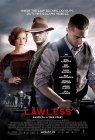 The Pitch: The bad, the ugly and the pretty.
The Review: For two actors who’ve got fairly similar résumés in terms of roles taken, you couldn’t really imagine two more different actors than Shia LaBoeuf and Tom Hardy. Both have mixed more serious roles with blockbuster fair, but LaBoeuf is from the Sam Worthington School Of Modern Acting, where major casting directors inexplicably keep putting him front and centre for major roles, despite his performances being eerily similar from Transformers to Wall Street. Hardy on the other hand is a cinematic chameleon, and comparing his performances in the likes of Warrior and Tinker Tailor Soldier Spy – and that’s just last year – it’s hard to imagine any role that he wouldn’t take a stab at. LaBoeuf had stardom thrust upon him, but at 26 still has the baby face of a young DiCaprio, another actor who had to earn his years before maturing as an actor, while Hardy at 34 has had a long, hard struggle, and his breakthrough in Star Trek: Nemesis ten years ago was a false start before directors such as Nicolas Winding Refn and Christopher Nolan began to find the best ways to tap his unique talents. So, of course, the next logical step for director John Hillcoat is to cast them as brothers.
They might seem like an uneasy partnership at first, but Hillcoat’s previous features, such as The Proposition and The Road, have done a good job of putting together eclectic casts and getting the best out of them. The Proposition was a Western-cum-road movie in the Outback, and The Road a very literal road movie with a post apocalyptic twist that gave it almost a siege mentality. That mindset is a common theme to the claustrophobic setting of the Western, and is pushed to the fore here, a tale of egos too big for the small town even before the outsiders roll up. The themes might be all Western but there’s a Chicago gangster polish, as if we’re on the set of a Sergio Leone epic, only to discover that The Untouchables is filming next door and they’re sharing props and extras. Throw in an Amish-like church community for good measure, and it’s a volatile melting pot just waiting to go off… the problem being that it never really does.
The fault doesn’t lie with (most of) the actors. There’s quality across the board here, from Guy Pearce’s satisfyingly creepy turn as a law enforcer to Gary Oldman’s all-too-brief turn as a high ranking mobster and even Dane De Haan, last seen in Chronicle, giving a measured performance as LaBoeuf’s willing sidekick. Women’s roles tend to be underwritten in these genres, but Jessica Chastain and Mia Wasikowska both do more with what they’re given than we should have any right to expect. The core of the film rests on LaBoeuf and Hardy; Hardy’s stoicism and quiet mumbling resonate and he makes the acting look effortless, while LaBoeuf feels markedly out of his depth when everyone makes acting look so easy around him, and you can almost see the gears changing when he’s required to emote. However, the role does require him to be mainly the cocksure younger brother, which he does with reasonable success, even if likeable proves too much of a stretch at the same time. The performances that will stick with you when the lights come up are Hardy and Pearce, but both are likely to alienate as many as they are to please given their reliance on mannerisms. Taken as a whole, the ensemble works effectively enough.
The real let-downs come in the form of two previous Hillcoat collaborators, Nick Cave and Benoît Delhomme. Both contributed to The Proposition in the same roles, and while Cave’s music (along with Warren Ellis) has been top-notch on both, here Cave’s script is flat, never giving the actors the memorable lines to get their teeth into that would sear Lawless into your memory. Delhomme’s cinematography is also lacking the character that defined The Proposition, and helps to dissipate any tension that director Hillcoat tries to generate, only the odd scene carrying any sparkle or tautness when Lawless had the potential to carry this through from start to finish. Even the violence feels half-hearted, the occasional moment of brutality feeling oddly out of place with the mild mannerisms of most of the rest of the narrative. Lawless ends up an odd concoction, neither Western nor gangster pic and not able to stand up to the best of either genre, and is likely to be a footnote in the careers of both its leads in years to come, but hopefully if it achieves anything, it’ll be another step on the road to Shia LaBoeuf becoming a good actor, a road that Tom Hardy seems already much further down.
Why see it at the cinema: Hillcoat’s love of landscapes isn’t quite as in evidence here as in his previous works, but the framing works well and the inevitable confrontations should at least pack a bit more of a punch on the big screen.
The Score: 7/10
The Half Dozen: 6 Most Interesting Looking Trailers For September 2012
Welcome back to the blog that loves trailers. Wow, I’m really sorry if you’re reading this and thinking, “Trailers? Again?” Due to my continuing commitment to a paid job that keeps a roof over my head and funds my film addiction, but gives me increasingly less time to write about my film addiction, four of the last nine posts on here have been lists of trailers. The bad news to anyone averse to trailers is that there’ll be another one along shortly; for the third year in a row I’ll be living at the Cambridge Film Festival for a week and a half, soaking in everything from the Kristen Stewart starring adaptation of Kerouac’s On The Road to a documentary about a man who makes sushi and pretty much everything in between. In 2010 and 2011 I listed the trailers for everything I’m seeing, and this year’s list – longer than ever before – will be up shortly. But there will be posts this month that aren’t all about trailers. Promise.
But life isn’t all about film festivals, sadly, and the real world still has plenty of cinematic treats to enjoy. It’s Joseph Gordon-Levitt month this month, with Looper (below) and Premium Rush, the Die Hard On A Bike that the world never knew it needed; the new Joe Wright film Anna Karenina, which if it’s at least half as good as Atonement or Hanna will be right up my street; The Sweeney, which has a fantastic looking cast but to which I now have an irrational hatred thanks to the awful Orange “turn your mobile off, slag” trailers running before most multiplex films at the moment; and the new Resident Evil film. If you are keeping Paul W.S. Anderson in work by repeatedly watching these films, then please leave now, we have nothing more to discuss.
There’s a whole host more out this month, much of which will be on the festival list, but for now here’s my pick of the general populace’s best choices this month.
Dredd 3D
I’ve never been a huge fan of comic books; not that I dislike them, I’ve just never really gotten into them. (Apart from buying all four issues of the Robocop vs. Terminator cross-over series for some reason. Go figure.) However, I did have a serious affection for Judge Dredd when I was younger, from 2000 A.D. to the single line strips that would appear in tabloid newspapers. The Stallone version from the mid-Nineties is best forgotten about, but it seems as if all concerned here have tried to keep faithful to the spirit of the original. It’s rumoured that a $50 million take in the U.S. is the minimum requirement to get two planned sequels; come on you lovely Yanks, don’t let us down now.
Tabu
It’s black and white, it’s in the Academy ratio, it and everything else that ticks two out of the three boxes will be compared to The Artist for years to come. The temptation to get a camera and film a black and white, Academy ratio, silent slasher horror comedy just to try to put a stop to that trend has never been greater. (If you’re reading this and you’re a talented director, or a madman with more money than sense, then feel free to make such a film; you’ll be doing us all a service in the long run.)
Paranorman
Why is it that so often these days the best films in terms of adhering to good storytelling principles are animated films? Discuss.
House At The End Of The Street
Jennifer Lawrence might just be the most promising young actress of her generation. Outstanding in Winter’s Bone, it’s not hard to see why she was cast in The Hunger Games and she’s delivered supporting performances in other films which have helped elevate them above their station. So is this the start of her inevitable Halle Berry phase and the descent into bad sequels, or can she enliven this slasher-of-the-month-remake to something more enticing? Let’s hope it’s the latter.
Killing Them Softly
Brad Pitt and Andrew Dominik team up again, after their first collaboration, The Assassination Of Jesse James By The Coward Robert Ford. Thankfully, the title of this one is slightly less spoilerific, although I would still expect some killings if I were you.
Looper
Bruce Willis, Joseph Gordon-Levitt, Emily Blunt and Jeff Daniels in a time travel movie set in the future? Sold. (To be honest, you had me at Bruce Willis.) There were a huge amount of great things about Rian Johnson’s previous film, The Brothers Bloom, and I can’t help but feel it was a decent ending short of being a great film. Take this scene where Rachel Weisz discusses what she collects; if all of Looper is this quality, it’ll be genius.
Review: Ted
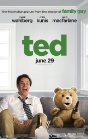 The Pitch: The bad news bear.
The Review: The rise and fall – and then stratospheric rise again – of Seth MacFarlane is one of the 21st century’s more surprising success stories. MacFarlane is practically a brand in his own right, with everything from the hour and a half of animation that now airs with his name on every Sunday night in the US to his acting career in the likes of Enterprise and Flash Forward to even his music career which has seen him singing at the Proms series and releasing a swing album. (Not many would have predicted that when Family Guy was originally cancelled after two seasons.) So a move into features seemed almost inevitable, but the subject he’s chosen a little less so, moving away from the family template that’s served him so well on each of his animated sitcoms and instead looking at the almost Peter Pan-esque story of a boy who couldn’t quite grow up. While the prologue shows us how Ted is magically wished to life, we’re quickly into adulthood, where Ted is still sharing a flat with his buddy John (Mark Wahlberg) and starting to become a thorn in the relationship of John and his long term girlfriend Lori (Mila Kunis). What will it take for John and Ted to finally grow up?
While he’s moved away from the character template to establish a modern day fairy tale, Ted is still closer to the Family Guy template than is practically useful. If you’ve never sampled Family Guy, then the template consists of a thinly stretched narrative, with repeated uses of cutaways to non-sequitur gags which actually provide the vast majority of the laughs. While these cutaways were often broad analogies of the main plot in earlier seasons, as time has gone on the random gags have gotten progressively less relevant, and also less funny, leaving Family Guy feeling even more tired than The Simpsons. (By contrast, another of the McFarlane stable, American Dad, doesn’t have any insert gags, so has to rely on the plot and the characters to drive the humour; it has gone from strength to strength in later seasons.) While Ted starts on the straight and narrow, it has increasing difficulty staying with the plot as the running time elapses, and there’s a faint whiff of desperation setting in by the final third.
If you have your Family Guy bingo card with you, though, expect to score big. Jaunty show-tune style score (from regular FG composer Walter Murphy)? Check? Procession of random celebrity cameos, only a couple of which actually work and one of which heavily outstays its welcome? Check. Extended violent fight scene between two characters that resolves nothing? Check. A smattering of laugh out loud moments surrounded by a collection of tired and predictable gags? Bingo. Ted does get credit for coming up with an original idea and seeing it through, but while it’s not an episode stretched to feature length, neither does it ever truly justify the running time.
What Ted does get right is the casting of its leads; Wahlberg and Kunis both have proven comedy chops and are a perfect match for the material and each other. MacFarlane has three main comedy voices and it’s the Peter Griffin variant in play here; all the fancy motion capture in the world can’t cover up the tired in-jokes (one of which, predictably, references Peter Griffin). It wouldn’t be fair to say that all of the laughs are in the trailer, but it would be fair to say that probably half of them are, and only a wordless cameo from a big name, Patrick Stewart’s shameless voiceover and a couple of jokes that successfully push the boundaries of taste will generate big laughs. If you’ve seen a lot of Seth MacFarlane’s other work, then Ted will feel as old as an antique teddy bear, and not half as loveable.
Why see it at the cinema: You might get lucky and see it with an audience that’s never seen Family Guy, or American Dad, or The Cleveland Show, or most modern, better, comedies. In which case they might well laugh, and that should help stimulate your funny bone.
The Score: 5/10
The Half Dozen: Film 4 Fright Fest Special
Warning: normally this is a PG blog but the trailers contained herein are not suitable for younger viewers. Normal service will be resumed shortly.
It’s been a big month for trailers, at least round here; not only have I published my pick of the month and my Tony Scott tribute list, but here we are with a third selection. And this time it’s personal.
Yes, as mentioned in that earlier monthly round-up, I’m having a day at Film 4 Fright Fest 2012, to substitute for the fact that there’s no Movie-Con or Big Screen this summer. The logistics of this should be fun: the first film starts at 10 a.m. tomorrow morning (meaning I’ll be heading to bed very soon), so I’ll be driving 60 miles to my nearest Tube station and parking up. However, the last film doesn’t start until 11:30 p.m., so I’m expecting to be on the night bus around 1 a.m. on Sunday (or later), back at the car around 2:30 – 3:00 a.m. and getting in around 4 a.m. The sacrifices I make for my craft sometimes…
It should help to address a rather unfortunate imbalance in my viewing this year as well, as The Woman In Black and Prometheus are the closest I’ve come to a horror film this year, and neither are what I’d be looking for in a decent horror. I’m equally at home with psychological horror, deep scares or an all out gore fest, but it’s harder to find quality product in the multiplexes these days. For the last two years I’ve managed to catch a few at the Cambridge Film Festival, but mainstream horror by and large leaves me cold these days, so I can’t wait to see what tomorrow’s got in store.
Right, I’m off to get some well needed sleep, but here’s (some of) the trailers for what I expect to be watching tomorrow, just to get a flavour of what I hope to be experiencing.
Review: The Amazing Spider-Man 3D
 The Pitch: Freaks and geeks.
The Review: When they come to write the history books, they’ll hopefully note the key cultural touchstones of the late 20th and early 21st centuries. The impact of 9/11. An actual Big Brother. Krispy Kremes hitting the UK (and shortly after, my waistline). But one which has as good a chance as any as standing the test of time is the comic book movie adaptation. It’s a genre that first took root in the late seventies with Superman: The Movie and has seen some iconic names captured on celluloid, and many now more than once. For any children of the Seventies or Eighties, there are probably three comic book heroes that stand out, that endure the test of time and that seemingly now need to be reinvented for cinema every ten years or so. While this year sees the end of another Batman cycle, it also sees the start of the third, and most relatable – unless you happen to be a billionaire or an alien, anyway – spandex-clad hero on another round of adventures, and this time Spider-Man is back and making claims to be Amazing. It’s a bold statement, especially when two-thirds of Sam Raimi’s web-slinging saga are still so fondly remembered.
Part of the reason – but by no means whole story – of why Nolan’s Bat-saga has succeeded less than a generation after Burton and Schumaker has their stab at interpreting the mythology is down to how much Nolan and co managed to differentiate their version in both style and substance. It’s not just a case of a different story; other than a man who dresses like a bat and a lunatic in clown make-up, the two approaches have little in common and are all the better for it. So it’s easy to criticise The Amazing Spider-Man for its lack of differentiation, but for all the attempts to bring in additions such as the parents’ back story, there’s an awful lot here that feels an awful lot like Raimi’s Spider-Man. Substitute a lizard for a guy in green on a flying skateboard and you’re practically into remake territory. For those questioning whether it was worth going back to the web quite so soon, the answer is far from a definitive yes.
Raimi’s original Spider-Man wasn’t perfect by any means, and Webb’s version gets as much wrong – especially the odd design of the main antagonist – but it also gets a fair amount right. First and foremost is the casting, which nails its Spidey in the form of Andrew Garfield, all teenage irritability and learning hard lessons as he tries to become a hero, more fuelled by vengeance than altruism in this take and willing to risk making himself genuinely unlikeable for long stretches. By way of contrast, Emma Stone’s Gwen Stacey doesn’t look much like a teenager but does have more charm and charisma than either Kirsten Dunst or Bryce Dallas Howard managed. Martin Sheen makes a memorable Uncle Ben and Dennis Leary a suitably stern authority figure. The let-downs are Rhys Ifans, never quite able to exude the level of menace required and a rather wet and unsympathetic turn from Sally Field as Aunt May.
It’s fair to say that balance of good and bad is also about what The Amazing Spider-Man manages as a whole. Taken on its own terms, there’s a lot to like, with a couple of satisfying action set pieces and a slightly darker tone than you might expect. This does mean that the Spidey wisecracking gets limited to the odd scene or two, and while the romance is good and the web swinging looks authentic, what’s really missing is just a little more fun. It’s a shame as we know director Mark Webb can certainly deliver that, based on his previous effort, (500) Days of Summer, but it’s just about enjoyable enough on its own terms. But there’s an elephant-sized spider in the room; Raimi’s original casts such a cloud that you can almost feel the gears straining as TASM attempts to avoid covering the same ground, and there would have been no shame in wheeling out the same catchphrase about power and responsibility, with this film coming off slightly worse for it. In terms of those cultural touchstones, one looms larger than any other, and the Spider-man series we’ve just had felt like a better reaction to the the mood of the times, as did Nolan’s Dark Knight (but for completely different reasons). When the most that TASM feels like a reaction to is the Twilight movies, you can’t help but feel that this is a reboot too far, too soon.
Why see it at the cinema: Spider geeks will find plenty to enjoy, and the web-slinging action is as crisp and as wide scale as it’s ever been.
Why see it in 3D: I nearly didn’t put 3D on this review, so anonymous is the extra dimension. While there’s nothing wrong with it, it’s absolutely not essential unless you’re a 3D obsessive.
The Score: 7/10 (if you ignore the 2002 Spider-Man, knock at least a point off if you don’t)
The Half Dozen: A Tony Scott Tribute
I awoke this morning to tragic news; Tony Scott, one of the finest film makers of a generation, has taken his own life at the age of 68 by jumping from the Vincent Thomas Bridge near Long Beach, California. I’m sure that the media of the world will pore over the possible reasons for this devastating act in weeks to come, but nothing will ever replace him for friends, family and millions of movie lovers around the world.
When I started this blog, I tried to settle on a name which captured my intentions, to encourage others to watch films and to watch them in a cinema. When settling on the name “The Movie Evangelist”, not only did the name roll off the tongue better than “The Film Evangelist”, but it also captured that sense of what drove my love in the first place. While I’m as happy with the art house as I am with the blockbuster these days, it was my love of genuine movies, the thrill ride best enjoyed in a dark room on a big screen with a large audience, that has fuelled my passion and sees me where I am today, desperately sad that we’re deprived of any more works from one of action cinema’s greatest talents.
But while he spoke the language of action movies fluently, he also worked with some of the best casts of the last thirty years: the likes of Denzel Washington, Gene Hackman and Christopher Walkman cropped up regularly in his films, and it was the combination of great acting, excellent scripts and his unique direction, which was undervalued in his lifetime but already seems to have touched so many as news of his death circulates. In addition, his production company Scott Free, set up with brother Ridley, had also started to produce some real gems in the past few years, and his impact on everything from music videos to big budget films will last for a long time to come.
While I don’t know that I can find fitting words to pay tribute, what I can do is share trailers for some of my favourite Tony Scott movies. I hope watching some of these will inspire you to get out the DVD or the Blu-ray and put them on sometime this week. Normally I would limit myself to a strict half dozen, but to try to sum up such a career in six films seems barely sufficient, but I’m sure you’ll not mind on this occasion. Tony Scott, rest in peace.
Movie-Con III, Chapter VI: Return Of The Milk Buy

Ever wondered where you’d go to if you could go back in time? Would you check out the Battle of Hastings? Take in the 1966 World Cup Final? Drop in on a stable in Bethlehem with some frankincense or myrrh? (Let’s be honest, if you’re going to take one of the gifts, cheap and practical’s always best. What’s a carpenter going to do with gold?) Maybe you’d take the Marty McFly route and check out a pivotal moment in your own life. If I was considering a trip back, it would come down to one of three moments.
There’s the time I attempted to overcome my fear of heights by attempting to drink half a pint of whisky and sliding down the death slide at the children’s playground behind my student house. If I timed it right I could give myself a big enough push to get me sliding and overcome my fear, rather than what I actually did, which was freak out, run two miles away, and then have to walk home very, very drunk. Maybe I’d go back to when I sent a girl I had a crush on a blank Valentine’s card and actually own up to sending it, rather than deny all knowledge then end up practically stalking her for a week. Or maybe just to reassure myself that she wasn’t The One, and not to panic, my soul mate was waiting just a bit further down life’s troubled road. Or possibly, I’d find myself on a Tube station platform on a Sunday morning, about two years ago, to try to get my past self not to ask a man about his shopping.
Cast your mind back a couple of years, then. I’d been writing this blog about three months when the annual Empire Magazine event Movie-Con rolled around, and the three day celebration of all things movie-related felt like an ideal way at the time to take it to the next level. It all seemed to be going so well at the time: I blogged ahead of the event about my struggle to get tickets, my sartorial choices, my expectations for the event, and in detail about the Friday and Saturday of the BFI-hosted event. I’d also managed to get my reviews of the films I’d seen posted, in record time, having written them on the Tube journey back to my car journey home. Friday was The Expendables, which initially led me to doubt my own critical faculties, enjoying it more than pretty much everyone else put together; Saturday was The Hole in 3D, a Joe Dante helmed disappointment which most others seemed to love, but not me. And then came Sunday. That fateful Sunday, where the advanced screening was announced as Scott Pilgrim vs The World, which had created that stampede for tickets in the first place. But looking back, one thing is conspicuous by its absence; I didn’t write up my Sunday experience.
If you weren’t at the event, you’d have no idea about the particular occasion that drove my shame to such an extent, a peculiar paralysis that somehow outstrips a fear of heights or even of asking a girl out. Empire’s website features detailed write-ups of the Q & A sessions that took place that day, and buried in the middle of one with Edgar Wright is this brief exchange:
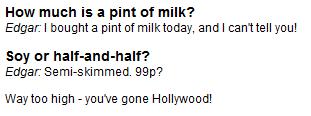 What you wouldn’t know is the ten hours leading up to that particular point. Ten hours starting on an Underground platform, leading to the event where I sat on the back row and got increasingly hyped up. Two days of commuting to London and minimal sleep, coupled with the regular injections of caffeine needed to keep me going and the excitement of what had gone before had already gotten me to a state of wide-eyed euphoria by 10 a.m. Further Q & A sessions with the likes of Simon Pegg and Nick Frost on their upcoming road movie Paul, and some impressive footage from Tron: Legacy (which turned out to be the only impressive footage from Tron: Legacy) had elevated me to an almost frantic level of expectation. By the time the lights went down for Scott Pilgrim seven hours later, I couldn’t have been more excited.
Oh wait, no, I could be even more excited exactly 112 minutes later. Scott Pilgrim finished, stamped its place as my favourite film of the year – a position it still held at the end of the year – and by now I was practically exploding in my seat. Not only a film which seemed to understand the true nature of love and relationships, but had overlaid with such a glorious sheen and continued Wright’s run of films built on geek references and in-jokes. And it had struck me during the closing credits that there was a question that must be asked during the following Q & A with him and comic book creator Bryan Lee O’Malley, a question befitting this director and his film but also the Empire hosts and which would charm them all and the audience. But how to give it the right context? And how to make sure, sat in a tiny corner on the back row, that the question got asked?
So I sat, waving my arm in the air frantically until I was finally given the microphone, at which point I blurted out something along the lines of:
“I’m sorry I don’t have a better question for you Mr O’Malley but Edgar, you’re about the same age as me and seem to have achieved so much, I feel I’ve kind of wasted my life and the only thing that will leave me something to hang on to is the thought that you no longer remain grounded in reality. So please answer me this one question: how much is a pint of milk?”
Ouch. Three days of caffiene, no sleep and excitement burbled into one almost incomprehensible question, but one at the end which got a knowing laugh from the rest of the audience. (If for any reason you’re reading this and don’t know the context, then How Much Is A Pint Of Milk? is one of Empire’s longest standing features, asking pointless questions of far from pointless film celebrities. Of course, the joke is never as good if you have to explain it.) And if I’d just left it there, that would probably have been it. But after giving the answer above, and fielding host Christ Hewitt’s follow-up question, the mic had left me and started its journey round the audience to the next participant. This didn’t stop me shouting out the answer to my own question. Yes, seemingly unsatisfied with Edgar’s own, perfectly reasonable answer to my question, I attempted to give the “correct” answer. Two years later, I can’t even remember what it was. It was something about the nature of love and how that relates to mammalian lactation retailing. I do know it got booed by an audience of geeks, many of whom probably thought it was a personal attack on their own love lives.
I was gutted. I’d ruined my own moment, hyped up to the point where I couldn’t stop my own stupidity. I slunk away from the Con at the end of the day, privately devastated that someone who had now become a film-making hero to me would now, for ever, think I was an idiot. (Not that he could probably even see me sat that far back, of course.) But what was the legacy of this moment of ineptitude? Pushed on by this, I felt driven to ask better questions at Q & A sessions, driven to ensure that at least the person asking the question didn’t think I was mad. I’ve learned that it’s not about the person asking the question, but the one answering it, and I’ve learned when not to ask the question if it’s just not worth it. I’ve actually hosted Q & A sessions myself at my local Picturehouse, the glorious Abbeygate in Bury St. Edmunds (and thanks to the team at the cinema, it’s always been a complete and utter pleasure) and I’ve even gotten my first actual director interview up on the blog earlier this year. And I also made a fantastic group of new friends, a group that talked the same language and loved movies at least as much as I did, and many of whom now get together regularly throughout the year for other screenings and general socialising. Not only that, two years later few if anyone remembers my question, thanks mainly to someone asking a much more inadvertently offensive question of Chloe Moretz the day before.
But still something felt wrong. Unfinished business. The Edgar Wright question still burned me at the back of my head, an irritating reminder of not only my own weakness, but also of his. 99p? Hewitt was right, I’m not even sure Hollywood cows are charging that much these days. Had he really lost touch with reality that much? Had the West Country lad who’d become a geek idol gone so far from his roots? Was it all worth it if that was the case, was fame, fortune and an enviable abundance of talent too much of a price to pay for losing track of the simple things in life? Then yesterday, on Twitter:
 Phew, that’s all right then.
Why the Olympics make me fear for the future of British film
It’s all over bar the shouting (and the Paralympics; actually, it’s probably only half over, isn’t it). Yes, after seven years of hope and expectation – the latter mainly that, like most things British, it would be more a Fawlty Towers writ large than a testament to organisational efficiency – the Olympics have come and gone in a flash, with the triumphs and tears still close enough to touch, but soon everything will fade into memory and Rio will come round much sooner than you think.
You might think that I’ve found all of these sporting events an irritating distraction to my normal hobby, but on the three occasions I got to the cinema during the Games there were a fair selection of people there, not full houses by any means but far from empty. I did pick two occasions when British medal hopes were unlikely, and that proved to be a safe assumption. But other than that, I’ve been wrapped up utterly in the drama of the Games, every single medal and event proving as exciting as the last.
But actually my love affair with the Olympics goes back much further; I was fascinated by them as a child, to the point where when I had to give a talk for my GCSE English Language on a subject of my choice, the Olympics was the most obvious selection (and I got top marks for it, too). I even saw an episode of Mastermind once where the contestant had selected it as a specialist subject, and I had outscored him; if only the general knowledge questions hadn’t been quite so fiendish, and if someone hadn’t just stolen my potential specialised subject, I could have been in there.
There’s something compelling about the Olympian ideal as encapsulated by their modern founder, Pierre de Coubertin, that it’s not the triumph but the struggle that’s important, not necessarily to have conquered your opponent but to have fought well. It appealed to me as a youngster to the extent I managed to get bottom marks for achievement and top marks for effort at my grammar school’s Physical Education lessons, before I was eventually relegated to the role of scorer. It didn’t win me any prizes, but still gave a certain sense of self-satisfaction. That sense can still be seen in the likes of Hamdou Issaka, trailing in three minutes behind the rest of the field in a six minute race during Eton Downey’s rowing events, but for many the pressure is much greater, carrying what they believe to be the hopes of a nation and unable to control their emotions when only able to deliver silver or bronze when they thought nothing less than gold would do.
It’s that sense of golden glory that has actually come to define these Games for Britain. Don’t get me wrong, I wouldn’t change a second of it, but I struggle to believe that we’d have seen these Games as quite the success had we taken home the seven gold medals that Australia did, rather than the twenty-nine that our athletes so thrillingly made their own. That success has allowed the nation to revel in the sense of being a major power for the first time since the fall of an empire, and doesn’t a little power feel good? I don’t think anyone would begrudge Britain its moment of glory, as unless something miraculous happens we’ll drop down the medals table next time like every other host that’s then lost its home advantage.
But that gold rush has also allowed us to market ourselves as a nation to the world, and the politicians of the nation have all been out in force, looking to capitalise on some of that good will. David Cameron has already made a commitment to elite sport, confirming that £125 million, the current annual budget for that elite sport, will now be guaranteed for the next four years, rather than the next two. It’s wonderful to see, but without the investment in sport in our primary schools and sport at a grass roots level in this country, there’s a risk that the supply line just won’t be there.
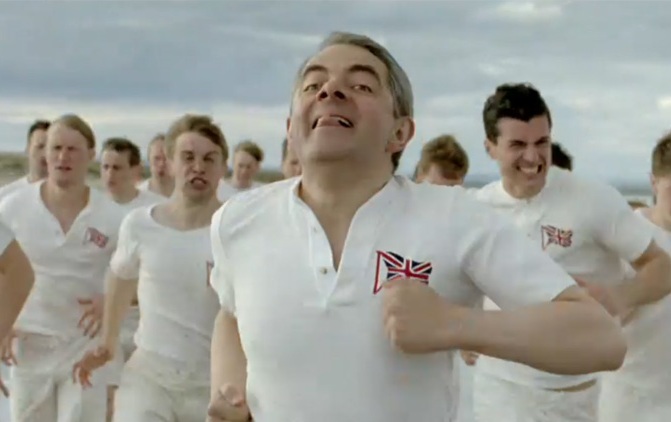
The other triumph in many eyes of the past two and a bit weeks has been the opening ceremony, which did much to highlight to the world just what we think makes Britain great. The arts have sat comfortably next to sport for the duration of the Games, and as well as highlighting Britain’s great musical heritage, the Games have also shown us as a nation how much film means to us, from James Bond and the Queen’s parachute display team to the Bean-influenced Chariots of Fire skit (and the music from that film playing over 300 times during the festivities, until everyone I spoke to was pretty sick of it, so ingrained in the British sporting and cultural psyche it’s become), and even the sight of Gregory’s Girl projected onto the side of a house that later flew into the air to reveal the creator of the world wide web underneath, the Olympics was like a stick of rock with the letters “FILM” running all the way through it.
My fear though, and I can only hope it’s unfounded, is that the same pressure and funding ethos being brought to bear on British sport is what we’ve already seen applied to the British film industry. On the 11th January this year, just prior to a review published on government funding for the film industry, the Prime Minister stated that the film industry should primarily be supporting “commercially successful pictures”, a view that was widely decried at the time, but one that seems scarily similar to the elite prioritisation being applied to Games funding. It’s the gold medals, and the gold statues, that bring prosperity to the economy, but what risks getting lost in the rush to glory is that without the likes of Danny Boyle and smaller British films like his debut Shallow Grave, there’d be no-one to go on and make Danny Boyle’s Oscar-winning Slumdog Millionaire or his Olympic opening ceremony.
Already there are too many British films getting lost in the mix and struggling to find distribution or funding, and with a country in recession and sport likely to claim a larger proportion of a diminishing pot for the next few years, it’s going to be just that little bit harder for those trying to keep the British film industry going. Let’s encourage British film makers to their craft without feeling that they need to be striving for box office success or Oscar glory every time they turn on a camera, and that they do their best in their own endeavours, and let’s just hope they don’t have to put up too much of a fight to continue to make British film the success that helped to put it at the heart of one of the most uplifting two weeks that this country has ever seen.
The Half Dozen: 6 Most Interesting Looking Trailers For August 2012
August. Really? I think my calendar may be broken. Where has the year gone? It’s been a challenging year keeping The Movie Evangelist going, mainly as my full time paid job has gotten in the way of pretty much everything else I do. I’ve managed to keep watching films at not far behind last year’s rate (at the end of July last year, I’d seen 87 new films in the cinema and I was up to 79 at the end of July this year), but, along with most of my other nice-to-have interests, the blog has taken a beating, as I got a grand total of two posts up last month, and one of them was the trailers.
Still, if I’m managing to watch films the least I can do is encourage you into trying to do the same, even if it’s proving a struggle to put fingers to keyboard at the moment. But I have a couple of highlights to look forward to: in the absence of an Empire magazine event this year such as Movie-Con or Big Screen, I’ve bought a day pass for FrightFest 2012, so I’m looking forward to a very varied day there at the end of this month, and by the time the month is up I’ll be buying my tickets for the Cambridge Film Festival, running between 13th and 23rd September. Given that I managed 19 films two years ago and 27 last year, the only question is how many, and the answer is probably quite a lot.
But before that, there’s plenty to look forward to, including a new entry in the Bourne series and Richard Ayoade’s attempt to follow Chris O’Dowd into American cinema. Oh, and this lot.
Sound Of My Voice
Despite showing at only a handful of cinemas and getting buried under the Olympics, Brit Marling’s second feature in as many years is a big step up from the overly simplistic Another Earth which landed late last year. On the surface, the ideas are similarly basic, but here the concepts are better handled and there’s more of a sense of ambiguity and tension. I was also sucked in by the video showing the first twelve minutes online, a concept which more films could take advantage of.
Ai Weiwei: Never Sorry
A fantastic look at a fascinating character, I’m sure, but who knew cats could do that? Seriously, I’ll be trying to train our Pumpkin to do that for months. I may also have to install some suitable door handles, but I’m sure it’ll be worth it.
The Forgiveness Of Blood
For some reason I keep mixing this up with the Christian Bale film out around the same time. Which I think is called The Flowers Of War. Definitely The Something Of Doo-Dah, anyway. I’m easily confused, I think it’s my age.
Brave
A Pixar I’m really not sure about, starting what could be a run of Pixar films I’m not sure about. No matter how good your run of quality is, it can’t go on forever. Apparently nothing outside the first act appears in this trailer, a fact which I look forward to testing, but if true is really how all trailers should be constructed.
The Imposter
It’s been a year for cracking documentaries: in the last month alone I’ve seen some outstanding work in the field, including Marina Abramovic: The Artist Is Present and Searching For Sugarman. Early word on this one suggests that trend could be continuing.
Berberian Sound Studio
And finally, in honour of FrightFest, a film that pops up there, although sadly not the day I’m there. Thankfully the rest of us don’t have too long to wait. Don’t have nightmares, now.
Trying to make sense of the senseless
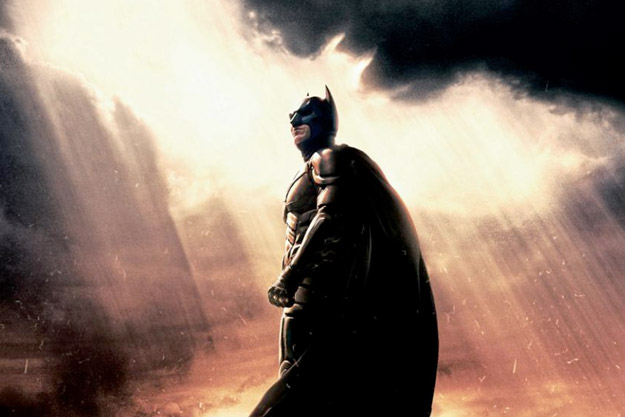
Who’s your favourite director? Spielberg? Scorcese? Maybe the Coens or David Fincher? For me, one man who stands above all of his contemporaries and has made some of the best films of the last decade is Christopher Nolan. Despite the fact that a number of my favourite directors have already delivered outstanding works this year, including Steve McQueen and Wes Anderson, my anticipation for The Dark Knight Rises couldn’t be higher. Nolan’s last three films are all comfortably 10/10 films in my eyes and while Inception and The Dark Knight are fantastic, The Prestige was my favourite film of the last decade. I saw the outstanding prologue at the IMAX in London last year, and tomorrow I’ll be heading down to London to see the remainder of the film. While I get a thrill from seeing just about anything at the cinema, I knew from the first day of January that this would be one of the highlights of my cinema year.
Then I got up this morning and put on the news.
In a week when the internet has been abuzz with the first reviews of the new film, then with attention seekers posting fake reviews or inflammatory comments, and in some circles even holding a certain opinion cannot be done without judgement, the death of twelve people at a cinema in Aurora in Colorado, only twenty miles from Columbine, puts all of that into desperately sharp relief. In the early hours of the morning, a man walked into a cinema and opened fire with a catalogue of weapons, managing to shoot around one in four people in attendance, twelve of them so far fatally. Words simply cannot express the senselessness of this tragedy, a loss of human life on a tragic scale, all the more so given that these people were simply there looking to enjoy themselves and do what I hope to do tomorrow, to escape the rigours of life for an hour or three and immerse themselves in another world.
But from the moment the first reports came in, this has been described by the the majority of news organisations in some form or another as the Batman shooting. It would be easy to think that this was a random act, a young man simply following in the footsteps of too many others who have sprung to notoriety by their actions, but the media would rather it wasn’t. By immediately reinforcing the association with Batman, the implication is immediately made, and will be harder to shake given that the perpetrator is reported to have worn a face-covering gas mask and is now being reported as claiming that he is “The Joker”, that this is in some way driven by the content of the genre of the very film that the crowd had gathered to watch (and ignoring the fact that The Joker first appeared in published media seventy-two years ago).
I’ve already made such an association myself, in mentioning Columbine in an earlier paragraph. But at that level it matters little, the crimes separated by almost as many years as they are miles and sharing little other than the futility and tragedy of their actions. What matters now are that the actions of one man have transformed the lives of so many others for ever, and left another association in the minds of many between violence in the entertainment media and in the real world which some struggle to distinguish between.
The reason for mentioning Columbine is to wonder how much has changed. I personally don’t believe that violent movies or video games are responsible for creating real life monsters such as these, but at the time it opened the debate once again both in America and around the world about not only the freedom of expression, but also the deeply rooted Constitutional right to bear arms. Both are long standing principles, and neither has changed in any real sense with over a decade of distance from the disaster in Columbine. We find ourselves here again, and while I cannot believe that this will motivate change any more than other previous tragedies have done in the culture of America of the wider world – whether it should or not is a point for debate that’s not really appropriate to today – but I can’t help but wonder how many people will be looking over their shoulders somewhere in the world when, and if, they settle down to watch a film this weekend.
It’s not the first time that something I love deeply in my life has become tainted with tragedy. On a Saturday afternoon in April over twenty years ago, I picked up a small radio and disappeared off into the bathroom, the only quiet haven in my family’s busy house, to listen to commentary on an important football match between Nottingham Forest and my beloved Liverpool. The commentary had lasted barely six minutes before it was interrupted; it seemed to be another unfortunate example of the violence which had occasionally gripped football during most of my childhood, not least when thirty-nine people were killed in fighting at the European Cup final in Brussels four years earlier between Juventus and Liverpool.
It quickly became clear that this was something entirely different, and the disaster at the Hillsborough stadium that afternoon not only claimed ninety-six innocent lives, but also fundamentally changed the face of football in this country. Somehow, the players fought through the emotional pain of that day and picked up the trophy they were competing for, the best tribute they could possibly muster. The following summer, I went to London twice to visit Wembley Stadium to watch Liverpool in action in pre-season matches, watching the match through the metal grill of the high fence erected to keep the hooligans off the field, but manoeuvring myself whenever possible so I could clearly see the action through the small gap in the fence where a gate had been opened, so that if something untoward happened, at least this time fans could escape and not be crushed to death.
There are some parallels, albeit small ones, between the events that occurred that day in Hillsborough and through what followed it, and what happened in Aurora earlier today. On both occasions, fans and families had gathered together to share the experience of enjoying something they loved dearly, only for tragedy to intrude forever in their lives. I pray that those who have suffered a deep loss in today’s events may eventually find some peace, knowing that so many of the families of Hillsborough have never had their closure. But while football has been able to find ways to prevent the recurrence of such a tragedy, I’m not sure anything less than turning cinema foyers in half the world into the same kind of security process that you see in the strictest airports could remove the possibility of this happening again, even though one would hope against hope that this is purely an isolated incident.
There was also an unpleasantness in the media in the wake of Hillsborough, where some publications instantly leapt on the Liverpool fans and attempted to castigate them for a role in the immediate aftermath of the disaster which turned out to be entirely fictitious. Emboldened by the fact that a small minority of hooligans had dragged Liverpool’s reputation into the mud after Heysel, they saw fit to publish stories that fans had urinated on victims, picked the pockets of the dead and attacked those trying to help others. It was easy to try to brand these victims with the stigma of previous tragedies, but it wasn’t actually in any way true and only deepened the pain not only of those immediately affected, but by a whole city. Whenever such a disaster with media connections occurs, it’s only a matter of time before someone questions the role of the likes of Christopher Nolan in making such “entertainments” and making acts of violence acceptable in the minds of those who know no better, but Nolan and his contemporaries, and indeed the fictional characters they create, are no more responsible for the creation of such despicable acts of reality than you or I. Maybe we all just need someone to blame when something so wretched happens, whether that’s right or not.
I’m not sure any of this makes sense, and by that I don’t just mean the devastating loss of life in Aurora, but also my attempt to reconcile in my own mind a tragedy from over twenty years ago with much more recent ones, but I hope you’ll forgive my own need to try to pour out my feelings in a hope of making some understanding of them, at least for my own benefit. My overriding feeling of Hillsborough was one of helplessness – so many people with a similar obsession were suffering, and there was nothing I could do except sit, hundreds of miles away, and attempt to come to terms with it with my friends. I can only hope that people are not deterred from watching The Dark Knight Rises, or indeed any other film, this weekend wherever in the world they are watching it, and that they can do so not only in comfort but in safety, but there’s little that I can do to make it otherwise. I don’t know if this Christopher Nolan film will be a fourth 10/10 in a row – earlier this week I had conclude that it didn’t really matter, and I’m more certain of that now than ever. Given that the entire ethos of my blog is to encourage people to the cinema to watch movies, I feel even more compelled to do this today, and hope that rather than being wrapped in fear, cinema can remain the escape that it should be. Thanks for reading, and I hope you enjoy whatever you do this weekend.
 The Movie Evangelist