review
Review: The Hobbit: The Desolation Of Smaug 3D

The Pitch: Middle Earth Episode II: Not Yet There, And Back Again Next Year.
The Review: Last year, audiences around the world were treated to the first of a new trilogy of Middle Earth films after a nine year break. Showered with awards, the originals are generally held up as pinnacles of modern film, but An Unexpected Journey arrived last year to a noticeable measure less of acclaim. There were problems, some with the 48 FPS experiment but not least because a film just shy of three hours had been spun slowly and painfully out of five chapters of what was ostensibly a children’s book. While the look and feel of Middle Earth was as magical as ever, nothing felt hugely fresh and the roster of returning characters from the original trilogy – seven in total – and the return to original trilogy settings such as Rivendell, coupled with the relative lack of forward momentum from the plot, made watching significant stretches of part one feel close to a chore, an accusation that could never be levelled at the originals (despite being shorter than any of them). The Riddles In The Dark climax gave the trilogy a sense of propulsion, but the question remained as to whether Peter Jackson could recapture any of that old magic.
So last time we left them, Magneto and John Watson once again set off with Guy Of Gisbourne, Rebus, the one I always confuse with John Hannah, the bald one, the fat one, the young fit one and his brother, the one inexplicably still wandering around withwith an axe in his head and probably about five others that I defy any rational person to distinguish from one another unless their name is an anagram of Jeter Packson had just escaped from the caves with Gollum in and had a ride on some convenient eagles. (I think. It’s been a year, leave me alone.) Where the first instalment creaked along, The Hobbit Part II fairly rattles along at breakneck pace from the start and never lets up. Gandalf decides to disappear off and do his own thing once again, leaving the vertically challenged remainder to tangle with elves, men and a giant, fire breathing dragon.
Where the previous episode felt almost apologetic in its reliance on familiar elements, The Desolation Of Smaug strikes more of a balance. Many of the franchise faces seen last time don’t recur, and the only new / old character to come back is Orlando Bloom’s Legolas, coming across more than ever like a cross between a Vulcan and a ninja. He’s pitched up against Evangeline Lilly’s Tauriel in a slightly daft love triangle involving them and the young fit dwarf (Kili, Aidan Turner) and it’s just one of the plot developments that highlights how much this chapter has veered away from Tolkien’s narrative; you could almost refer to this as “inspired by” rather than “based upon”. I’ve no issue with that if it’s providing solid storytelling, and thankfully interspecies crushes are a minor distraction. Desolation is a chance to explore further facets of Jackson’s vision of Middle Earth and the likes of Lake-Town, and the men Bard (Luke Evans) and the master (Stephen Fry) and while the continued pursuit of Azog (Manu Bennett) drives them forward, what the group are encountering is eminently more interesting than the first part of their quest on almost every level, from character to action.
There are minor gripes: Weta’s CGI seems to be going backwards rather than forwards and in particular anything around water has taken a trip through the uncanny valley and is now standing on the other side, hanging its head in shame. Although Gandalf (Ian McKellen) is necessarily sidelined by his excursion to see what lurks in Dol Guldur, there are points in the second act when it also feels as if Bilbo has been forgotten in his own story, and it’s never as clear as it was in Lord Of The Rings exactly who we should be rooting for. There’s also no getting away from the oddness of the title, especially when the only real appearance of the Desolation is the dwarves waving at it from a distance as they wander past. (It almost feels a bit, “Let’s not go to the Desolation. It is a silly place.”) Finally, while there aren’t the painful longueurs of its predecessor, Desolation did make me look at my watch once, oddly in the Smaug section which feels about five minutes too long. But that shouldn’t detract from the genuine magnificence of the beast, ominously voiced by Benedict Cumberbatch, or indeed the success of both that sequence and some earlier action sequences such as the barrel ride down river. Jackson continues to take the slender Hobbit tome and recast it in the image of his masterpiece, but that’s more successful second time out, even with a slightly portentous tone that has only flecks of humour. Despite its flaws The Desolation Of Smaug is a much more entertaining ride and while still not quite at the level of the Rings films, come the cliff-hanger ending you’re more likely to be relishing the third part than you would have been three hours earlier.
Why see it at the cinema: If you’ve seen the previous four Tolkien adaptations, you’ll know what to expect, and this is no less epic. Particularly impressive is Lake Town, but the big screen is also the only way to really appreciate the true magnificence of Smaug.
Why see it in 3D: More positives than negatives, in 24 FPS (the way I chose to see it) there’s not a huge brightness issue, even in the murkiness of Mirkwood. Jackson’s good at depth of field and throws in a couple of cheeky in-your-face moments, but still hasn’t quite learned that quick cuts in action editing don’t work in 3D as your eyes don’t have enough time to focus.
What about the rating? Rated 12A for moderate violence and threat. Again, fans of the trilogy won’t have any nasty surprises here, although arachnophobes who struggled with The Return Of The King might be advised to take a valium before heading out. (Thankfully I lived in Leicester when I saw The Return Of The King at the Odeon there; hopefully the several families who brought very young children will not have been replaced by a new generation there, or indeed anywhere else.)
My cinema experience: A work trip to Exeter saw me taking in the comforts of the Exeter Picturehouse. A beautiful bar in a lovely location complements the venue, and the spacious screen 1 is well set up with a bank of sofas at the back and well spaced rows of seating. I was nervous about booking a seat in the middle of a row, done to minimise ghosting and other odd effects on the 3D, but the ample legroom – even for someone 6′ 3″ like myself – was very welcome and the reclining seats still had plenty of give. The projection and sound were also up to the normal standard I’d expect from the Picturehouse chain. An Apple Tango at just over £2 with my members’ discount helped to keep me hydrated through the lengthy running time, and I look forward to my next work trip there to sample the other screens. Random thanks also to the person who helped me look for my car key after the screening, which it transpires I’d left at the hotel. (Sorry.)
The Score: 8/10
Review: Don Jon

The Pitch: Jon’s Addiction.
The Cockney Rhyming Slang Review: Due to the graphic and adult nature of the content of this film and my desire to make this as much of a PG (or 12A) blog as possible, I have replaced the stronger terms in this review with Cockney Rhyming Slang. Most of the translations are courtesy of whoohoo.co.uk and londontopia.net.
A friend of mine once asked me why being called a merchant banker was an insult. His reasoning was that everyone does it, so why would anyone be offended to be called one? Maybe there’s still a social stigma to anyone who prefers merchant banking to good, old fashioned Posh ‘N’ Becks, possibly some deep seated religious conscience. Strictly speaking, there’s nowhere in the Bible that condemns merchant banking, but it does condemn certain sexual practices, and (especially for men) there’s an association between merchant banking and Frankie Vaughn, as many men feel the need for a bit of Frankie to get themselves in the right state of Chinese Blind. It’s easy to take the moral high ground and to Barnaby Rudge those who do, but Joseph Gordon-Levitt’s first film for the Stevie Nicks attempts to understand what makes a young man want to play with his Uncle Silly while watching Frankie.
As well as directing Gordon-Levitt is the la-di-da of his own film, the Jon of the title, a young man who’s disenchanted with the physical nature of his physical relationship with twist’n’twirls. He’s in the rub-a-dub every night with a different twist, but ending up in Uncle Ned with them is never as satisfying as the time on his own with his pistol and shooter. When he meets Scarlett Johanssen he tries to be a better old pot and pan, but he’s soon falling into the same old patterns, patterns repeated in his weekly confession at the left in the lurch. He gets his strong New York passions from his dad Tony Danza, while his sock and blister Brie Larson sits silently in judgement. The only person who truly seems to understand him is fellow student Julianne Moore, a few donkey’s ears older than JGL and the only one who doesn’t seem to sit in judgement.
Gordon-Levitt follows the typical path for this kind of jackanory, surrounding his Jon with other alpha males, but the Frankie remains resolutely off the Betty Grable when it comes to getting under the true nature of his Barney Rubbles. While he makes some interesting decisions as a director, the script is generic and Jon starts out as little more than a caricature. He’s a Max Factor of credit and gradually shades in Jon with levels of detail, but it’s the performance more than the storytelling that makes Jon feel real. It’s not helped by Scarlett Johansson, who also seems to act in one too many stereotypes and it’s difficult to orange peel anything much for either of them. It’s only when Julianne Moore shows her Chevy Chase that Don Jon starts to generate any kind of depth or satisfying narrative arc.
So Don Jon is an odd hybrid, of an exploration of onanistic pleasures, a coming of age story and an unusual turtle dove story. It doesn’t have anything profound to say about merchant banking, Frankie Vaughn or Posh ‘n‘ Becks but it does at least see the other aspects of its story through to a reasonable conclusion. It’s a mixed start to JGL’s directorial career, and you can see what he was aiming for to a point, but it’s all a touch predictable and safe, which is quite an achievement for such potentially offensive subject matter. Let’s hope that this is the start of a long career : I Adam and Eve that young Joe’s got plenty of talent but next time I hope, with no small sense of irony, he shows slightly more orchestra stalls.
Why see it at the cinema: If you didn’t feel you got enough cinema discomfort from watching Blue Is The Warmest Color, here’s an ideal opportunity to test your tolerance for sitting in a room full of strangers while topics not normally discussed in polite conversation are brought up repeatedly.
What about the rating: Rated 18 for strong sex and sex references. Also has a tiny bit of bad language and some joint smoking, but even so it’s far from the most extreme 18 rated film I’ve seen and there’s very little dwelling on the material at hand.
My cinema experience: Having missed this at my local Cineworld, I ventured further afield to catch both this and Captain Phillips at the Cineworld in Braintree. A good job I was only seeing two films, as the car park appears to have a six hour limit (so no seeing seven films in a day here). It appears to be a newer Cineworld, as the seats were still comfortable and I managed to find plenty of legroom in both screens, and there were no sound or vision issues in either film. The only slight downer was that I was actually sold a ticket for Jackass Presents: Bad Grandpa instead of Don Jon, so had a mad dash to the concessions desk after Captain Phillips to find someone to tell me which screen I was actually supposed to be in.
The Score: 6/10
Review: Gravity 3D

The Pitch: Journey To The Surface Of The Earth.
The Review: Space. The final frontier, more so now than ever, with man’s fanciful dreams of space exploration feeling more of the pipe variety than ever as a lack of immediately achievable goals and a number of fatal accidents have served to put space travel well down the agenda. But despite the increasing reluctance to break out of our own atmosphere, the allure of space hasn’t diminished for most of mankind and for something so temptingly close – but for the unfortunate restrictions of gravitational pull – the thought of going into space remains a dream. Space is the same distance away as Edinburgh for me, but the addition of the third dimension will make it unlikely any of us will visit in my lifetime. It’s the nature of that difficulty which turns it into a nightmare, with a catalogue of thousands of problems waiting to spring onto astronauts at any moment, and Sandra Bullock seems to face most of them in what could be the most realistic depiction of space travel yet committed to film.
I can’t speak from personal experience, of course, but along with advances in space travel over the last fifty years have come advances in cinema projection as well. Film creatives have long been attempting to immerse audiences in their product and developments such as IMAX and 3D have brought audiences closer to the action on screen than ever before. It takes someone of true creativity to use those tools correctly, but Alfonso Cuaron is now attempting to push the boundaries of those tools further than ever before. A production that’s taken him and his team several years and involved the development of new techniques and methods has resulted in a film which will give most people the closest experience they will ever come to being in space. Some of Cuaron’s earlier films have been technical marvels, but Gravity genuinely feels like nothing seen before and shots such as the opening sequence – constructed to appear as a seventeen minute unbroken shot without an edit – will leave all but the most lacking in imagination struggling for breath. There is no debate to be had: Gravity is the most visually impressive film of the year.
Once you’ve adapted to the reality of what Cuaron’s presented, the immediate question becomes: is this enough? The story is simplicity itself: when veteran George Clooney and rookie Sandra Bullock are completing work on the Hubble telescope, they get word from ground control (Ed Harris) that a Russian satellite is breaking up and about to cover them in a shower of lethal debris. With no time to react, their shuttle is destroyed and Bullock and Clooney find themselves fighting for their very lives with limited resources and almost no hope of survival. And, er, that’s it. With a compact ninety minute running time and a certain amount of repetition in the storyline as the astronauts move from one return option to another, it’s not going to win any awards for complexity, but that’s not what Gravity’s about.
There’s a certain amount of myth-making at work, but Gravity can be seen as allegory for a spiritual rebirth. It’s interesting that advocates of the film fall into both pro- and anti-religious groups, and both interpretations can be feasibly read into Bullock’s journey. For those who put any weight into the seven stories theory that any film boils down to one of seven basic types, Gravity ticks not only the rebirth box but also the voyage and return element, with a journey and obstacles that would have been familiar to Odysseus had he been born two millennia later. That works to Gravity’s favour, as the grandeur of the imagery is supported, rather than inhibited, by the storytelling at work in the script from Cuaron and his son Jonas. There is the odd flourish, with the Cuarons dropping in subtle (and not so subtle) homages to a host of sci-fi classics, but they complement rather than detracting and Gravity stands up well in comparison with those lofty peers.
As bold and simple as the narrative is, it wouldn’t work if it weren’t grounded in performances and Cuaron had to find actors who could work within the strict technical limitations but also deliver the story in an engaging manner. While George Clooney is as effortlessly charismatic as ever, all of the script’s heavy lifting is done by Sandra Bullock. As one of a select band of actors to win both an Oscar and a Razzie, you might be forgiven for not being sure which Sandra Bullock’s going to turn up but she’s carried everything from romantic comedies to action movies over the years and you underestimate her at your peril. If Cuaron’s imagery draws you in, then Sandra Bullock is the beating heart of Gravity and her performance will resonate in your mind for just as long as the breathtaking space scenes. It might have taken him seven years to follow up on Children Of Men, but Gravity is truly worth the wait.
Why see it at the cinema: I’m struggling to think of a film which is more suited to the cinema screen that’s been released in the three and a half years since this blog started. It’s a film that demands to be seen on the biggest screen possible to truly emphasise the sense of actually being in space. At the time of writing, the film’s been on general release in the UK for five weeks but is still showing fairly widely; catch it on the big screen before it falls out of orbit.
Why see it in 3D: There are two main problems with 3D: normal editing doesn’t give the eyes time to focus when shots are in 3D, and wearing sunglasses indoors diminishes the brightness of the image. Here, the mainly black background allows the brightness of the rest of the image to be ramped up and the long continuous takes allow your eyes to fully appreciate the 3D image. Seeing this in 3D is one of a handful of truly immersive 3D experiences I’ve had in the cinema (as good as Avatar and Life Of Pi) and Cuaron succeeds in making the viewer a participant in every shot. Essential.
What about the rating? Rated 12A for sustained moderate threat, disturbing images and strong language. It’s at the softer end of 12A apart from one rather graphic image showing the fate of a character who came off worse with the debris; as long as that doesn’t give the kiddies nightmares, this one should be reasonable to take children to.
My cinema experience: Unable to make it to an IMAX screening, I camped out in the third row at the Cineworld Bury St. Edmunds. Around two minutes in, the realism of the 3D and the positioning of the camera above earth looking down made me genuinely feel as if I was falling into the screen. If that’s not enough to convince you of the verisimilitude of Gravity’s space scenes, then the fact I was also dodging debris every time it came round hopefully will.
The Score: 10/10
Review: Thor: The Dark World

The Pitch: Meet The Parents.
The Review: It’s a luxurious position to be in, but when you’ve gone from being an organisation that could barely get one of its comic properties made less than twenty years ago to being a studio bankrolled by one of the biggest organisations in the world it’s also a double-edged sword. With each success comes a higher expectation: Iron Man Three proved that The Avengers wasn’t just a flash in the pan, but it could only take one failure to derail the Marvel Universe train which has stops mapped out for another three to five years already. It could also be a risk that familiarity might breed apathy rather than contentment, with dedicated Thor fans a lock for his adventures but fans of the other characters maybe needing more to tempt them back for subsequent adventures. Where Marvel appears to be attempting to strike a specific balance is in keeping familiar elements to reassure audiences, but also introducing new aspects to keep the series fresh and alive.
It’s the familiar elements of this instalment of the Marvel Cinematic Universe that undoubtedly work best. The Avengers worked as a sequel to a number of the first phase Marvel movies, Thor included, and now the situation is reversed as a number of characters make their third film appearance. Chief among them are the demigod of thunder, the swagger still intact but Chris Hemsworth’s Thor now finally showing some maturity. That doesn’t save him from a slap or two from his Earth-bound sweetheart Jane Foster (Natalie Portman) when the two are reunited and Thor has to explain where he’s been and why he didn’t call. The two are brought together when a threat from before the dawn of the universe, lord of the Elves Malekith (Christopher Eccleston) is revived and poses a threat so big, Thor’s only option is to turn to disgraced brother Loki (Tom Hiddleston) to find the answer to defeating this new threat. Meanwhile, Jane has to get to grips with the culture clash of meeting Thor’s disapproving parents, especially the All-Father Odin (Anthony Hopkins).
Everyone from the original gets a moment here, with second tier players from last time of the likes of Kat Dennings, Idris Elba and Rene Russo all given more to do this time around. That does make proceedings a touch congested, especially when attempting to service the plot at the same time. Marvel’s willingness to keep shaking things up has seen a revolving door of directors across their franchises, and Alan Taylor has been imported from Game Of Thrones because presumably some Disney executive can’t distinguish between that literary fantasy and Norse legend. Game Of Thrones often relies on lots of short interplay between a large roster of characters, some getting very little screen time, and so that plays to Taylor’s strengths, but the big battle episodes of the HBO series are actually being picked up by British director Neil Marshall, and it’s not always clear what’s going on in some of Thor’s exceptionally brown battle sequences. His strengths do come to the fore at some of the darker, more poignant moments, but his Asgard never quite has the epic feel that Kenneth Branagh’s did in the original.
What there is a lot of is humour, with Joss Whedon contributing to the script, and this Thor sequel isn’t afraid to throw in some big laughs, playing up the backstory of the universe it’s set in and even mixing humour into the epic final battle, once again showcasing London’s easily destroyed monuments. Thor: The Dark World works well as spectacle and comedy, but you can’t help wishing for a little more threat, not only because Loki is sidelined for much of the film after his Avengers antics but also because Elvish dialogue and a heavy prosthetic smother Christopher Eccleston’s performance more effectively than a crowd rush at a Doctor Who convention. His performance could have also done with some of the ninth Doctor’s impish cheekiness and robust threat, but when the Thor / Loki double act is allowed into high gear, there’s just about enough moments to make up for the lack of a decent antagonist. Thor: The Dark World is a serviceable entry in the Marvel universe, but is more intriguing at times for the promise it holds for the future than what’s actually on screen.
Why see it at the cinema? It’s not short on spectacle, and it’s up there with The Avengers and Iron Man 3 in terms of zingers and general comedy. Plenty to enjoy on a large screen with a large audience.
Should I stay through the credits? Having its cake and eating it, there’s not only a sequence in the middle of the credits, but also one at the very end. For those just wanting to see where the story goes next, you can leave in the middle (probably to Google what you’ve just seen, as only comic book aficionados will make any sense of it first time round); for the true completist, stay to the end.
What about the rating? Rated 12A for moderate fantasy violence. You have to love the BBFC’s Insight section, which includes the likes of the following:
There are also mild sex references, such as a man saying he found out his ex-girlfriend was “sleeping with other dudes”.My cinema experience: Took Mrs Evangelist to see this at the Cineworld in Bury St Edmunds. She didn’t thank me for having to sit through all the credits for the second time this year at a Marvel movie; I think I might have to catch the Captain America 2 credits on my own next year.
The Score: 7/10
Cambridge Film Festival 2013 Day 6: Local Hero, Wayland’s Song, Big Bad Wolves
Day 6, the halfway point of the eleven day festival, and the point at which I once again decide to put comfort before style in my appearance. I make that excuse a lot, as well as a lot of other excuses for my appearance, but this one’s genuine. My normal short sleeve shirt and jeans combo is normally supplemented by dark trainers, but my white running shoes are much more comfortable and also help when I’m bounding up the stairs to the screens two at a time. I also base it partly on the theory that The Shawshank Redemption first posited, that you never look at a man’s shoes, but this may fail on my account on at least two cases: generally, people would rather look anywhere than my face, and Andy Dufresne didn’t drag some white Nike knock-offs in a plastic bag through the sewage tunnels of a fictional prison. Still, I’m spending most of the day sat in a dark room with my feet under the seat, so for slogging up and down Cambridge’s streets, the running shoes come in extra handy.
And there was more walking, for day six saw me taking in three different venues.
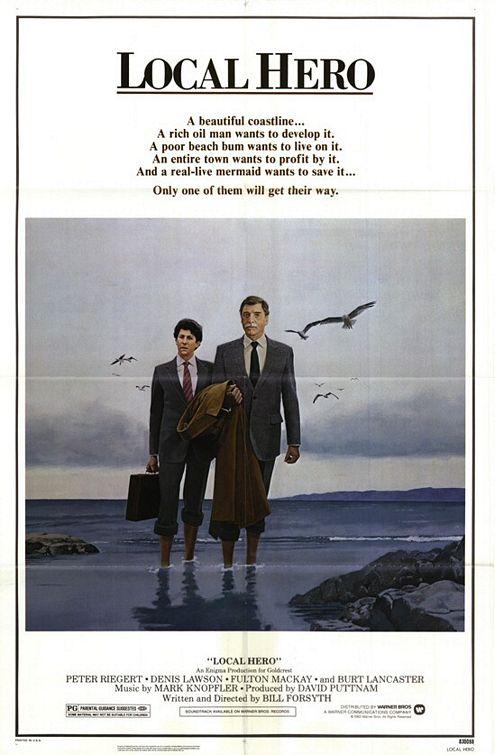 Local Hero
As part of my attempt to determine the Forty Films To See Before I’m Forty, Jim Ross from Take One had suggested some typically Scottish offerings to supplement my viewing. He did this already in the knowledge that Local Hero was coming to this year’s festival, so I felt duly bound by honour to take in Bill Forsyth’s tale of corporate America taking on rural Scotland.
First, I had to contend with Emmanuel College, which is just opposite the Arts Picturehouse and acts as a venue for a number of screenings. There’s very little signage at the college to indicate they’re showing films, but on wandering in the first gate I saw a small sign. Following another half a dozen of these signs led me to a modern building at the far end of the college complex, at which point the signs ran out and I found myself ascending a spiral staircase more in hope than expectation. Turns out I was at the venue, which was a modern lecture theatre with curtains drawn as much as possible but the occasional shaft of light still creeping in. Although the base of the seats is padded, they are still benches and I struggled and fidgeted through the next hour and a half.
Local Hero is a product of its era, resolutely Eighties with a truly eccentric performance from Burt Lancaster. It did succeed in helping Dennis Lawson to make a more significant cultural contribution than Wedge to popular culture, but at the same time it’s now impossible to watch Peter Capaldi in anything without now imagining him doing it as The Doctor. (His edginess and inquisitiveness make him an excellent choice in my mind, but I digress.) Eccentric goes a long way to summing up Local Hero, and I’d also throw in whimsical, pleasant and humourous, and while it’s not a cast iron classic I’m glad to have ticked it off my list.
I then cut across the road, attempting (not entirely successfully) to undo my route, and arrived back at the Arts Picturehouse for my next film.
 Wayland’s Song
When navigating the festival programme each year, it’s difficult to make informed choices about everything. Sometimes you’re looking for a familiar face or name, something to give you a hook into a film, so when I saw the name of Richard Jobson, that seemed enough to hook me into his latest film, Wayland’s Song. My familiarity with Jobson stems from his presenting stint on the late night ITV programme Hollywood Report rather than his film career, but I’m always keen to give British film a chance. What I was left with was the only film of any nationality of the whole festival that I regretted seeing.
Wayland (Michael Nardone) is a veteran of the Afghanistan war who returns home to discover his daughter has gone missing, and sets out to find her and not to worry about who gets in his way. The simplest way to think of Wayland’s Song is as a companion piece to the distinctly similar Dead Man’s Shoes, except without any of the narrative, directorial or production skill that went into the former. The acting ranges from a dull monotone to screechingly bad, the Afghanistan flashbacks suffered by Wayland are laughably inept and there are a whole host of production issues, not least the sound mix which at certain points leaves the dialogue inaudible. There isn’t a shred of originality in Wayland’s Song and there’s not much more competence, although if you do see it yourself, please let me know if I’m right in thinking that at one point, Wayland puts his iPhone to his head the wrong way around (with the speaker and home button away from his face), I’d love to know.
Following this, it was another fifteen minute walk back down to the Cineworld in Cambridge for my last film of the day.
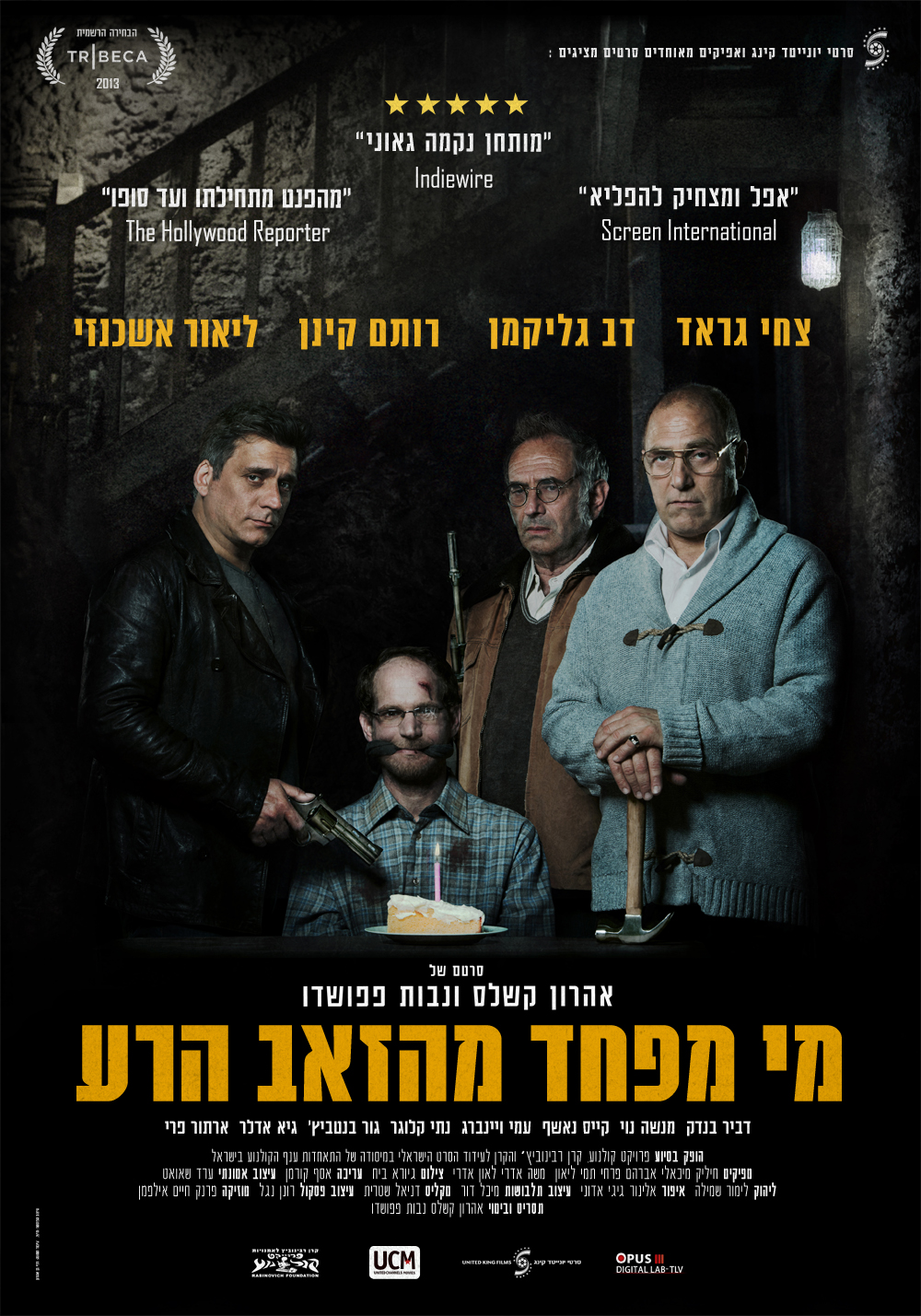 Big Bad Wolves (Mi mefahed mezeev hara)
People often ask me why I watch horror movies, and I resist the temptation to ask them why they watch Coronation Street or The X-Factor. I suppose it’s a fair question, as horror movies aren’t for everyone, and it’s a genre that covers a lot of bases, so some horror movies still won’t be for all horror fans. I’m not a huge fan of torture porn, but certainly the forbidden thrill of gore has often appealed, but for someone who’s pleasant and welcoming on the outside I have a dark and twisted core, like one of those new tubs of Ben ‘N’ Jerry’s, and certain horror movies appeal to that darker side of my personality.
It’s the story of three men who gradually find themselves entangled in each other’s lives: Dror (Rotem Keinan) is suspected of some brutal child murders in which the heads of the children haven’t been found, thus denying them a full Jewish burial. Miki (Lior Ashenkazi) is the police officer who goes too far in attempting to extract information through official channels, so is forced to follow Dror on a more informal basis in the hope he slips up. Unbeknown to them both, they’re also being tracked by Gidi (Tzahi Grad), the father of the most recent victim out for revenge and answers.
I found Big Bad Wolves very, very appealing, but it’s definitely an acquired taste. As with many horror movies, it manages to be blackly comic as well as bleak, but this is a film with more than two gears in its gearbox. It also succeeds in being more generally funny and occasionally a little surreal, but the true joy of Big Bad Wolves is how it manages to switch between gears, often in the same scene, effortlessly and never breaks the overall tone. It’s packed full of more twists than a bag of fun size Curly-Wurlys and writer / director team Aharon Keshales and Navot Papushado excel on both fronts. I’d almost added a second day at this year’s FrightFest to catch this and a couple of other films, and was very thankful that this made it’s way to the FrightFest strand at this year’s festival.
Cambridge Film Festival Day 5: Roland Klick: The Heart Is A Hungry Hunter, Machete Kills, The Strange Little Cat
Day 5 is the Monday of the festival, and is the point in last year’s festival where I hit my peak, watching six films in the day. That was no longer possible at this year’s festival as there were no late screenings on the Monday, but I was attempting to have a slightly quieter year anyway. Last year, in the eleven days of the festival I saw 42 films and one programme of shorts during it, as well as two other films not in the festival, and in one of those (Killing Them Softly) I swear I began to hallucinate. Even my madness has its limits, it would seem.
So this year I used the morning to attempt to catch up on some of my press commitments for Take One and Bums On Seats, as well as my own blog. The film festival offered the use of a press room, which sounds grander than it really is; a meeting room next to the entrance to the screens which was a useful place to charge my laptop and to catch up with other fellow journalists and the occasional film-maker, but was quite often out of use due to being locked or for being used as a green room for the aforementioned film-makers, so much of my writing was done in the bar with the use of wi-fi anyway.
Consequently my Monday had a late start, and a late change when an appeal for attendees to a documentary with a Q & A saw me abandon plans to see Ain’t Them Bodies Saints; probably for the best as Terrence Malick leaves me cold and almost every review I read drew that comparison.
 Roland Klick: The Heart Is A Hungry Hunter
My original plans for the festival hadn’t included any of Roland Klick’s films, much to my regret, as he was one of the big names of the festival and due to be making an appearance (more on that later). However, the documentary on his life by Sandra Prechtel gave me the first opportunity to understand more about the man as, I’ll be completely honest, I’d never heard of him before laying eyes on the Festival brochure. Despite his relative anonymity, he’s a twice winner of German Film Awards and has a legacy which includes Alejandro Jodorowsky citing him as an influence, so he’s clearly a subject worth examination.
Prechtel’s documentary does a great job of three things. Firstly, it manages to put into context Klick’s achievements and his position in German cinema and beyond. Secondly, through picking selected highlights from Roland Klick’s career it manages to demonstrate why he may have fallen from favour. Lastly, it manages to make both the man and his films seem completely compelling, highlighting Klick’s humour and honest appraisal of his own career, and encouraged me to seek out at least one other film later in the week. As biographies go, The Heart Is A Hungry Hunter does an efficient and thorough job at covering the career of one of cinema’s unfortunately forgotten greats.
Sandra Prechtel gave a Q & A session after the film, and in the process further convinced me to add more Klick to my schedule for the rest of the week. She also gave valuable advice to anyone looking to make such a documentary that you don’t need to be completely exhaustive to truly understand your subject.
 Machete Kills
Not for the first time, the Festival also extended its reach from the Cambridge Arts Picturehouse down the road to its neighbouring Cineworld. The cinema had two strands of the Festival, a Gothic season and the FrightFest strand, showcasing the best of the London horror festival’s recent weekend. Although I made it to London for a single day of this year’s FrightFest, there were still a veritable feast of delights available across the strand that I hadn’t seen.
So Machete Kills is the sequel nobody really demanded to the film based on a film based on a trailer for a film that didn’t really exist, except not only does it now exist but it has a sequel, and that sequel begins with a trailer for the sequel to the sequel. Confused? Wait until you see Charlie Sheen credited under his real name as the President of the United States, or Walt Goggins, Cuba Gooding Jr., Antonio Banderas and Lady Gaga, who are all playing the same character.
As the original pretty much did the Grindhouse inspiration to death, the sequel promptly kills off one of the original’s stars in the pre-titles sequence before spiralling off into a strange parody of the Bond series, casting Mel Gibson as a Hugo Drax-like bad guy with aspirations for a space station and a reboot of the human race. Grindhouse is never short of ideas, but it’s got an attention deficit disorder and never truly hangs together. Given that it also features Mel Gibson fighting at one point with a Klingon bat’leth, it’s never quite as much fun as it could be. Danny Trejo’s character of Machete is also now a one note joke running a little thin. Still, for those with aspirations it’s moderately enjoyable in an undemanding fashion.
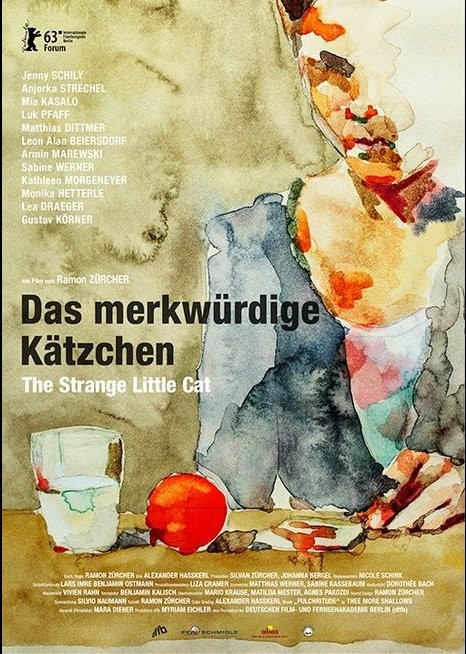 The Strange Little Cat (Das merkwürdige Kätzchen)
The last film I saw at last year’s festival was Holy Motors, and it had a peculiar effect on me: while I was moderately taken with it on first watch, I couldn’t get it out of my mind for days afterwards. The Strange Little Cat couldn’t be more different in terms of content and approach, but it created a similar resonance in my brain which lasted a good proportion of the week.
Ramon Zurcher wrote and directed the film, inspired loosely by Franz Kafka’s The Metamorphosis and from an idea originally worked on at a workshop the director attended with Bela Tarr. It’s a remarkable day in the life of piece for a family spanning several generations, with small objects such as an empty ketchup bottle having a significant effect on the members of the household and each having their own independent stories that overlap and interweave. It’s visually compact, close static angles leaving as much to the imagination as is captured in the frame and sound is as important as vision with rhythms and the tempo becoming as important as any visual clues. It’s a perspective on family life shot at a child’s eye level, but showing a maturity and insight beyond many longer films and older film makers.
Zurcher was present for a Q & A after the film, where he gave further insight into his production process. This included the differences between handling his adult and child actors, Tarr’s involvement in the production of the film and the level of choreography that went into making scenes work. He was also annoyingly young, handsome and talented and it’s fair to say I was a tiny bit jealous. Maybe that was just the lack of sleep talking.
Cambridge Film Festival 2013 Day 4: Fireworks Wednesday, All The Light In The Sky, Blackbird, The Great Hip-Hop Hoax
With my other commitments of the first weekend out of the way, I was now free to tackle films to my heart’s content. The difficulty of the programme’s breadth and depth is partly knowing what to tackle and partly having time to tackle it. So for the first time I went into a day at the festival without a fixed plan for the day, rather attempting to use on the ground knowledge to guide me to my most valuable watching choices.
 Fireworks Wednesday
My first choice of the day very much made itself, as having seen both About Elly (as the very first film I saw at last year’s festival) and A Separation, I was keen to explore the earlier work of Asghar Farhadi. The only real mystery is why it took him a decade to come to international prominence, as all of the hallmarks of quality of his later works are present and correct here.
Sure, it’s another domestic drama, but Farhadi has a gift for shading in his characters rather than casting them in black and white, and for intricate plotting which makes use of happenstance rather than feeling like it’s built on contrivance. His films manage to reflect both the realities and the uniqueness of life in contemporary Iran but also the universal nature of human relationships and frailties. Fireworks Wednesday is neither as deeply fraught as About Elly or as tense and probing as A Separation, but it’s still well worth checking out if you’re a fan of either of his more recent works.
I also wrote a longer review of Fireworks Wednesday for Take One, which you can read here.
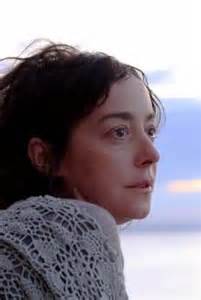 All The Light In The Sky
Having had around five hours sleep the previous night before getting up to write another Take One review, the thought of a 140 minute German costume drama (in the form of Ludwig II) was a little too much for me, so instead I took the option of prolific American director Joe Swanberg’s latest. At the age of just 32 Swanberg has clocked up an impressive seventeen films as a director, although he came to my prominence recently as an actor in the throwback horror You’re Next.
All The Light In The Sky might come across as unusual material for a 32 year old director, dealing as it does with a woman in her mid-forties (Jane Adams, best remembered to me as Niles’ second wife Mel in TV’s Frasier) dealing with the direction of her life and her attempts at relationships, both of friendship and of something deeper. Despite everything in her life wearing away or feeling worn out, Adams’ Marie and her friend Faye embrace everything life has to throw at them, and Swanberg and Adams’ script – which feels heavily improvised – is warmly naturalistic and refreshingly honest, as are the performances. There’s no point being prolific if you can’t maintain quality, but if everything Swanberg puts his hand to is of this quality, it suggests he should have no concern about his current workrate.
The film was preceded by short film Me, The Terrible, a charming confection featuring a young girl’s adventures with some crude animation mixed with live action. It was due to be followed by a Skype Q & A with Swanberg and Josephine Decker, the director of the short, but regrettably some confusion meant that only Decker joined the portion I attended. Despite that, it gave some useful insights into her working practices.
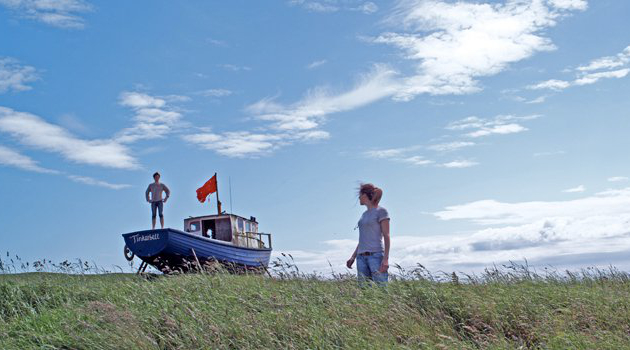 Blackbird
I followed this up with a debut from Scottish director Jamie Chambers. Blackbird is the story of a rural Scottish community. Ruadhan is a young drifter who is inspired by the local elders and their folk singing, but who sees their way of life gradually slipping away. Ruadhan lives in a boat on the land of town bard Alec and generally scavenges off the lives of others, but as the town’s traditions appear under threat, his own way of life is the one most under threat.
Woven through Blackbird are the Scottish folk stylings of luminaries such as Norman Maclean and Sheila Stewart, who both lend their voices to the film. Despite no prior acting experience, Maclean helps to ground the film and give it a sense of realism as well as adding his distinctive sound to the music, which is the highlight of Blackbird. The film’s primary let-down is in its narrative, which never manages to convince in either Ruadhan’s plight or his eventual fate. Some decent performances and Chambers’ skill as director, which seems to be better than his writing, keep Blackbird watchable but leave it falling short of anything more.
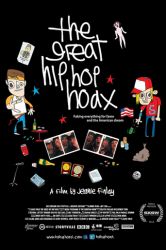 The Great Hip Hop Hoax
I finished the day with Jeanie Finlay’s latest music documentary. Finlay was in attendance, glammed up and introducing the film with a simple “I think you should watch the film and decide if you like it, and then we’ll talk afterwards.” That pragmatism and directness is well reflected in Finlay’s doc, which tells the story of two more Scottish singers, this time rappers who couldn’t get into the hip hop industry as themselves, so reinvented themselves with American accents and fake backstories and who suddenly found themselves welcomed by managers and agents alike, with a route into the big time seemingly guaranteed for as long as they could keep up the pretence.
Finlay’s latest effort isn’t quite as effective as her previous visit to the festival with Sound It Out, which was the intriguing story of a northern record shop. Here my main obstacle was with the animation which is used to flesh out the parts of the story documented by the fake Americans; it’s so stylised that it never quite gelled with the rest of the material. However, Gavin Bain and Billy Boyd – otherwise known as Silibil n’ Brains – were generally charming and likeable, even if you could never quite tell if the unreliable narrators were truly becoming reliable in their old age. The Great Hip Hop Hoax’s strength lies in the uncertaintly of the outcome, and Finlay structures her story well in that sense.
However, the Q & A afterwards threw up even more intriguing details which suggest a director’s cut in a few years may have an even more fascinating story to tell, as they are now both recording again after having been reunited by filming for the documentary. Silibil n’ Brains might be a thing of the past, but Bain and Boyd may yet find fame, or at least some form of infamy, and Finlay has another solid film to add to her CV.
Cambridge Film Festival 2013 Day 3: Hannah Arendt, Muscle Shoals
Day 3 arrived, and as usual in the film festival it’s the one day each year when commitments of my other hobby leave me unavailable. But for a humble church chorister as myself, the chance to sing in King’s College Chapel each year is too good to turn down.
The difficulty of this is that it means almost a whole day when I can’t see films. With an impeccable lack of timing, the film that won the audience award screened in this slot in 2012. Last year, because I’m clearly insane, I went to Bums On Seats for the first time, then to a film, then to sing at King’s, then back to the cinema for more films, and still managed to miss the festival’s best. I was Bumming again this year, venting my Hawking frustrations again (which you can hear here) but sadly there was no suitable gap before the evening to get a film in.
 Hannah Arendt
So after singing until I was hoarse, my first film of the day was Hannah Arendt. I have a passing interest in philosophy, so Hannah Arendt’s name is one of those I’ve heard of but couldn’t necessarily place. Arendt was a chain-smoking free thinker who saw her theories taking precedence over the feelings of friends and colleagues. This might not have been so provocative had Arendt’s theories not centred around the motivations of the Nazi. Arendt was herself a Jew who’d escaped a French detention camp, but she’d also had an affair before her marriage with a Nazi-sympathising professor and some couldn’t see past that when reviewing her work.
There’s a disconnect at play, in that emotions and passions are suggested to be running high by Hannah’s actions, but that’s barely alluded to on screen. The footage from Adolf Eichmann’s trial shows great anger, but that level of emotion never translates into any of the film’s contemporary characters. Hannah Arendt builds to a simultaneously thoughtful and stirring climax, but it’s a shame about some of what precedes it.
I also reviewed the film for Take One in more detail here.
Muscle Shoals
There’s been some superb music documentaries in the past few years, but the best understand the balance between the music and the story behind it. Muscle Shoals has a phenomenal musical heritage to call on, and the talking heads make a line-up that would make Glastonbury blush, from Alicia Keys to The Rolling Stones and Wilson Pickett to Aretha Franklin. The music is unquestionably the highlight, and what Muscle Shoals does well is to not only give insight into the characters behind the music, such as Rick Hall, but into the process and composition of the sound. It tells the story of how both Rick Hall’s Fame Studios and its rival Muscle Shoals Sounds came into being, and in the process left its distinctive sound written through decades of music like letters in a musical stick of rock.
The only area where Muscle Shoals falls down slightly is in an attempt to be a comprehensive and exhaustive history of the musical period, following a fairly strict chronology. By the time we’re into Lynnyrd Skynnyrd the fascination may be waning somewhat, and trimming 10-15 minutes may have helped. It’s a documentary that looks almost good as it sounds, the digital cinematography showing off both the countryside and the crags in Keith Richards’ face to equal effect, but it’s at it’s best when it’s exploring the characters behind the music.
Cambridge Film Festival 2013 Day 2: Mushrooming, Particle Fever, The Crash Reel
As I mentioned in my coverage of Day 1, after three years of being solely a paying punter taking in the festival has escalated somewhat and I am now involved in a whole range of media coverage. Day 2 saw me take the first steps on two particular journeys as part of that coverage.
The other thing that Day 1 had brought was some unexpected recognition of my behind the scenes support, as part of a cast of dozens that help to make the festival what it is. While my contribution was fairly minimal compared to some of those that work full time for much of the year to bring these eleven days of cinematic heaven to the public each year, everyone is equally rewarded when it comes to thanking those involved, and a giant caption displayed before each film lists the names of those involved. The past year of my involvement in film activity in and around Cambridge means that a significant proportion of these names are now people I know and talk to regularly, and it’s had the effect of making the festival that much more interactive, and even more enjoyable for a fledgling film geek like myself.
In fact, I was so thrilled to see my name in lights that I hadn’t noticed something about it:
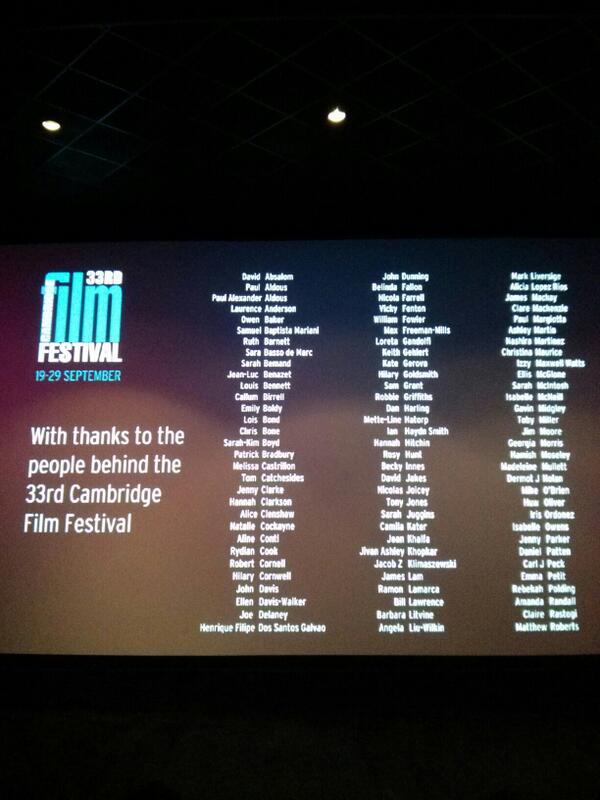
That’s my name, at the top of the third column. It took me two films to notice that my name was spelled wrong. But hey, there’s no wrong letters, just a slight absence of all of the rights ones, and I’m a firm believer in that it’s the thought that counts.
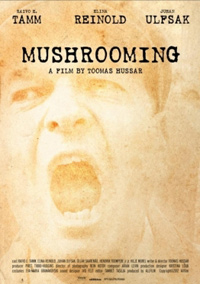 Mushrooming
So my first involvement of the day was to introduce the film Mushrooming, then to host the Q & A afterwards. Actor Raivo E. Tamm had been brought over by the Estonian embassy especially for the film’s two screenings, and I headed down to introduce him and the film, having seen a screener of it already. Arriving at the microphone, I got right into the line of the projector and promptly blinded myself, causing me to give a rather panicked introduction. Raivo stayed in for the duration of the film, allowing me to pop out and continue to prep for my questions later. Q & A sessions can sometimes be difficult to judge, as you never know quite how many questions are going to come up. In the end I asked two or three lead in questions, and then left the rest to an audience seemingly keen to know more about the actual practice of Mushrooming.
The film itself played after a whole Estonian season last year (including Raivo as Disgruntled Tennis Player in The Temptation Of St. Tony) and Raivo backed up the fact that Estonian cinema appears to be attempting to be a little less deep and ponderous. Mushrooming starts out quite dry, but gradually blends its genres until a simple trip into the woods for a politician and his wife escalates into a stand-off in a cabin with a redneck and a rock star. It’s played generally very straight, and consequently it might not be for everyone, but you must be doing something right if you can be simultaneously over the top and understated. (And Raivo’s the best thing in it, even if I had to concentrate extraordinarily hard at all times not to call him Ravio.)
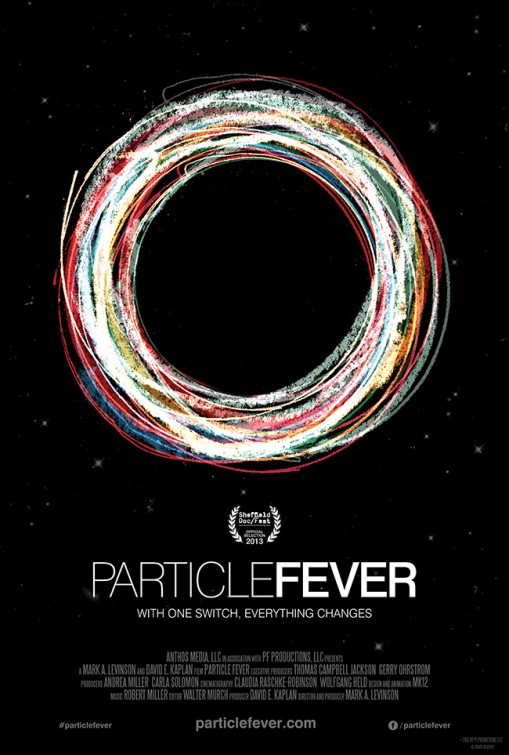 Particle Fever
It feels odd watching a physics documentary in Cambridge. Twenty years ago I was turned down here for a place reading mathematics after I had two interviews. The physics one went so badly I couldn’t remember Newton’s three laws, so I felt slightly uncomfortable sitting in an audience potentially filled with some fine academic minds. I needn’t have worried; Particle Fever gets the balance just right between the human stories of the CERN project at the Large Hadron Collider and giving a sense of the magnitude of the potential consequences of the discoveries being made for the very future of science itself. The editing by science buff and not-bad-editor-either Walter Murch helps to condense the four year story into a digestible narrative with clear direction, but it’s the graphics from design firm D12 (also responsible for Quantum Of Solace’s opening credits, fact fans) that help to make the science digestible. Mark Levinson’s project is clearly one of passion and is far more likely to inspire people to an interest in physics than day 1’s Hawking documentary.
This was also my first review for Take One, Cambridge’s independent film magazine which runs along side the festival. The full review can be found here.
 The Crash Reel
We have become so inured to the sight of extreme sportsmen at events such as the X-Games pulling off their tricks that the element of spectacle can be somewhat diminished, driving the sportsmen themselves to attempt even greater stunts for our gratification. We’re also so accustomed to seeing the stunts not quite come off that when champion snowboarder Kevin Pearce comes a cropper at the start of this documentary, just six weeks before the Olympics, we’d naturally expect him to dust himself off and for this to be a story of triumph over adversity. But The Crash Reel is something very different, and so much more powerful for it.
Kevin suffers a traumatic brain injury (TBI), and Lucy Walker’s documentary charts his path to attempted recovery, alongside the strain it’s put on his close-knit family and especially two of his brothers, one of whom suffers from Down’s Syndrome. The Crash Reel is both a gripping human drama and a damning indictment of the nature of extreme sports. Walker has struck documentary gold with her subjects and makes the most of what she’s been given, and has assembled a documentary that will traumatise and appal you in the best ways possible, but if there’s any justice in the world should be a catalyst for change in these fledgling sports. Just occasionally the onscreen graphics feel a little overdone as Walker attempts to keep on top of her characters, but other than that it’s hard to find a flaw, and hopefully this will find a wider market than just snowboarding geeks; I for one felt physically affected by it.
Cambridge Film Festival 2013 Day 1: Just Before Losing Everything, Life Distorted shorts, Hawking, Prince Avalanche
This is my fourth Cambridge Film Festival, which I first encouraged myself to explore after starting this blog in 2010, and this year by the morning of the first day I had a palpable sense of excitement for what was coming up. Partly that’s my involvement, which this year is reaching new levels: as well as a daily diary here, I’m also contributing a number of interviews to Take One, the Cambridge publication that runs alongside the festival, and hosting two Q & A sessions. For me it’s a thrill to be involved, but also serves to further the reason for setting up this blog originally, to attempt to get word out about the finest films showing anywhere and to encourage people to see them, and my evangelising will reach new heights over the next eleven days.
The first day is always a slightly strange experience as it’s really a half day, with films typically starting late afternoon before the gala opening. I’ve had good experiences with the opening films, as in 2010 (Winter’s Bone) and 2011 (Tinker, Tailor, Soldier, Spy), the first film I saw each year was also my favourite come the end of the festival. (Last year was the opposite experience, with my favourite two films being the last I saw.)
But this year also marked a personal milestone, in that on day one I finally managed to get to a short film programme. I’ve taken in Tridentfest for the last two years, but for externally submitted films I’ve had tickets and then had to return them for various reasons. So it was a joy to finally be able to take in a selection of shorts, and I’m hoping I’ll get more chances throughout the festival.
Here’s my breakdown of the good, the strange and the desperately unfortunate that made up day 1.
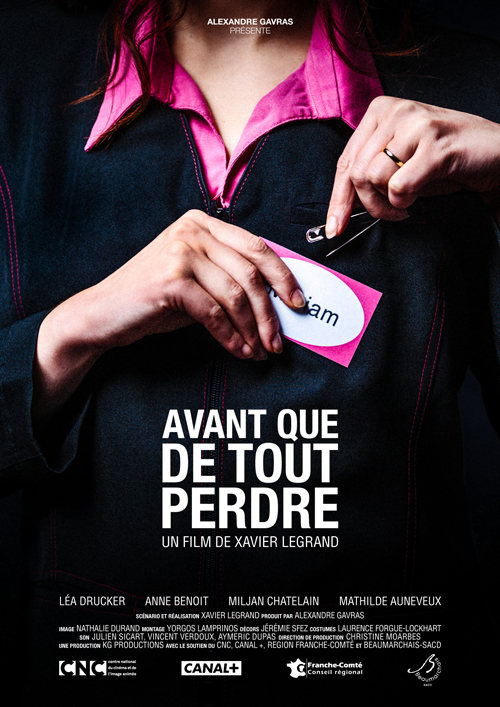 Just Before Losing Everything
This French short, running to around 25 minutes, is showing in conjunction with a number of other shorts programmes over the course of the festival. It’s difficult to get too much into plot without giving the game away, but there’s a number of sharp and sudden escalations in the plot and the viewer is left to piece together what’s happened from pieces of conversation and visual clues. By effectively stripping out any exposition and allowing the plot to drive the narrative, Just Before Losing Everything builds and maintains tension almost out of nowhere, while running parallel social commentary, and it perfectly fit the running time. It comes highly recommended if you get another chance during the course of the festival.
Life Distorted
What followed was the first of the festival’s half a dozen or so short film programmes that will run during the course of the festival, in this case seven films which each had a somewhat skewed outlook on life. Personal highlights included Our Name Is Michael Morgan, a tale of competition between two eerily similar salesmen, and Emmeline, the tale of a girl who has to overcome an unusual affliction to find happiness. Director Tim Hewitt was also in attendance for his adaptation of a Graham Greene short story A Little Place Off The Edgeware Road, and the thread also included the voiceover difficulties of A Big Deal, the a satnav with jealousy issues in Bird In A Box, the short and slightly macabre animation Menu and the tale of extreme recluse author Izzy Blue in Hermit. Overall there wasn’t a significantly weak link, and with two or three charming and provoking shorts this was a well composed programme. A slight sound issue on the first film thankfully didn’t cause too many problems.
 Hawking
The main event of day 1 was the gala screening of the documentary Hawking with Q & A, which had not only taken over all three screens at the Cambridge Arts Picturehouse but was also being beamed live to cinemas around the country. Demand was certainly high, and five minutes before the scheduled start time I was in a queue that stretched virtually throughout the entire length of the cinema, from the screens doors through the bars and almost to the street.
The documentary they were all served up is a curious beast. Although directed by Stephen Finnegan and Ben Bowie, it’s been co-written by them and Hawking himself. Hawking takes his opportunity to summarise his career achievements, from theories on the Big Bang to his partunification of various fields, but that’s all it is: a fairly thin biography that serves to eulogise its subject without ever getting below the surface. In that sense it achieves its initial aim, as Hawking wrote The Brief History Of Time not only to bring science to the masses, but to encourage the wider questioning of the fundamental aspects of the universe. Consequently, a documentary that doesn’t question anything feels violenty at odds with its subject and his philosophy, and for a pseudo-scientist such as myself it comes over as an exeperiment based on a fundamentally flawed terms of reference.
This was then followed by a question and answer session that can charitably be best described as excruciating. A set of unfortunate circumstances, including Professor Hawking’s seeming movement to the wrong part of the cinema leaving him stuck when it came to his time to answer pre-recorded questions, a failure of his pre-recorded questions to answer, a set of odd questions from a bemused audience who seemingly hadn’t been briefed that they couldn’t answer Hawking any direct questions and Krishnan Guru-Murthy’s insistence on (probably unintentionally) doing his best to draw the audience’s attention to the flaws at any given point, the whole experience was the equivalent of a slow-motion car crash, enlivened only by video messages from Sheldon and Amy from The Big Bang Theory (geekgasm), Richard Branson (space advert) and Morgan Freeman (bizarre non-sequitur). To cap it off, when fellow scientist Kip Thorne was asked where Hawking sits in the scientific pantheon, he gave a very honest answer that still felt somewhat uncomplimentary in an evening desgined to celebrate the world’s most famous scientist. I don’t believe anyone at the cinema or the festival itself to have been too responsible for what happened, and it would be unfortunate if it reflected badly on them.
 Prince Avalanche
David Gordon Green’s directorial career has followed a somewhat unusual trajectory, from the inide credibility of George Washington and All The Real Girls to the mainstream excess of Pineapple Express and Your Highness. Pineapple Express represents a meeting of minds of the two David Gordon Greens: Paul Rudd and Emile Hirsch are two highway workers wandering through a wilderness painting lines on the road and putting up posts, while they gently bicker and attempt to resolve the issues with their respective love lives (not least the fact that Rudd is dating Hirsch’s sister and has only taken him on this journey out of a feeling of loyalty). Their relationship is fractious, slightly daft and often laugh-out-loud funny, and if that was all there was to Prince Avalanche it might not be enough. But the wilderness they’re tracking through is one devastated by wildfire and their encounters with some of the other residents of the wilderness add a resonance and a sweetly melancholic tone. It’s also lovely to see a great performance from Lance LeGault, remembered by anyone my age and sensibility as Colonel Decker from The A-Team in what turned out to be one of his last roles; the film is dedicated to his memory. It’s a fine achievement by Green, bittersweet and roughly honest with itself and beautifully shot in the washed out residue of the American wild.
Coming soon: day 2, with my reviews of Mushrooming, Particle Fever and The Crash Reel.
 The Movie Evangelist