horror
Review: Let Me In
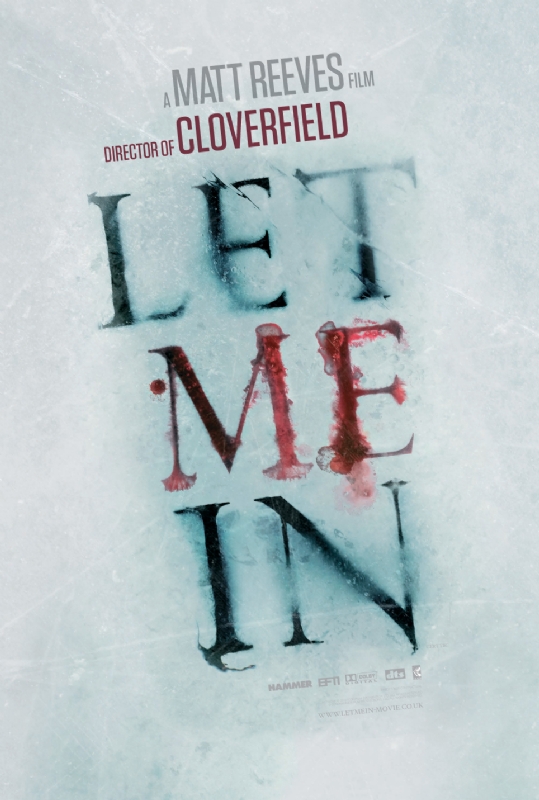 The Pitch: Haven’t I seen you somewhere before?
The Review: Hollywood does many things well, and one it seems to do extremely well is to make a complete Horlicks of remaking successful foreign films, either losing the essence of what made them so special in the first place or adding in element that don’t work in context. There’s a spate of high profile instances going through the production cycle at present, and it’s two of the Scandinavian movies that have won widespread acclaim in the last couple of years that are currently getting the most attention. The first out of the box is Cloverfield director Matt Reeves with his re-imagining of the Swedish classic, Let The Right One In.
First of all, re-imagining may be too strong a word for what Reeves has done. Claims that he’s returned to the source material prove unfounded and there is, in places, an almost slavish dedication to recapturing the look and feel of the predecessor, to the extent that you have to pinch yourself as a reminder that this is set in New Mexico, not Northern Europe. While Reeves has made a few attempts to distance himself from the original, at times this has the feel of a shot for shot remake in the style of Van Sant’s Psycho or Haneke’s English language Funny Games, and feels about as essential as either – in other words, not at all if you’ve any familiarity with the first film.
So to those areas where the differences come in, and this is still a story about a young boy who’s isolated and ends up living next door to someone who gradually reveals their secret, except now they’re called Owen and Abby instead of Oscar and Eli. There’s one change, in the modus operandi of Abby’s guardian, which leads to a stunning set piece seen from a fixed viewpoint at the back of a car that equals and, whisper it, possible even betters anything in the original. Additionally, we never see Owen’s mother clearly, which serves to reinforce his sense of isolation. But apart from that, other than the casting, any other changes actually work against the overall feel, including some ill-advised CGI which serves to take you out of the scene rather than further into it.
The casting, though, is about as impeccable as you could possibly hope for in such a situation. Chloe Moretz, while occasionally less androgynous in appearance than her Swedish counterpart, still nails the role of the creature years beyond her young appearance, while Kodi Smit-McPhee, Richard Jenkins and Elias Koteas round out an excellent central cast. Michael Giacchino’s score is also moodily effective and worth a mention. But other than that, this first film from the relaunched Hammer studios feels like the safest possible bet that they could have made. So let’s be clear – it’s a great film, but the original was outstanding, and is so recent that I bought it on Blu-ray as soon as it came out. Imagine having been given an orange flavoured, chocolate covered cake snack from a supermarket’s own range when you already own a packet of Jaffa Cakes – why would you not just eat the Jaffa Cakes?
Why see it at the cinema: The car set piece deserves a view on the big screen, and this is absolutely dripping in atmosphere. It’s also a real thrill to see the Hammer logo on the big screen, and long may it remain. But if you’ve encountered the original, then move along, for there’s nothing to see here.
The Score: 8/10
(Author’s note: I was eating Jaffa Cakes at the time of writing.)
Review: Paranormal Activity 2
 The Pitch: [ ∆ PLAY] [ ∆ PLAY] [ ∆ PLAY] [ ∆ PLAY] [ ∆ PLAY]
The Review: I remember a time when Hallowe’en wasn’t just an excuse to churn out another half-baked sequel in a scary movie franchise. Simpler times, but money talks and the only thing that managed to derail the Saw series from picking up massive opening weekends seemingly unrelated to the actual quality of the movie was another crowd pleaser full of seasonal frights, but which this time jumped on the back of the “found footage” craze. Paranormal Activity had such an impressive box office to cost ratio that a sequel was inevitable, but how can you make money a second time round, without just regurgitating the same concept?
To an extent, this does its fair share of regurgitating in that we are still looking at video footage recorded overnight, but the writers (and producer and returning writer / director from the original Oren Peli) have attempted to retain what was so successful about the original while expanding the concept. That expansion actually works backwards in time, as this is a prequel, and it comes as a certain surprise to see the two lead characters from the first movie returning, but the onscreen caption confirming this place in the timeline does lend another slender air of suspense to proceedings.
But what worked so well in Paranormal Activity was the gradual build of tension through the repetitive structure. By edging up the drama each night, the slow burn nature gradually took its grip on, let’s be honest, some rather gullible audiences, but part of the fun was being caught up in the reactions of those around you. The sequel retains this concept, but with a succession of five cameras spread around the house that are cycled through, allowing you not only the same chance to spot what’s going to cause the scare, like a sort of horror “Where’s Wally?”, but also to speculate on which one is actually going to offer up the scares.
It was also that sense of found footage that helped those more susceptible to fully engage with the original experience, and sadly this is where the sequel compromises in two key areas. Rather than characters played by complete unknowns, we have one played by Sprague Grayden, a.k.a. the manipulative daughter of President Taylor from TV’s 24. The original also dispensed with credits in an effort to maintain the façade; sadly this tries to have its cake and eat it, with a long black screen at the end, but only the most sprightly front row patrons will be out the front door by the time that Sprague Grayden’s credit appears on screen. There’s not much more to say – if you enjoyed the first one at the cinema, and can find a big enough crowd willing to open themselves up to this, then the downsides are offset by some slightly more effective scares and a satisfying extension to the mythology. Amazingly, this franchise might not be on its last legs yet – didn’t see that coming.
Why see it at the cinema: This is a 7/10 experience rather than a 7/10 movie, in all honesty; any attempt to watch this when not fully surrounded by the company of like-minded people, with a large enough proportion jumping out of their skin at the appropriate moments, will completely diminish the effect.
The Score: 7/10
Cambridge Film Festival Review: Dark Souls (Mørke Sjeler)
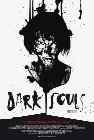 The Pitch: Oily Vomit Of The Living Dead.
The Review: I will be honest, this, in nearly 100 reviews I’ve written, has been one of if not the most difficult one line pitches to write. Part of that is down to how much is going on in this quiet little Norwegian chiller, which while running to only just over an hour and a half covers an awful lot of territory in that time. The one substance in abundance in this movie is oil, but it’s not the only black entity around, as much of the humour is of the dark variety. Dark Souls attempts to put a smile on your face as it drills into your brain, and it succeeds to a large extent in that endeavour.
We start with a young girl, Johanna (Johanna Gustavson), who is attacked by a man in an orange boiler suit with an electric drill and left for dead, found face down in the mud by the police who pronounce her dead and have her taken to the mortuary. This comes as a surprise to her loving father, Morten (Morten Ruda), who’s seen her walk in the door not moments earlier. But there’s something not quite right about Johanna any more, and she’s not alone. While detective Askestad (Kyrre H. Sydness) attempts to uncover the truth behind these mystery murders, and the local doctor (Jan Harstad) attempts to uncover the truth behind these rather lively corpses and their strange symptoms, Morten attempts to re-establish family life with Johanna as best as possible, but is slowly but surely drawn into the secret world behind it all.
Directors and writers Mathieu Petuel and César Ducasse obviously know their horror. There’s a deliberate, unhurried pace from start to end and, as with so many other effective horror movies over the years, the pacing is used to build tension and to unsettle the viewer. This isn’t your average American slasher, filled with jump cuts and loud bursts on the soundtrack in a vain attempt to summon up scares, everything here is designed more to pick at your nerves and unsettle, apart from the occasional head drilling, of course. The acting is generally fit for purpose, so while it won’t win any awards, it does engage your sympathy in all the right ways, and Morten Ruda is the stand out, carrying more of the narrative as the movie progresses and allowing the mix of off-kilter laughs to blend perfectly with the feeling and the pain.
The use of oil is also an interesting motif, but its allegorical use pales in comparison to the body horror of watching it exude from every pore of its victims, and it gives them a distinctive and effective look. There are also a lot of references to other horror movies thrown into the mix (more than this casual horror fan could ever detect), but the overall narrative, while taking occasional tangents, hangs together very effectively, and the abiding impression is of a deliciously dark movie that will creep under your skin like the oil in its victims.
Why see it at the cinema: There’s plenty of effective imagery, both subtle and in-your-face, and of course this is at its core a horror movie, so why not guarantee yourself a dark room with a large screen to make the most of the chills?
The Score: 8/10
Review: The Last Exorcism
 The Pitch: The Exorcist Witch Project.
The Review: Horror is a predominant genre of cinema, thanks to classic horror movies such as The Exorcist. There have also been a number of sub-genres of horror over the years, and probably the most prevalent of the last decade is the “found footage” genre, where either a documentary or home video feel is applied to footage, such as The Blair Witch Project and [REC]. So it was surely only a matter of time before someone decided to splice the two together. Taking a break from another sub-genre, torture porn stalwart Eli Roth takes a producer credit on this “documentary” of the less than reverend Cotton Marcus and his faking of an exorcism to expose the issues with the wider trade.
The first act of the movie is set-up for the later events, and consequently is more focused on the religious aspects, reflecting on Cotton’s increasing lack of faith, but the journey that’s actually taken him on and how he’s arrived at this point. His cynicism and brashness is only vaguely challenged as he heads out to the home of Nell, where he’s chosen at random to conduct his last exorcism. Through this section of the movie, there’s plenty to reflect on, especially around the nature of faith and aspects of belief.
Then the second act shows Nell start to show the effects that have led her father to call on Cotton’s services in the first place. By setting up the fact that the demon only presents itself at night, there’s an underlying tension built in as we approach darkness each time over the course of the next few days. There’s a couple of very effective shots using the camera to grisly or suspenseful ends, and as we’re led to question characters’ motives and back stories the tension starts to come from without as well as within, and in general the middle stretch is by far the most compelling section.
In the final stretch, there’s a deliberate set-up for what is to come, and expectations are set, only for those expectations to be subverted a couple of times. Unfortunately, this is where The Last Exorcism starts to lose points; the first of those subversions culminates in a decision taken by characters who’ve obviously never watched Scream or any other self-mocking horror (don’t do that – no sensible person would do what you lot are doing!), which leads them to the final twist, and a riff on another very famous Sixties horror, which while making sense of all the characters’ arcs denies us the gory catharsis promised by that earlier set-up, and feels horribly anti-climactic. If you like a more tense and cerebral horror, then this could be for you, but it may be best to leave just before the end, and see if you can come up with a better ending than the moviemakers.
Why see it at the cinema: Some early and mid-movie creepiness always works well in a large, darkened cinema. You can also get to enjoy the tutting and disbelief of your fellow moviegoers on your way out.
The Score: 6/10
- ← Previous
- 1
- 2
 The Movie Evangelist